Service
Lease Road & Caliche Road Construction Contractor in Midland, TX
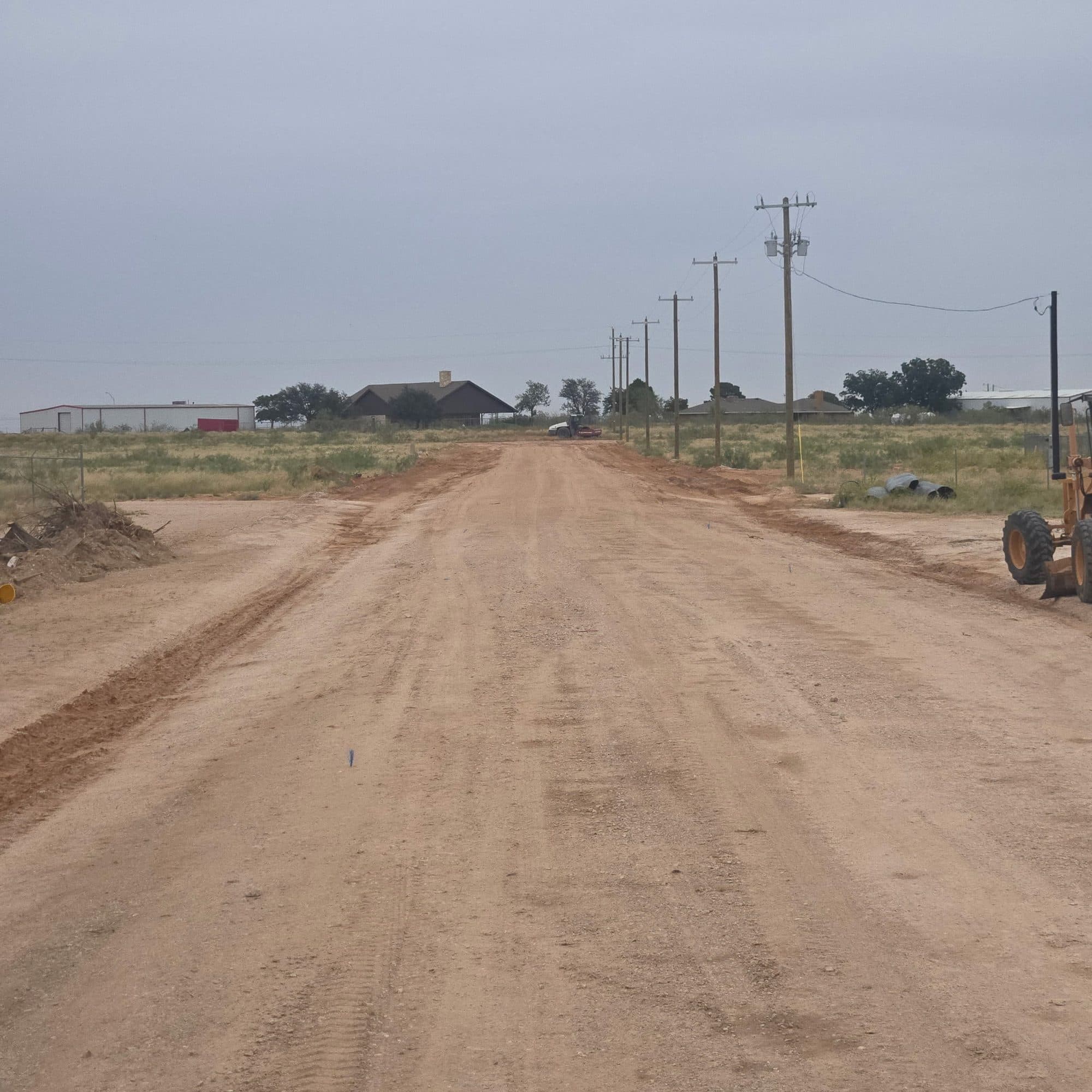
Lease roads and caliche roads built to carry the heaviest load that will ever use them.
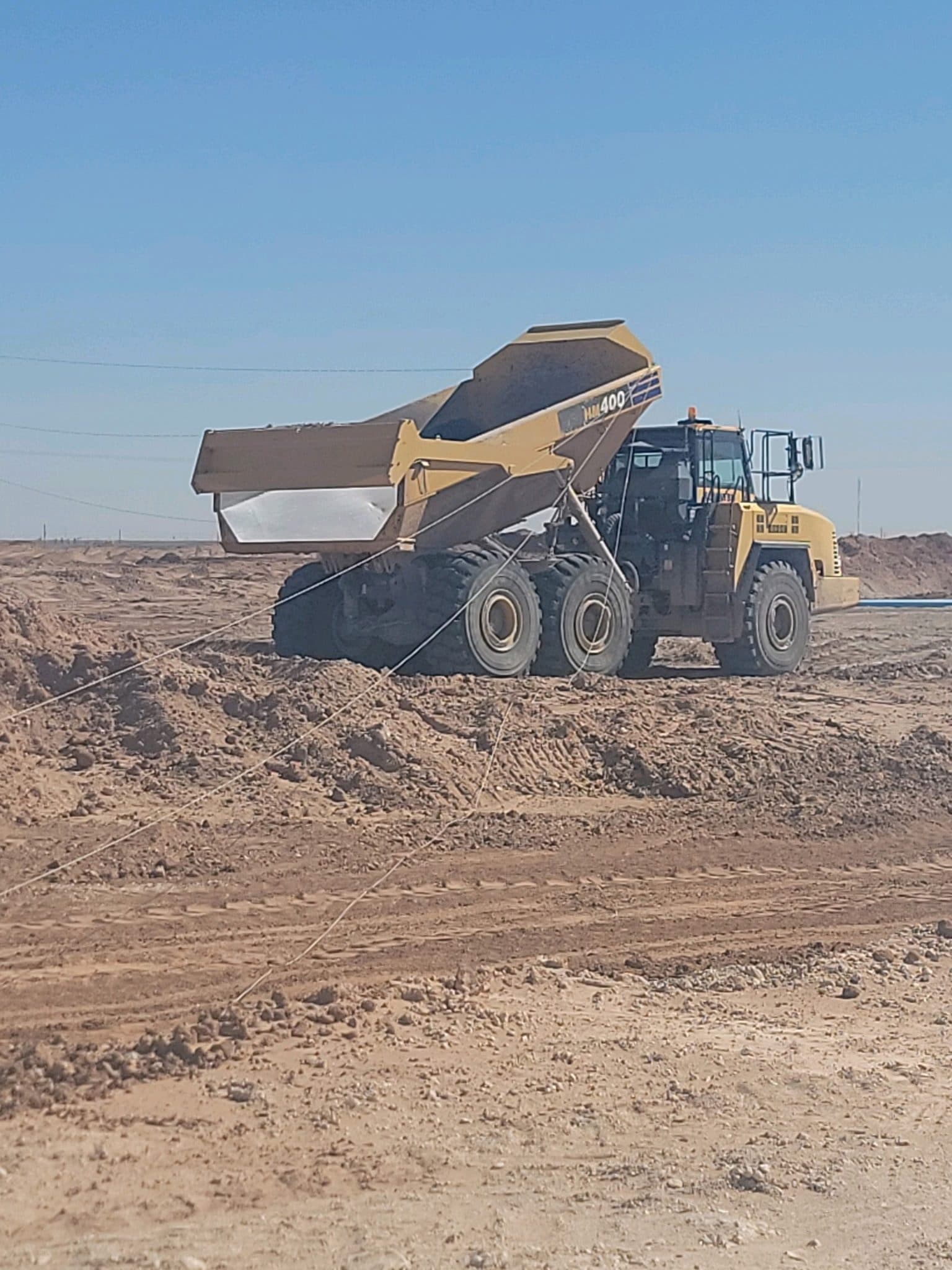
A location is only as useful as the heaviest load that can reach it. Rangefinder Excavation has built lease roads, pads and tank battery locations across the Permian Basin since 2018, on our own scrapers, dozers, motor graders, rollers, water trucks and haul trucks, and the road is the half of that job we get called back to fix most often when somebody else built it.
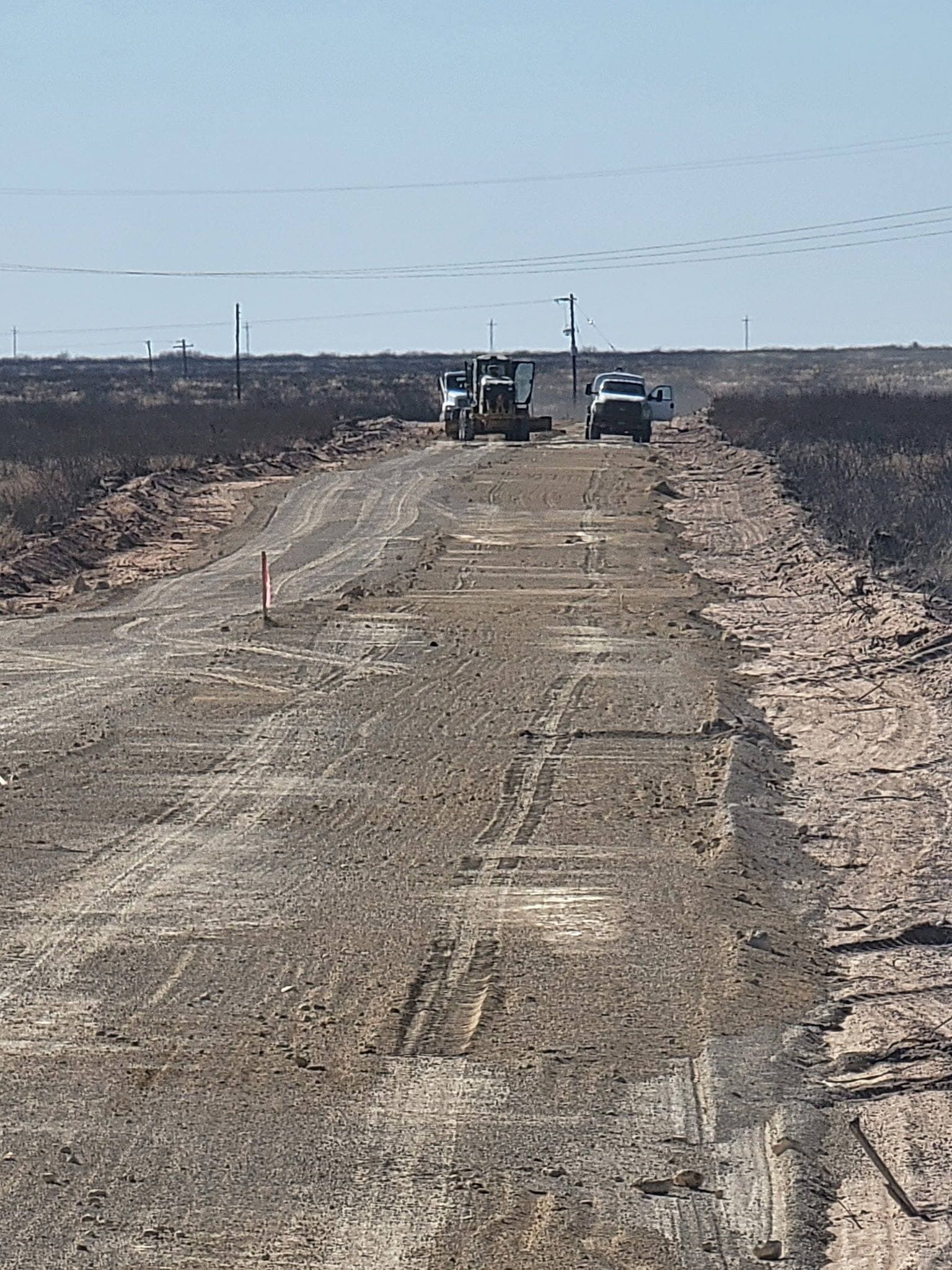
We build lease roads and caliche roads the same way we build a pad: subgrade prepared, caliche or select base placed in compacted lifts, a crown so the road sheds water, ditches where the ground makes water run along it, and culverts at the crossings. For ranch and private caliche roads it is the same build, sized to what actually needs to drive on it.
Guide
Caliche vs Gravel Driveway: Which One Holds Up Out Here
The two materials most Permian Basin driveways get built out of, compared honestly — how each behaves under a loaded trailer, what a hard rain does to it, and what it takes to keep.
Read: Caliche vs Gravel DrivewayMore planning guides
What's Included
- New lease roads and access roads to well pads and tank battery locations
- Caliche roads for ranches, private property and equipment yards
- Subgrade preparation and caliche or select base placed in compacted lifts
- Crown, shoulders and ditching so the road sheds water instead of holding it
- Culverts at draw and ditch crossings, tied into the road section
- Rebuilding and re-crowning existing roads that rut, pothole or hold water
Why It Matters
- A road built to the same standard as the pad it serves, so a rig move is not stopped by the last mile
- Caliche compacted in lifts binds and carries loaded trucks instead of dishing out into ruts
- A crown and ditches that move water off the road, which is what keeps it from becoming a repair job after the first wet week
- Our own scrapers, dozers, graders, rollers and water trucks, so the start date is a scheduling decision
Our Process
Get the spec and walk the route
Road width, section and the heaviest load come from the operator or owner. We walk the route for draws, soft ground and where the road leaves the county road, and tell you what the ground is going to do before we price it.
Strip and prepare subgrade
Topsoil comes off and is stockpiled, soft spots are dealt with, and the subgrade is shaped and compacted so the base has something solid to sit on.
Base in compacted lifts
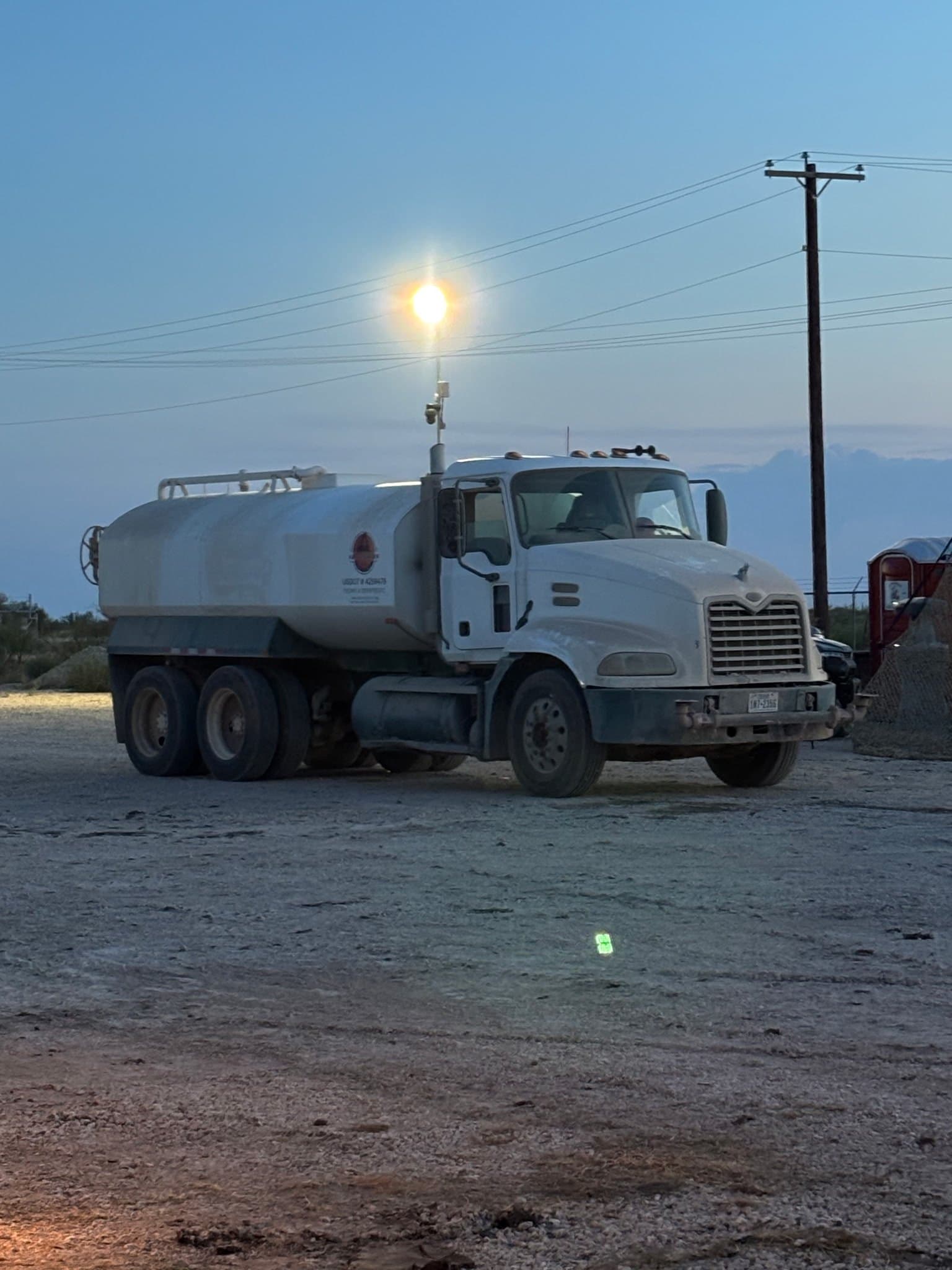
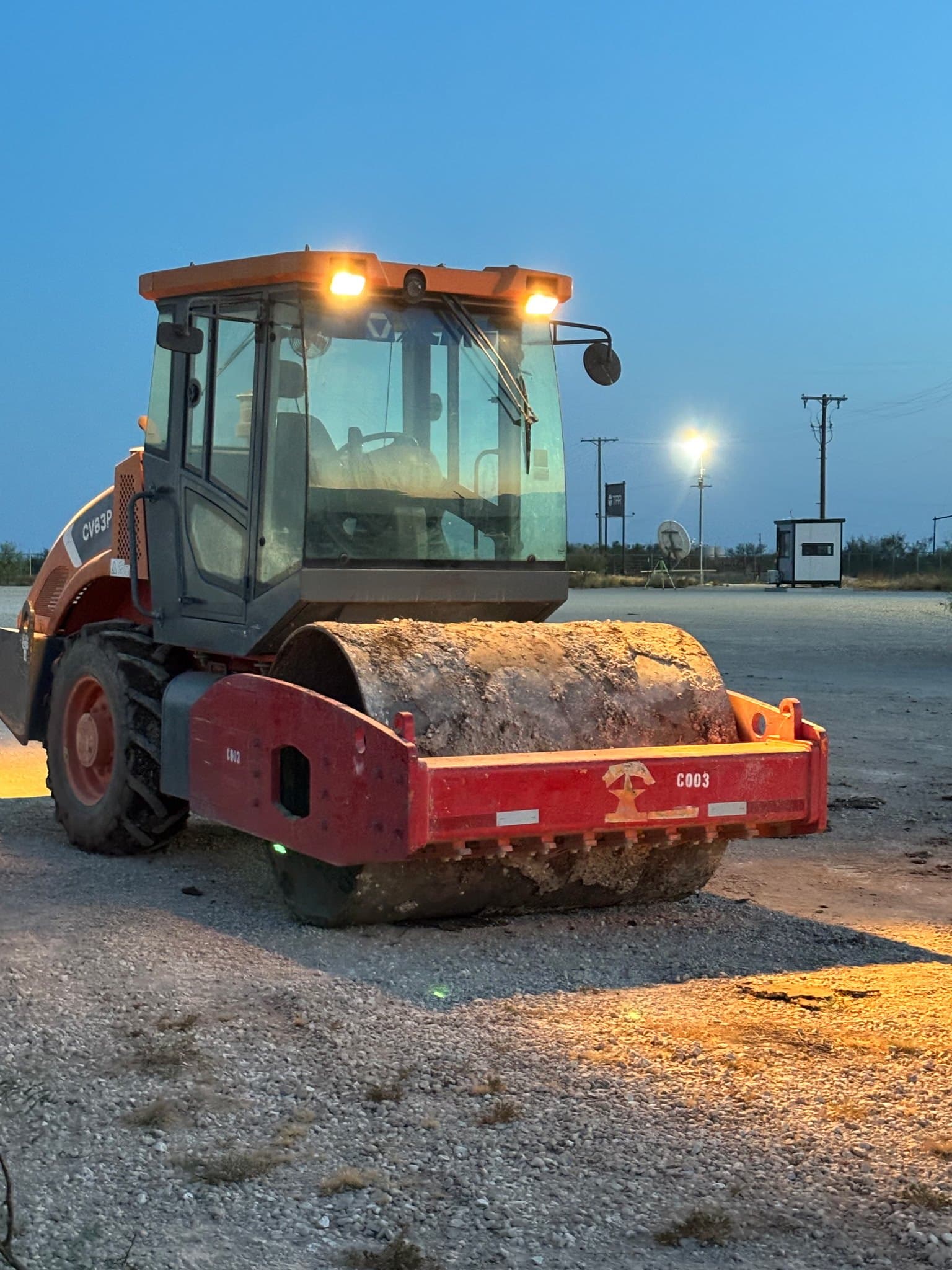
Caliche or select base goes down in lifts, moisture-conditioned with water trucks and rolled with padfoot and smooth drum rollers, so the whole section carries weight as one piece.
Crown, ditch and culvert
The motor grader sets the crown and shoulders, ditches go in where water would otherwise run down the road, and culverts go in at the crossings.
Lease Road & Caliche Road Construction Gallery

Frequently Asked Questions
Do you build the lease road and the pad together?
Yes, and we would rather build both. The road and the pad are one system: the pad is only as useful as the heaviest load that can reach it, and roads built to a lower standard than the pad they serve are the most common thing we get called back to fix.
How wide and how thick should a lease road be?
That comes from the operator's spec, and it changes with the location and the traffic. We build to the spec you send and do not substitute our own. If no spec comes with the bid request, that is the first thing we ask for.
Why does my caliche road keep rutting and holding water?
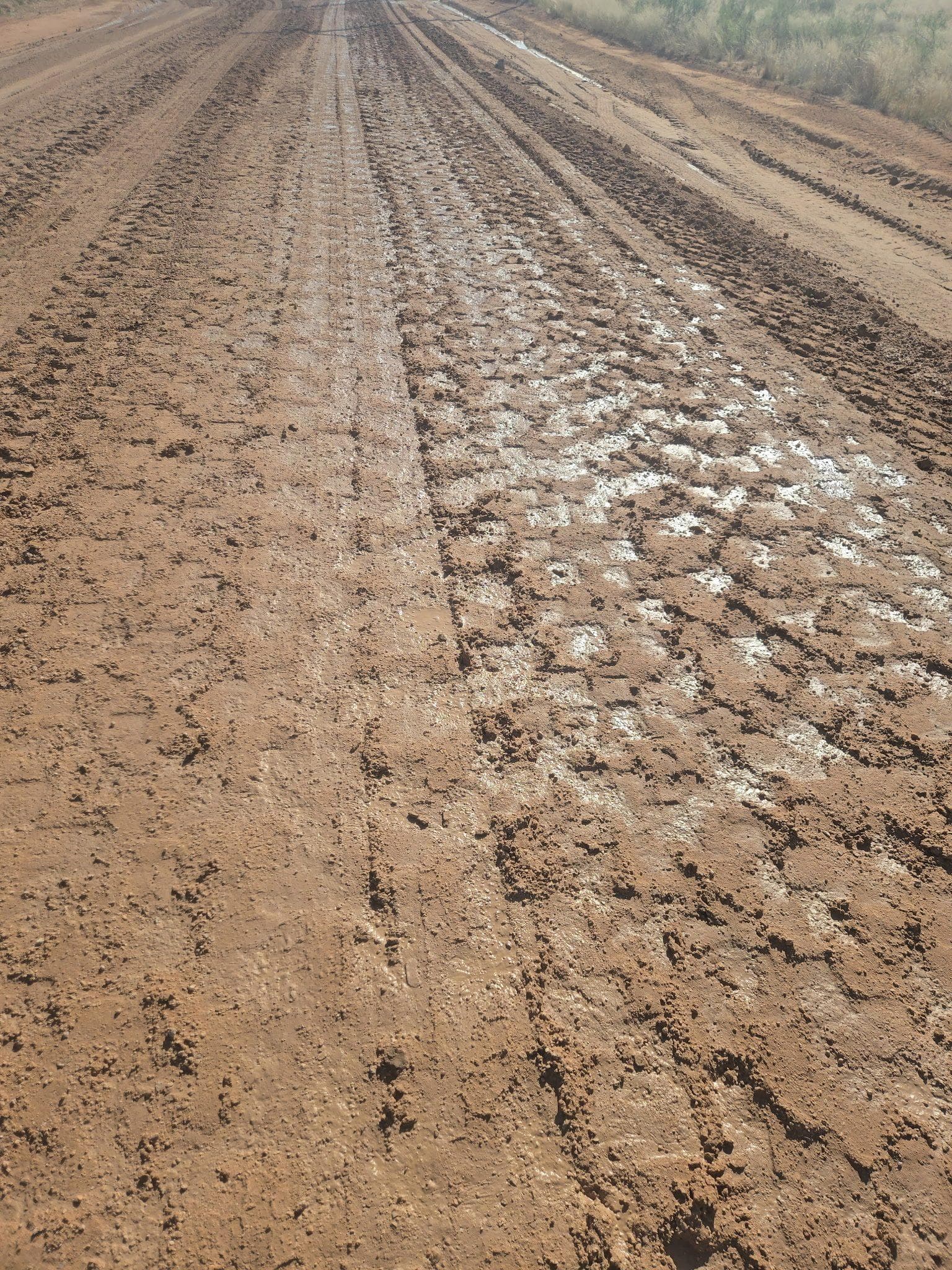
Almost always the crown and the ditches, not the caliche. A road that was bladed flat traps water on the surface, and water on the surface is where the soft spots and potholes start. Re-crowning, ditching and adding base where it has thinned usually fixes it without starting over.
Can you build a road over sandy ground?
Yes. Sand does not hold compaction on its own, so the road gets imported caliche or select base placed and compacted over a prepared subgrade rather than built out of what is there. It costs more than a road on good native caliche, and far less than a road that ruts out under the first loaded truck.
Do you handle the permits for a lease road?
No. The operator, their surveyor and the regulators own the permitting and the staking. Where the road comes off a county road or a state highway, the approach goes through the county Road & Bridge or TxDOT; we can tell you which one applies and build the approach and culvert to what they require.
Where We Provide Lease Road & Caliche Road Construction
Lease Road & Caliche Road Construction across Midland, Odessa and the surrounding Permian Basin towns — one page covers them all.
Everything else we do in our home county is on one page: excavation contractor in Midland, TX.
Related Services
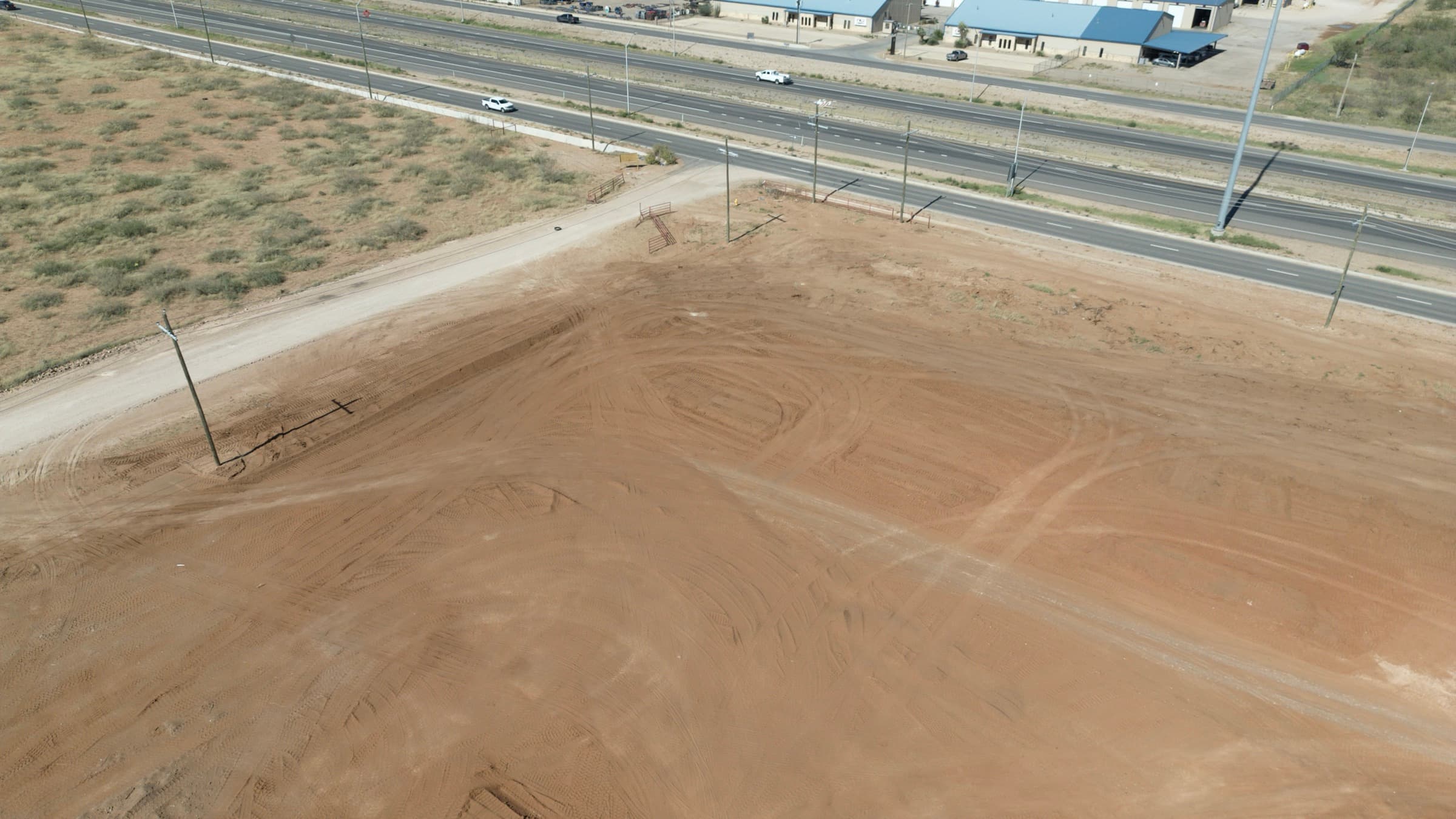
Site & Pad Construction
Site prep and pad construction that gets the ground ready to build.
Learn more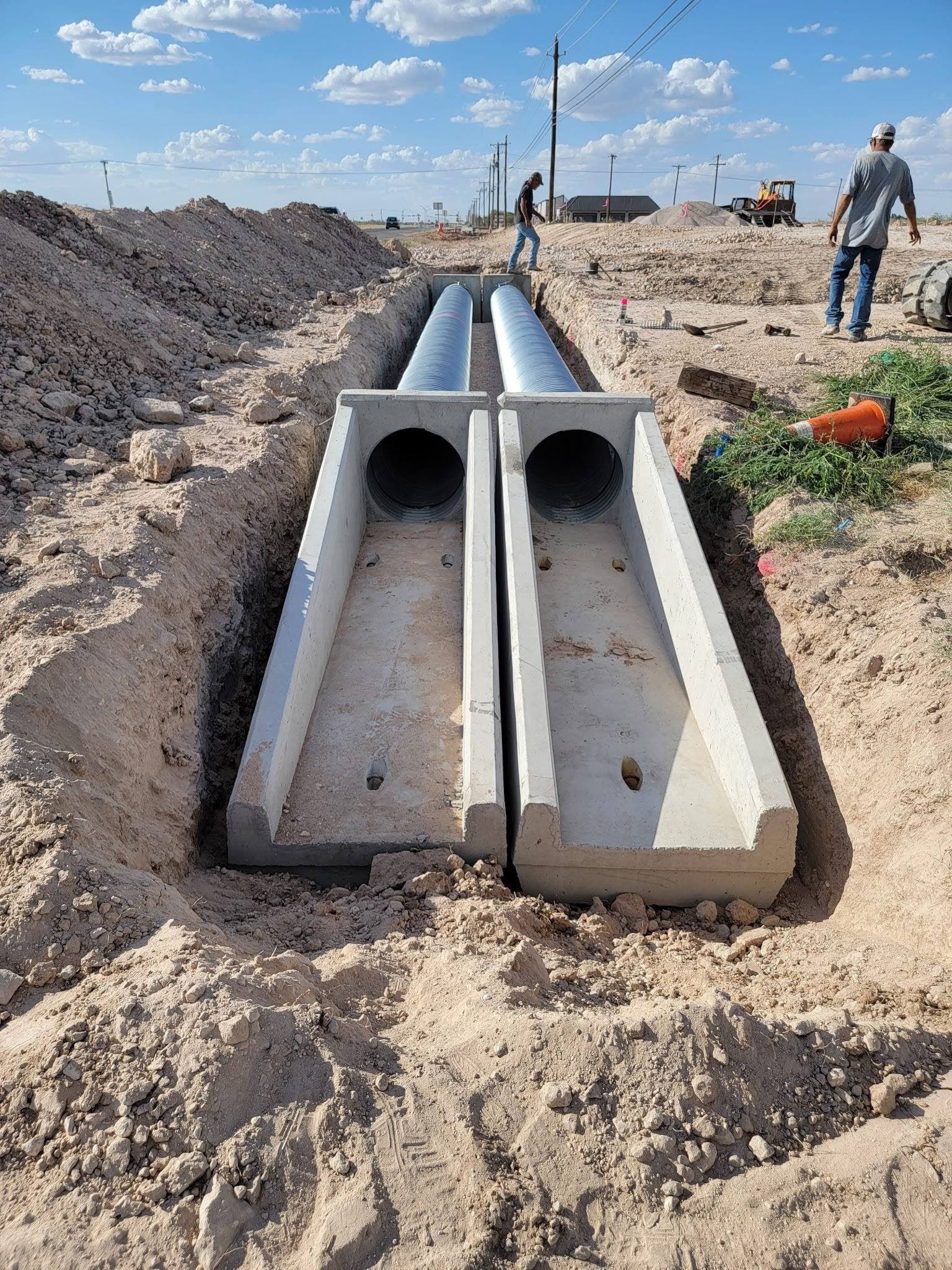
Culvert Installation
Culverts sized and set to actually carry the water, not just look installed.
Learn more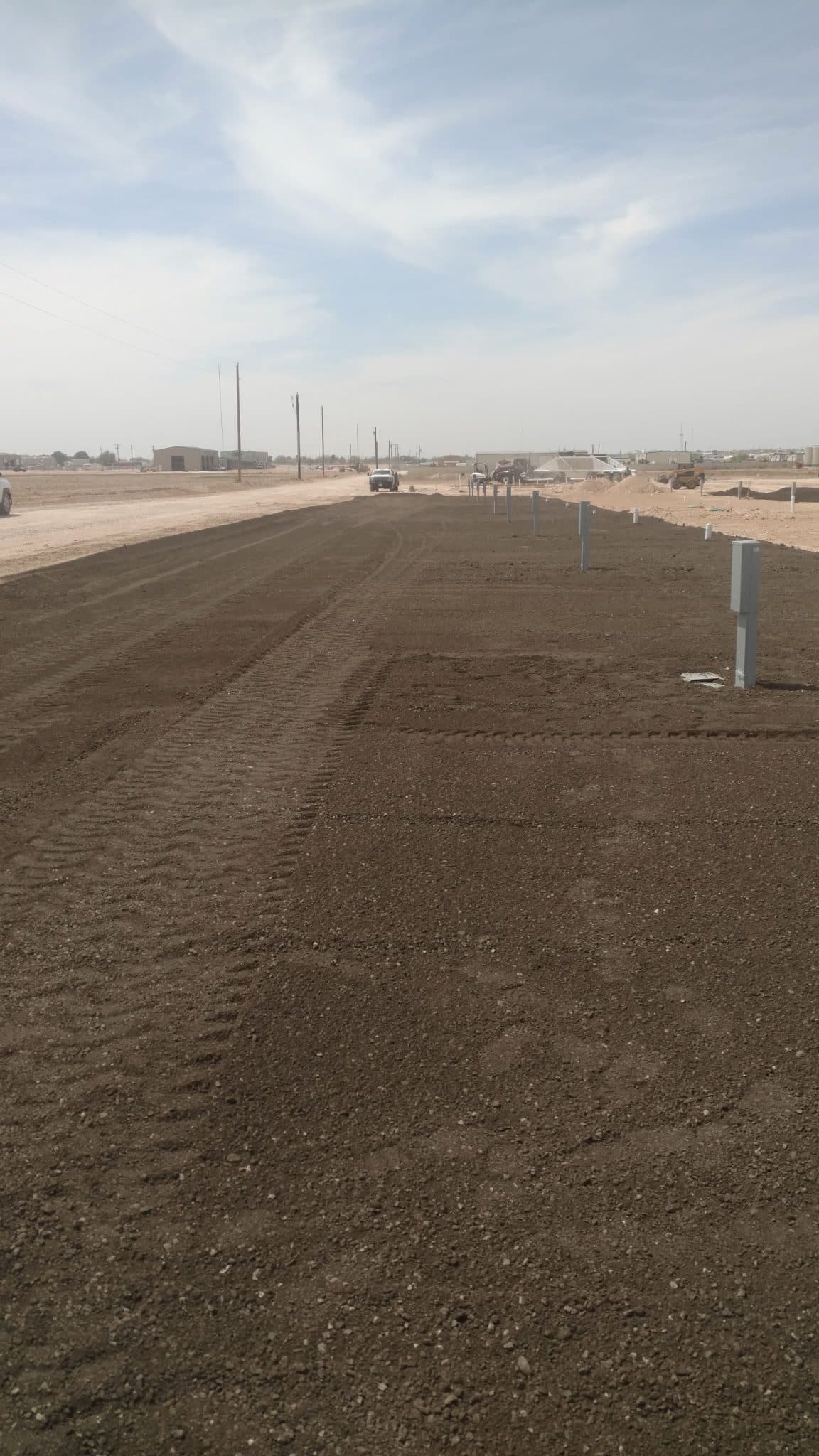
Ranch Development
Ranch roads, pads, and infrastructure built to work as hard as you do.
Learn more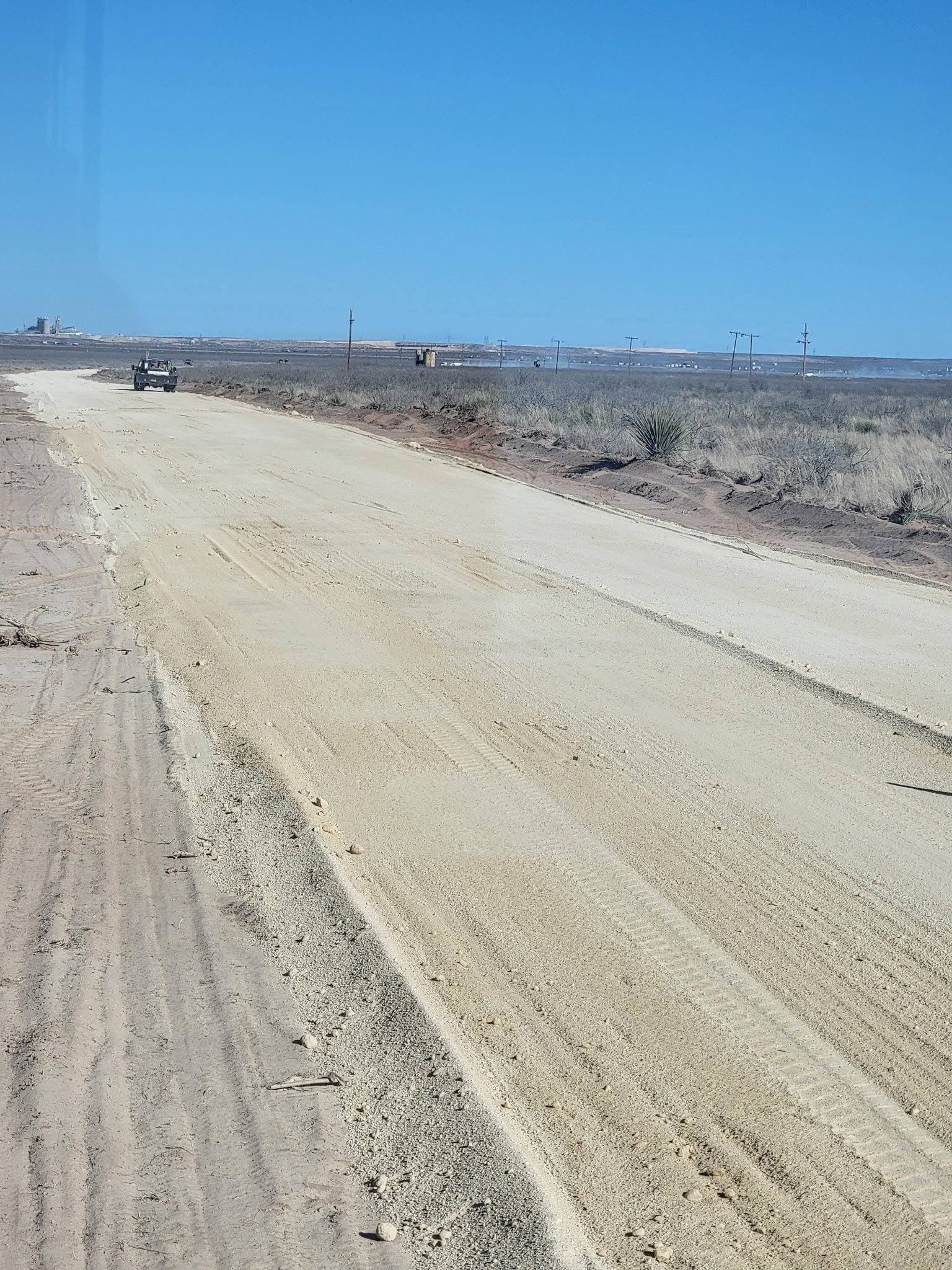
Driveway Installation
A driveway that drains right and holds up, not just a scraped-flat path.
Learn moreReady for lease road & caliche road construction on your property?
Contact Us Directly
Prefer to call or email instead of filling out the form? Reach us directly:
Phone
(575) 973-8523Hours
- Monday – SundayOpen 24 hours — call anytime
Service Area
Midland, TX & the Permian Basin