Guide
Well Pad Construction: Building From the Cut vs Hauling Caliche In
Every well pad out here gets built one of two ways: balanced on the location itself, or built up out of material hauled in. The ground picks, not the budget — and knowing which one your location is before the bid goes in changes the number more than anything else on the job.
A well pad looks like the simplest thing we build. It is a flat rectangle of dirt. But it has to sit dead level under a rig that weighs what a rig weighs, stay level through a wet spring, drain away from the cellar instead of into it, and be reachable by a truck hauling the heaviest single load that will ever come down that road. Get any of those wrong and the cost does not show up on our invoice — it shows up as a rig waiting.
The first real decision on any location is whether the pad can be built out of what is already there or whether material has to be hauled in. That is not a preference and it is not a budget call. It is decided by the ground, the topography and the elevation you have to hold, and it gets answered by walking the location before anybody quotes it. Rangefinder Excavation has built pads, lease roads and tank battery locations across the Permian Basin since 2018, on our own scrapers, dozers and haul trucks.
If you already know what you want built, the site & pad construction page covers scope, process and what a job like it involves instead.
Straight talk: we build it, we do not permit it
We are a dirt contractor. We do not file your permits, we do not run your survey, and we do not set your compaction spec — the operator, the engineer and the surveyor own those, and the regulatory side sits with you and the Railroad Commission. What we do is build the location to what they specify and tell you plainly if something in the plan is going to fight the ground.
We will also tell you when the honest answer costs more. A location that will not compact, or a road that needs real base rather than a blade pass, is going to get paid for either up front or later with a rig sitting on it. We would rather have that conversation standing on the location than write you a low number and come back with a change order.
Head to Head
Balanced on the location
The pad is built out of the location itself. High ground gets cut, the cut becomes the fill, and the finished elevation is set so the dirt balances inside the footprint instead of leaving or arriving on trucks.
Built up from imported material
Subgrade gets prepared in place and the pad is built up in compacted lifts of caliche or select fill hauled in from a pit, because the location cannot supply what the pad needs.
| What you're comparing | Balanced on the location | Built up from imported material |
|---|---|---|
| What decides it | Relief and material. If there is something to cut and the cut compacts, the pad balances — and that is almost always the cheaper pad. | The absence of both. Flat ground, sandy ground, or a required elevation the location cannot reach on its own puts material on trucks. |
| What drives the cost | Yards moved and how far they move. Inside one footprint with scrapers, the haul is measured in hundreds of feet, and the number stays predictable. | Yards, plus the pit, plus the road miles between them. Haul distance is usually the single biggest line on an imported pad, and it moves with fuel. |
| Compaction | Native material ripped, moisture-conditioned and rolled in lifts. Whether it makes spec is a soils question, and it gets answered before the bid, not after. | Placed in lifts and rolled the same way. The advantage is a known material — you are not hoping the location gives you something that compacts. |
| Weather exposure | Lower. Fewer truck miles, fewer chances for a wet week to strand loads, and the whole job stays inside a footprint you can work. | Higher. A wet pit road stops delivery even when the location itself is fine, and a partly built pad is the worst thing to leave sitting. |
| Rig-move readiness | Same standard either way — the pad and the road both have to carry the heaviest single load coming in, and the road is what usually fails first. | Same standard. An imported pad on a road that was never built up is a good pad nobody can reach. |
| Reclamation later | Simpler. The material came off the location, so restoring contour is mostly putting it back where it was and respreading the topsoil that was stripped and stockpiled. | More involved. Imported material either stays, gets reworked into the restored contour, or comes back off — and that is a conversation worth having at build time, not at plugging time. |
Where Each One Is the Right Call
Reach for balanced on the location when
- Locations with enough relief to cut from — a rise, a shoulder, ground that is not already dead flat
- Ground where the native material compacts to spec once it is ripped, moisture-conditioned and rolled
- Sites far enough from a pit that the haul is what would drive the price
- Schedules where scrapers running a short loop beat trucks running a long one
Reach for built up from imported material when
- Flat ground with nothing to cut, where holding elevation means adding material, not moving it
- Sand, or soft material that will not hold compaction no matter how many passes it gets
- Locations that have to be raised above surrounding grade to stay out of standing water
- Any pad where the operator's spec calls for a surfacing material the site does not have
Strip the topsoil first, and keep it
The first pass on any location is stripping topsoil off the footprint and stockpiling it somewhere it will not be driven over. Two reasons, and only one of them is about reclamation. Topsoil is organic, it holds moisture, and it will not compact — build a pad on top of it and you have built a pad on a sponge that keeps working long after we leave.
The other reason shows up years later. When the location gets restored, that stockpile is what goes back on top, and it is the difference between ground that revegetates and ground that stays a scar. It costs almost nothing to stockpile it correctly on day one and it cannot be recovered once it is buried under the pad.
The pad drains, or the pad fails
A well pad is not truly flat. It is built to a working grade with a deliberate fall so water leaves the surface instead of standing on it, and it is shaped so nothing drains toward the cellar. Standing water on a pad softens the subgrade under load, and soft subgrade under a rig is how a location starts rutting and pumping.
That means the drainage plan gets built into the pad, not added afterward: where the water goes when it comes off, whether the perimeter needs a berm or a diversion above the location to keep upgradient runoff from crossing it, and whether the access road needs a culvert where it crosses a draw. On flat country that seems like overkill right up until a storm sits on it.
The road is half the job and it is usually the half that fails
A pad only matters if the heaviest load coming to it can get there. Lease roads take a beating that no county road design contemplates — loaded rig trucks, water trucks running all day, and traffic that shows up in concentrated bursts rather than spread across a year.
So the road gets built like part of the pad: subgrade prepared, base placed and compacted, crowned so it sheds, ditched where the ground makes water run along it, and culverted at the crossings. Building a good pad at the end of a road that was bladed once is a way to spend real money on something that stops working the first wet week.
Build to the operator's spec, and get the spec first
Pad dimensions, orientation, finished elevation and the compaction standard come from the operator and their engineer, and the location is staked by their surveyor. Different operators specify differently, and the same operator can specify differently for a drilling location than for a production or tank battery location.
What we will not do is guess at it. If a bid comes back to you with a pad size and a compaction standard that nobody sent to the contractor, the number is fiction, and the correction lands on your schedule. Send us the spec and the survey and the bid means something.
What we need to give you a real number
The location staked or the coordinates. The pad dimensions and finished elevation. The compaction and surfacing spec. Access — where the road comes off the county road, how far it runs and what it crosses. And any containment or tank battery work in the same scope, since it changes the earthwork rather than sitting on top of it.
With that we walk it, look at the relief and the material, and tell you whether it balances or whether it hauls. That conversation before the bid is what keeps a change order from showing up in the middle of it.
What Your Ground Changes
The Permian Basin is not one kind of dirt. What is obviously the right call on one side of our service area is the wrong one two counties over, and it is the ground underneath — not the thing sitting on top of it — that decides.
Midland, TX
Midland County
Caliche close to the surface across most of Midland County, which cuts two ways on a location — it is good pad material once it is ripped and compacted, and it is a hard layer that sets how deep a cut can practically go. Plenty of Midland County locations balance on themselves for exactly this reason.
Dirt work in MidlandOdessa, TX
Ector County
Ector County ground runs caliche and sandy loam with a lot of established lease infrastructure already crossing it. The build question here is often less about material than about tying a new location and its road into roads and traffic that already exist without creating a drainage problem for somebody else.
Dirt work in OdessaAndrews, TX
Andrews County
Caliche and sandy loam, generally workable, with good base material close to most locations — which usually keeps haul distances short when a pad does need material brought in. Flat ground means water sits where you leave it, so the fall built into the pad matters more than the relief you have to work with.
Dirt work in AndrewsGoldsmith, TX
Ector County
Old producing field in Ector County with a long history of locations, roads and pipeline crossings on the ground. Existing infrastructure is the constraint as often as the dirt is, and a location here frequently reuses or upgrades an access road rather than starting a new one.
Dirt work in GoldsmithNotrees, TX
Ector County
Sandy country in western Ector County along SH-302, gas and wind ground. Sand is the flag — it moves easily and it does not hold compaction on its own, so locations out here lean toward imported caliche far more often than the county average would suggest.
Dirt work in NotreesMidkiff, TX
Upton County
Upton County ground is rocky in places with caliche ledge close to the surface, and the land falls off toward the draws. Relief means a location can often be balanced; those same draws mean the access road is where the culverts and the erosion work end up.
Dirt work in MidkiffStanton, TX
Martin County
Sandy loam farm ground over caliche across Martin County — easy digging up top with a hard layer underneath. Locations here are often cut into working farm ground, so the topsoil strip and the eventual restoration matter to a landowner who intends to farm it again.
Dirt work in StantonBig Spring, TX
Howard County
Howard County turns rocky quickly and caliche ledge is common, and ground falls off toward the draws east and south of town. Rock changes what a cut costs, and concentrated runoff in those draws is what takes out an access road that was not ditched and culverted.
Dirt work in Big SpringWhat This Looks Like on the Ground
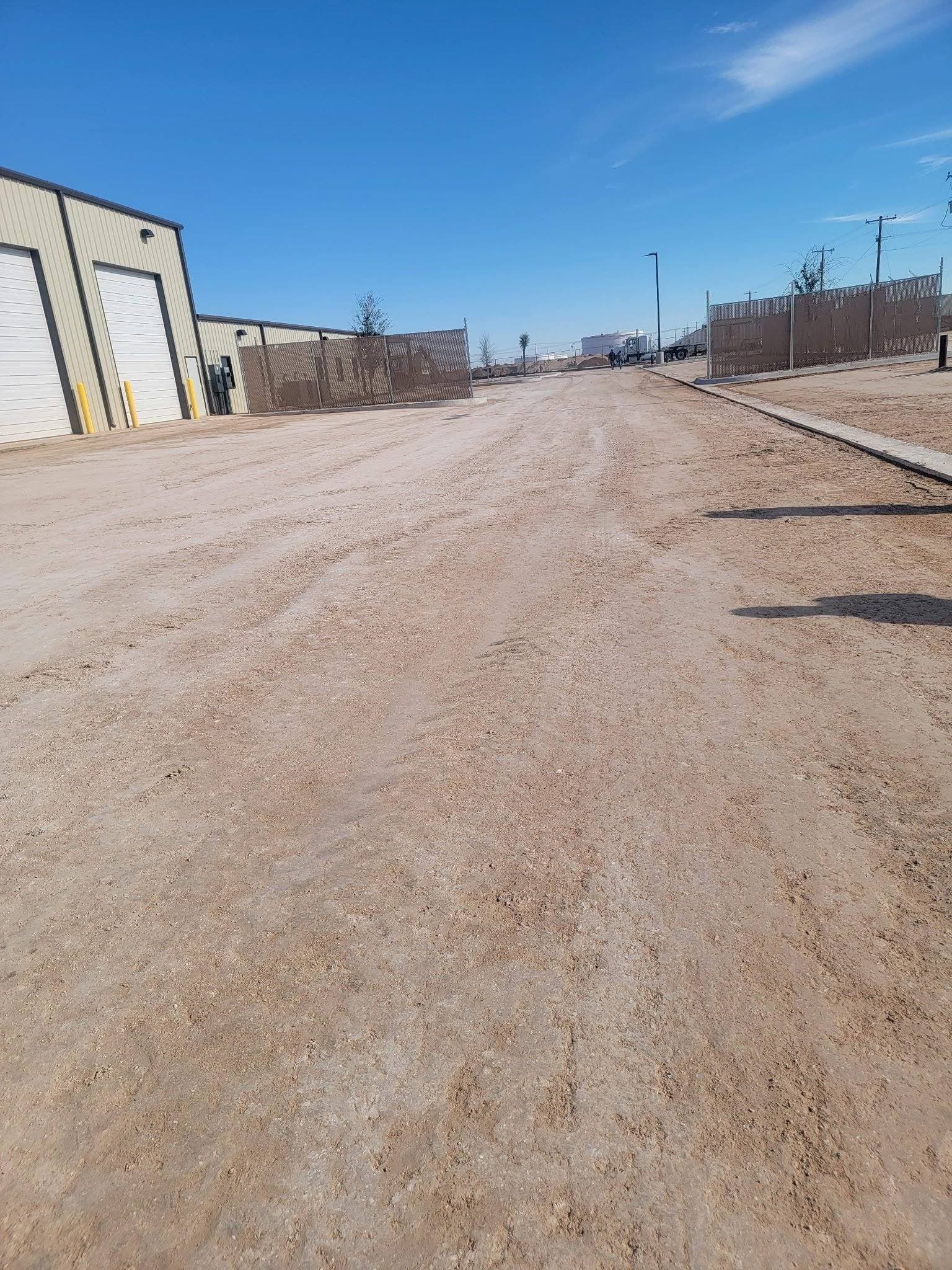
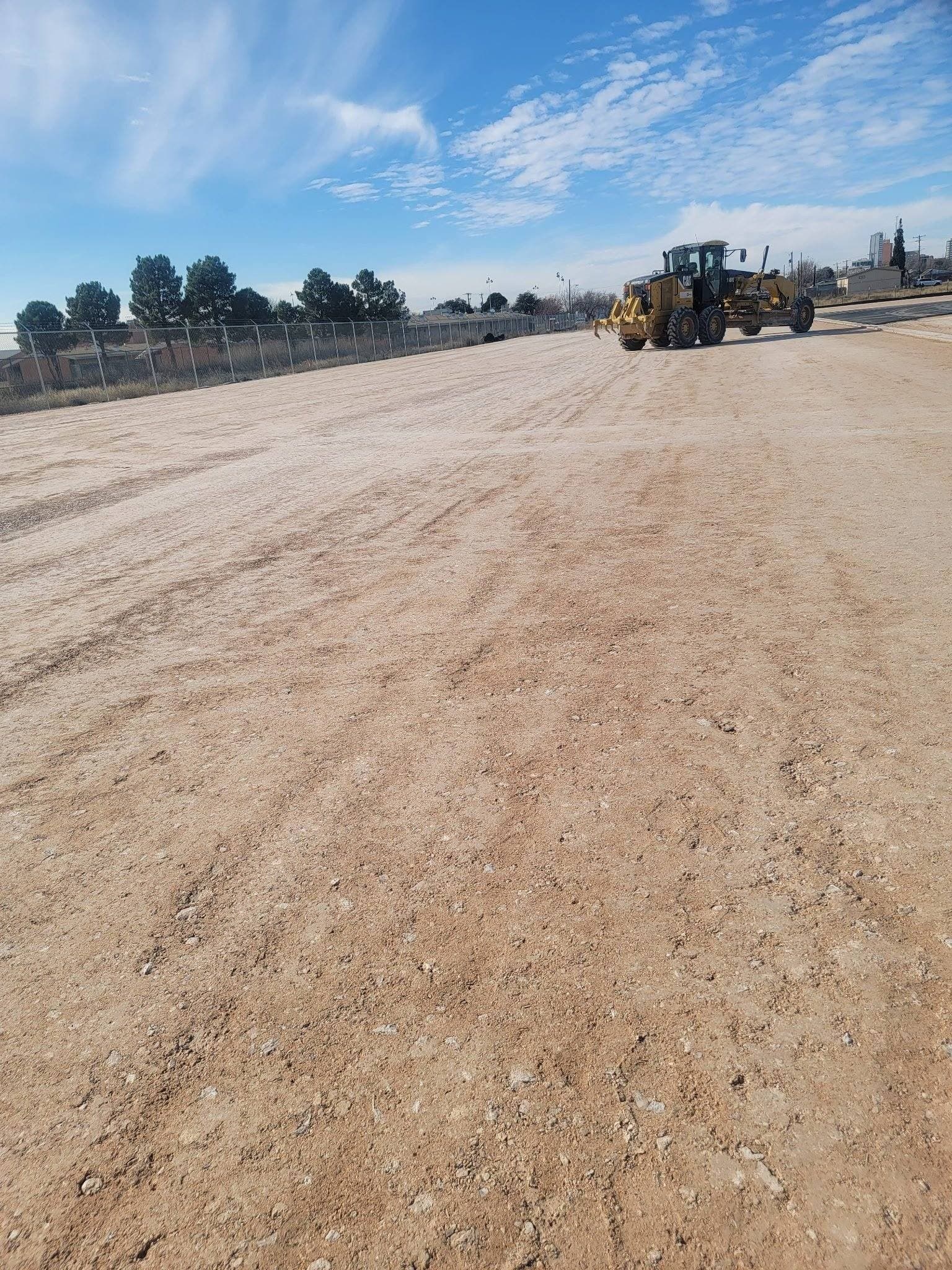
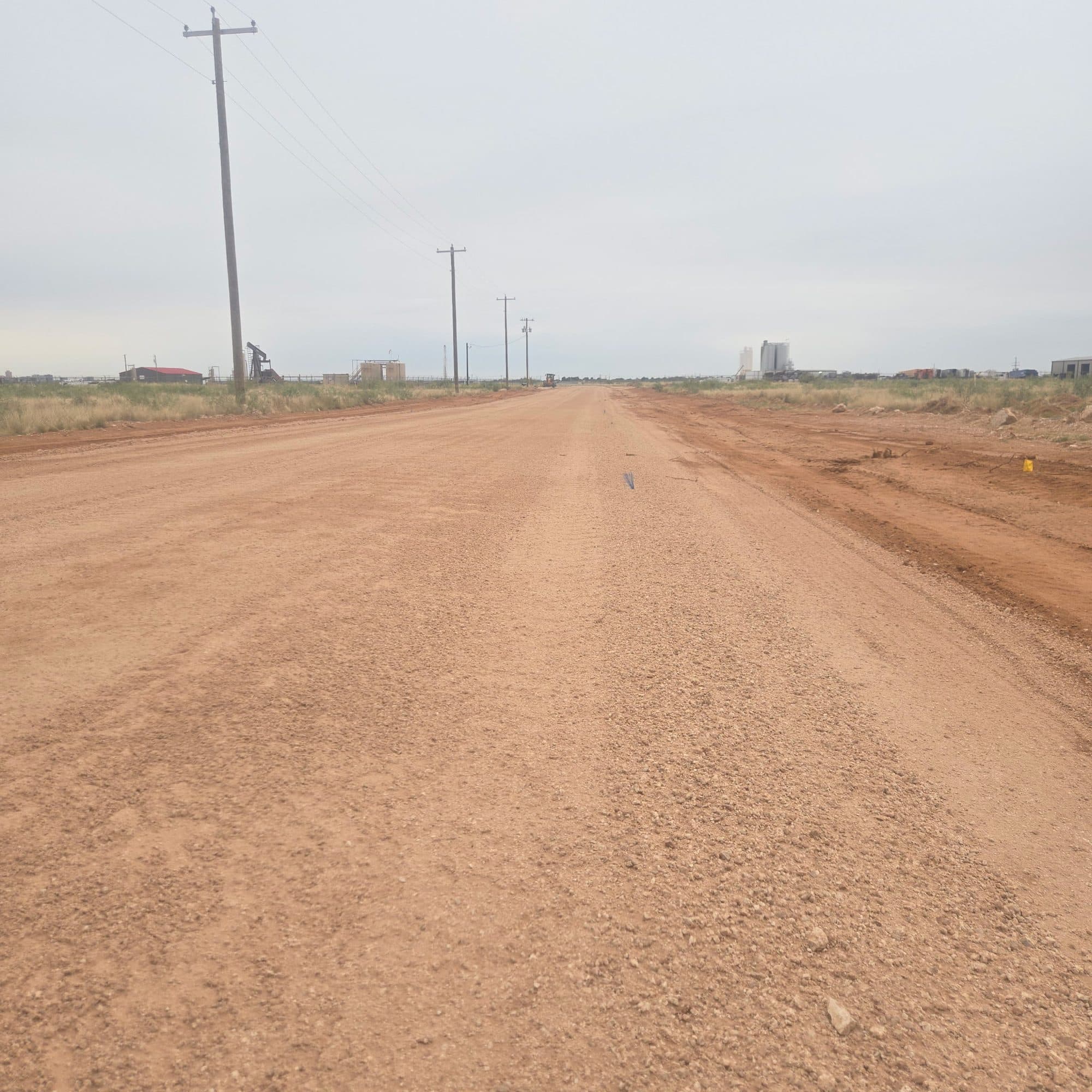
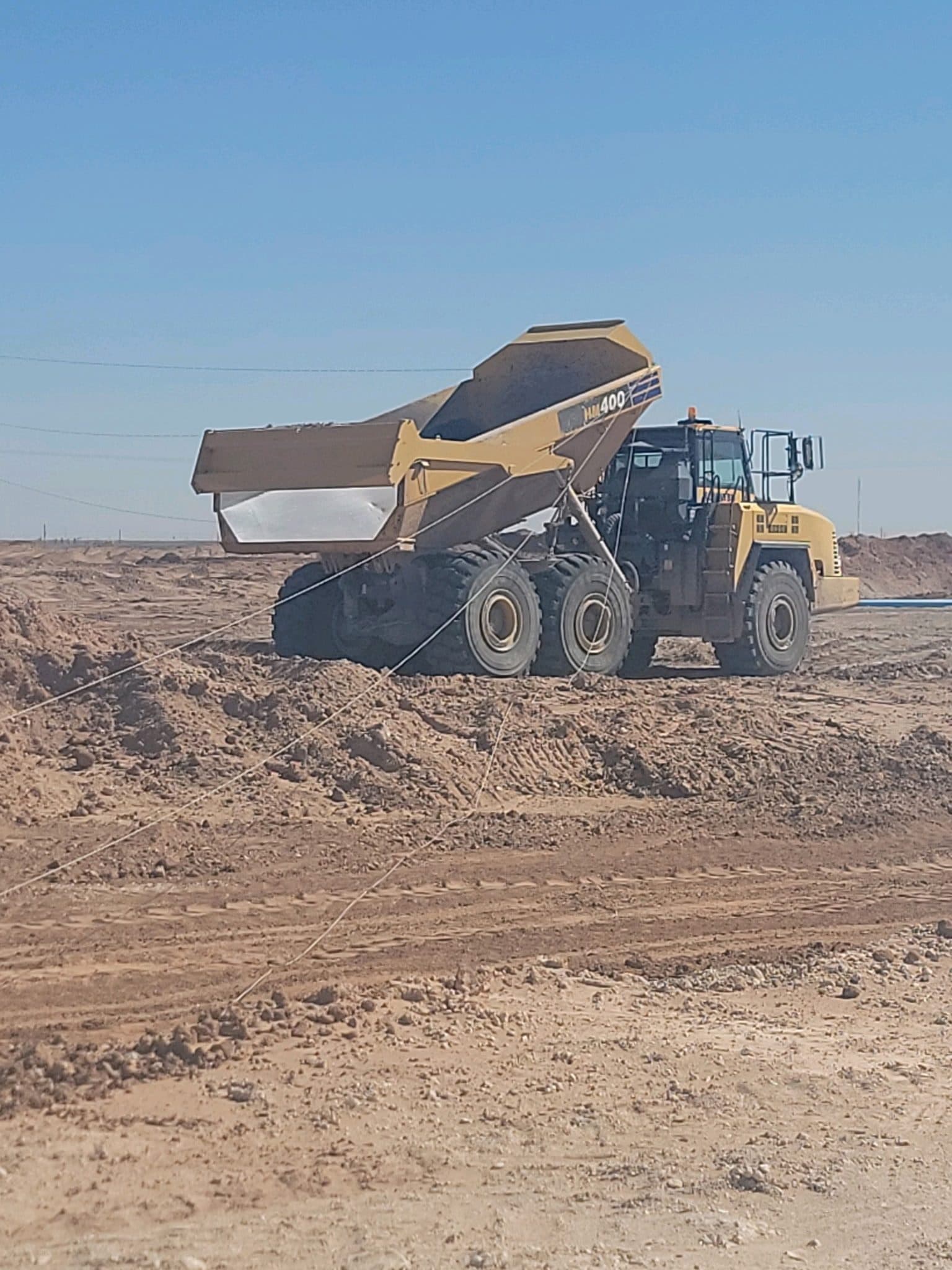
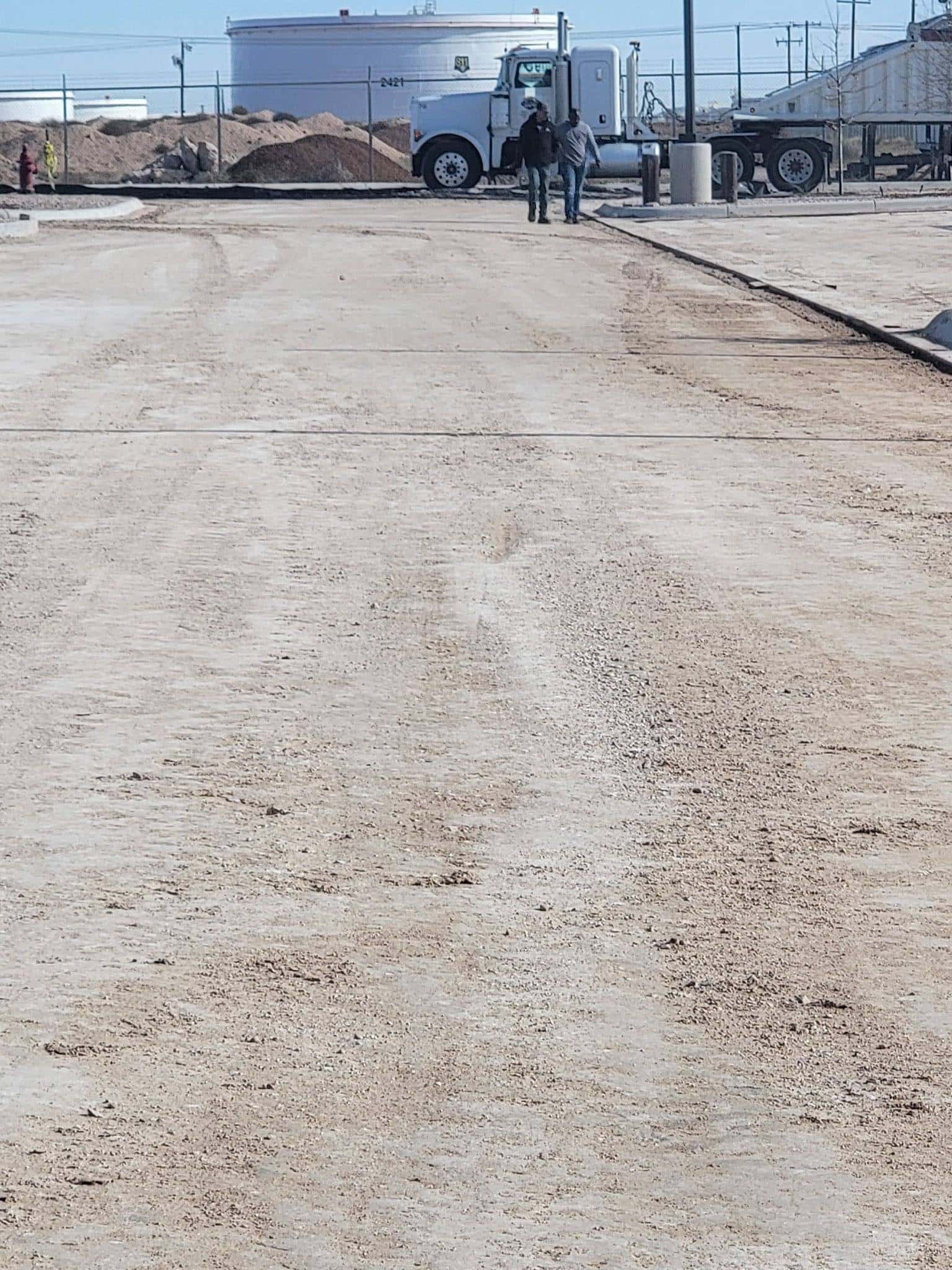
Frequently Asked Questions
How long does it take to build a well pad?
It depends on the size of the location, how much dirt has to move, whether that dirt comes off the site or arrives on trucks, and how far the access road runs. A straightforward balanced location with a short road is a different job from a raised pad fed by a pit twenty miles out. We give a schedule off the staked location and the spec, not off a rule of thumb.
Do you build the lease road too?
Yes, and we would rather build both. The road and the pad are one system — the pad is only as useful as the heaviest load that can reach it, and roads built to a lower standard than the pad they serve are the most common thing we get called back to fix.
What compaction do you build to?
Whatever the operator and their engineer specify. Standards vary by operator and by location type, so we build to the spec you send and we do not substitute our own. If no spec comes with the bid request, that is the first thing we ask for.
Can you build a pad on sandy ground?
Yes, and it usually means importing material. Sand does not hold compaction on its own, so the pad gets built up in lifts of caliche or select fill over a prepared subgrade rather than balanced out of what is there. It costs more than a location that balances, and it costs far less than a pad that rutted out under a rig.
Do you do tank battery pads and containment?
We do. Tank battery locations and containment berms are earthwork with a different set of requirements around them, and they are best scoped with the pad rather than added after, because the grading and drainage have to work together.
What does a well pad cost in the Permian Basin?
There is no flat rate, and a number quoted before anyone has seen the location is a guess. What moves it: pad size and finished elevation, how much material moves and whether it balances or hauls, haul distance if it hauls, the compaction and surfacing spec, how much access road is in the scope, and what the ground turns out to be. We walk it and price it off the location, and the estimate is free.
The Work Behind This Guide
Everything above is one of these services, or the drainage work that keeps it from failing.
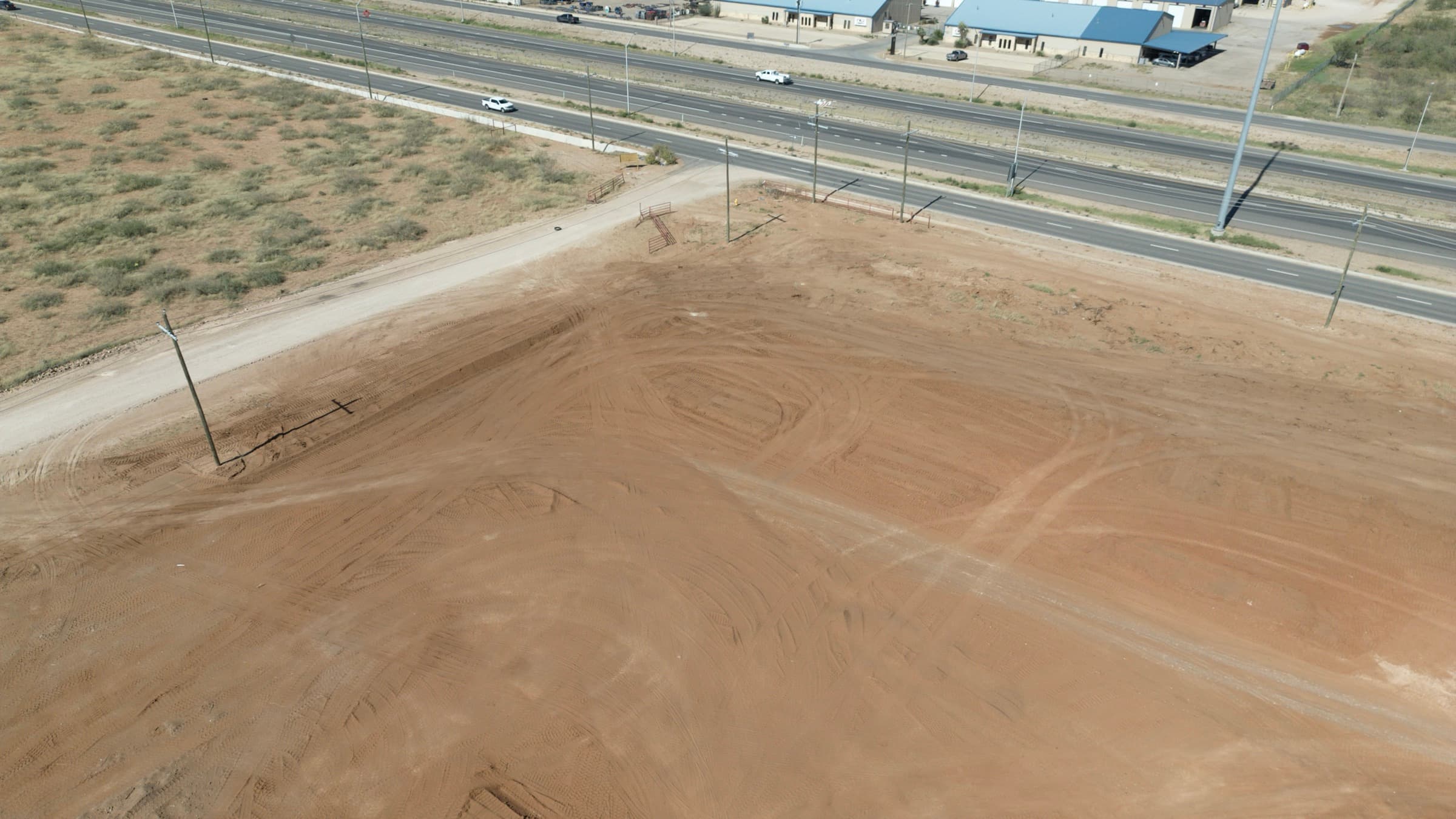
Site & Pad Construction
Site prep and pad construction that gets the ground ready to build.
Learn more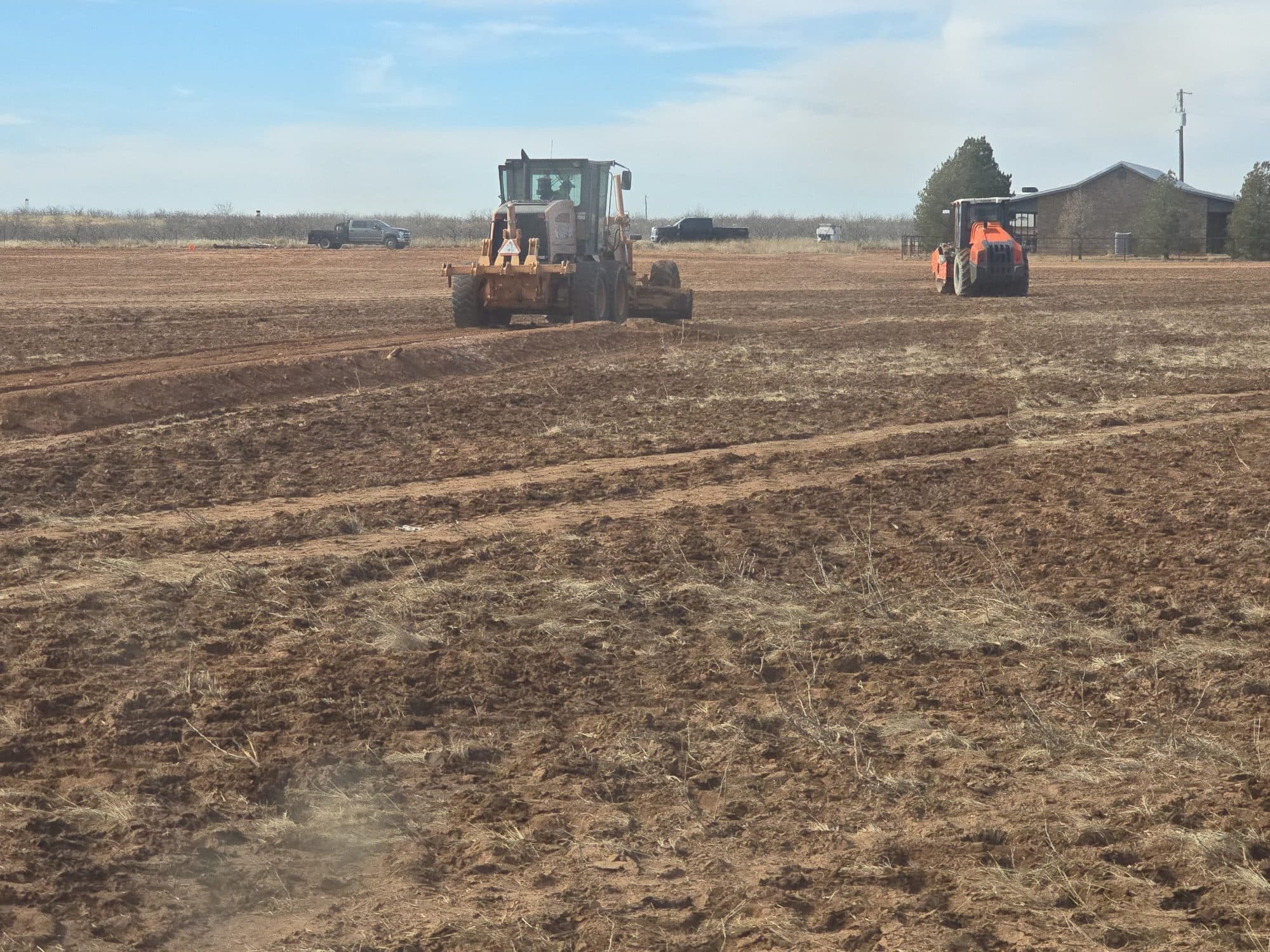
Land Clearing
Clearing brush, mesquite, and cedar to open up land that's worth using.
Learn more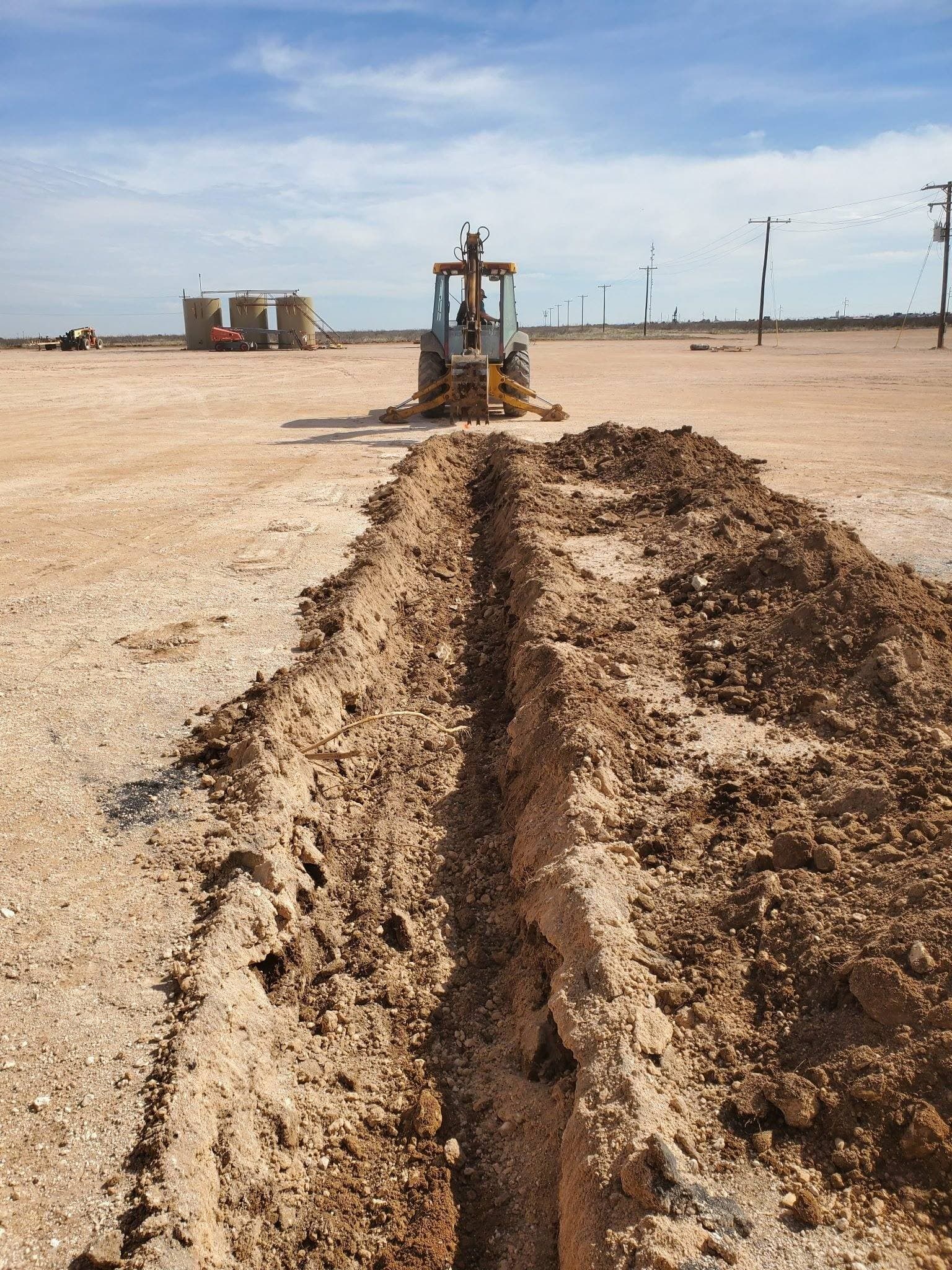
Drainage Solutions
Grading and drainage work that gets water moving where it's supposed to go.
Learn more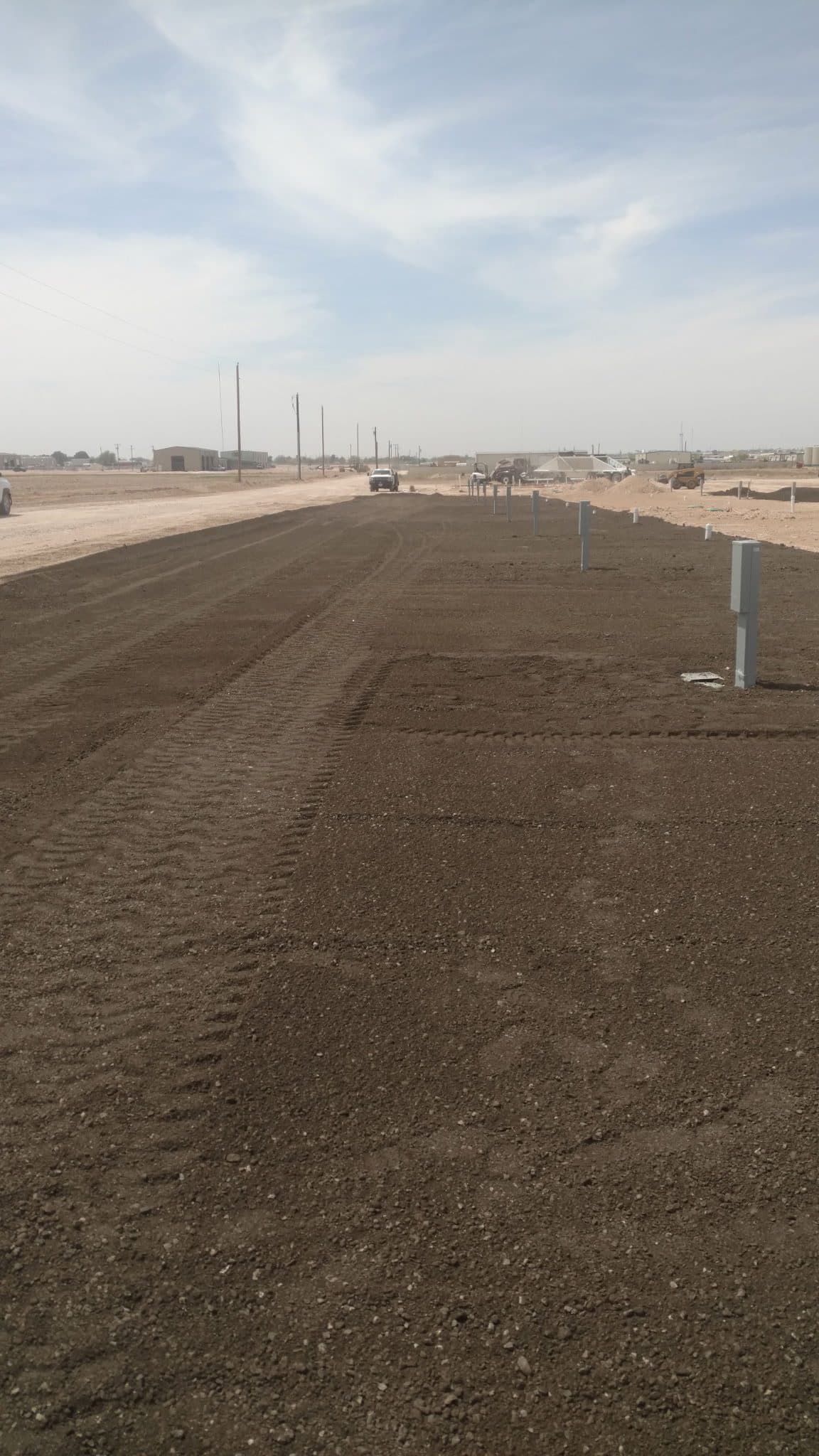
Ranch Development
Ranch roads, pads, and infrastructure built to work as hard as you do.
Learn moreStill not sure which one your ground wants?
Tell us where the gate is and what you are trying to end up with. We will walk it and tell you what we would build, including when the answer is less work than you were expecting.
Contact Us Directly
Prefer to call or email instead of filling out the form? Reach us directly:
Phone
(575) 973-8523Hours
- Monday – SundayOpen 24 hours — call anytime
Service Area
Midland, TX & the Permian Basin