Guide
Caliche vs Gravel Driveway: Which One Holds Up Out Here
The two materials most Permian Basin driveways get built out of, compared honestly — how each behaves under a loaded trailer, what a hard rain does to it, and what it takes to keep.
This is the question we get more than any other on driveways, usually from somebody who has already ruled out asphalt and concrete and wants to know what the two remaining options actually get them. The short version is the same answer we give on the phone: caliche compacts harder and holds up better over time in most Permian Basin soils, which is why we use it on most rural driveways. Gravel works well as a top layer over a caliche base, especially if you want a finished look near the house.
The longer version is below, because the right call depends on what the driveway has to carry, what your ground is made of, and how much attention you want to give it once we leave. Rangefinder Excavation has been building driveways across the Permian Basin since 2018, and most of them end up using both materials in different places for different reasons.
If you already know what you want built, the driveway installation page covers scope, process and what a job like it involves instead.
Straight talk: we do not pour concrete
We build caliche and gravel driveways, we regrade and repair the ones already there, and we build the subgrade and base under paved surfaces. We also scope and manage asphalt with our paving partners. What we do not do is pour concrete driveways.
So if you came here looking for somebody to talk you out of a poured drive, we are not going to do that either. If concrete in front of the house is what you actually want, that is a different contractor and we would rather say so than sell you rock. What we will do is build the base under it correctly, which is the half of that job that decides how long the surface lasts.
Head to Head
Caliche
The pale, hard, calcium-carbonate-cemented material that sits close to the surface across a lot of this country. Placed in compacted lifts it sets up into a bound surface rather than a loose one.
Gravel
Crushed rock screened to a size and hauled in. It stays loose by design — the stones never bind to each other the way caliche fines bind caliche.
| What you're comparing | Caliche | Gravel |
|---|---|---|
| Under load | Compacted in lifts, the fines bind the coarse material and the whole section carries weight as one piece. That is what lets a caliche driveway take a loaded trailer without dishing out ruts. | Loose rock rides on whatever is underneath it. Each stone moves under a tire, so gravel spread on unimproved ground shifts and spreads instead of supporting anything. |
| After a hard rain | Sheds water if it has a crown on it. Where the crown has flattened out or water is trapped against a high shoulder, that is where the soft spots and the potholes show up. | Water drains down through the rock instead of standing on it, so it firms up sooner. The trade is that runoff moving across the surface carries rock with it and puts it in the ditch. |
| Maintenance rhythm | A blade pass on a schedule to pull the crown back and close up the ruts. Fewer, larger interventions rather than constant attention. | Topping up. Rock migrates to the edges, drops into the low spots, and gets pressed down into whatever is beneath it under traffic, so the surface thins over time. |
| Dust | The fines that make caliche compact are also what makes it dusty in dry weather, and dry weather is most of the year out here. | Washed rock throws far less dust off the surface itself, which is the main reason people want it in front of a house. |
| How it looks | Pale and chalky, and it reads as part of the landscape because it usually came out of it. Looks like a ranch road, because it is one. | Darker, with a defined edge and a size and color you can actually pick. It reads as a built driveway rather than a graded path. |
Where Each One Is the Right Call
Reach for caliche when
- Long rural driveways and ranch entrances that have to carry loaded trucks and trailers end to end
- Ground where caliche is already the native material and the haul is short
- Working entrances — shop approaches, equipment yards, gate roads — that get a blade pass on a schedule
- The base course under any driveway, including the ones that get finished in gravel
Reach for gravel when
- The last stretch near the house, over a compacted caliche base, where you want a defined edge
- Parking aprons and turnarounds that get walked on as much as driven on
- Cutting down on what gets tracked onto a porch or into a shop
- A finished look on a driveway that already has a real base under it
The build matters more than the material
The material argument gets most of the attention and the build gets almost none, which is backwards. A gravel driveway over a properly crowned, properly compacted base will outlast a caliche driveway that got bladed flat in an afternoon. Either way, the sequence is the same: look at the entry point, the existing grade, and where water already wants to go, then plan a driveway that works with the land instead of against it.
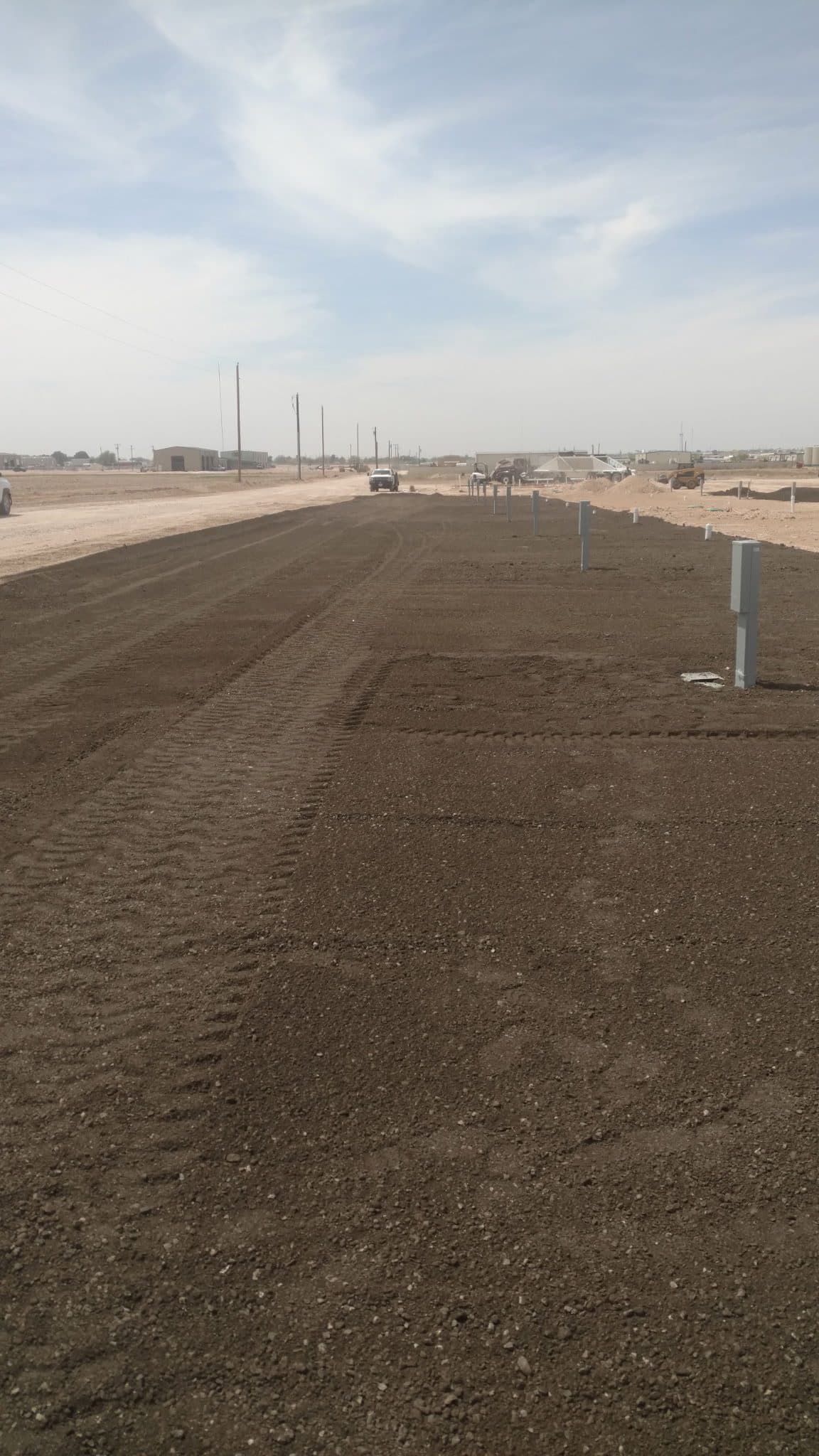
From there we cut and fill to establish the path and a center crown so rain sheds to the sides instead of washing out the middle, place the base material in compacted lifts, put a culvert in at the road crossing where the approach needs one, and finish-shape the surface and the shoulders. A typical rural driveway takes one to a few days depending on length, grade changes, and whether a culvert is involved.
The crown is the part that gets skipped and the part that decides whether you are re-grading every spring. If a driveway is holding water, that is almost never the surface material's fault.
The combination most people end up with
Caliche base the full length, gravel on the last stretch near the house. The caliche carries the weight, the gravel gives you a clean edge, less dust on the porch, and a surface that is drivable sooner after a storm. That is not splitting the difference — it is each material doing the job it is actually good at.
Where a driveway is a working entrance — a ranch gate, a shop approach, an equipment yard — we usually leave it caliche the whole way and blade it on a schedule instead. Rock spread across an entrance that sees loaded trucks all week mostly ends up in the ditch.
What Your Ground Changes
The Permian Basin is not one kind of dirt. What is obviously the right call on one side of our service area is the wrong one two counties over, and it is the ground underneath — not the thing sitting on top of it — that decides.
Midland, TX
Midland County
Caliche sits close to the surface across most of Midland County, and it is good bearing material once it is ripped, shaped and compacted properly. A caliche driveway here is often built largely out of what is already under your feet.
Dirt work in MidlandMonahans, TX
Ward County
Ward County ground is sand — the Monahans Sandhills run right along the north side of town — and sand does not compact the way caliche does. The problem is never standing water; it is a surface that will not hold shape under load without imported base. Spread rock straight onto it and it works its way down into the sand.
Dirt work in MonahansLubbock, TX
Lubbock County
Flat South Plains ground over clay-loam soils, with playa basins that hold water instead of shedding it. Rain arrives in heavy summer thunderstorms and pools on ground with almost no natural fall, so the fall has to be cut in rather than found. Here the crown and the ditch decide more than the surface material does.
Dirt work in LubbockBig Spring, TX
Howard County
Howard County ground turns rocky quickly. Caliche ledge and rock are common, and shallow rock changes both the dig and the price — which is a conversation to have before anybody talks about what goes on top.
Dirt work in Big SpringSnyder, TX
Scurry County
Scurry County mixes caliche, rock and red clay across rolling ground — the kind of tract where the dig changes twice between the gate and the build site. A driveway crossing all three gets walked before we quote a material for it.
Dirt work in SnyderAbilene, TX
Taylor County
Taylor County runs from sandy loam to tight clay with rock ledges, so the same tract can dig three different ways. Clay holds water long after a rain, which turns an unimproved driveway into ruts unless there is base under it and fall away from it.
Dirt work in AbileneWhat This Looks Like on the Ground
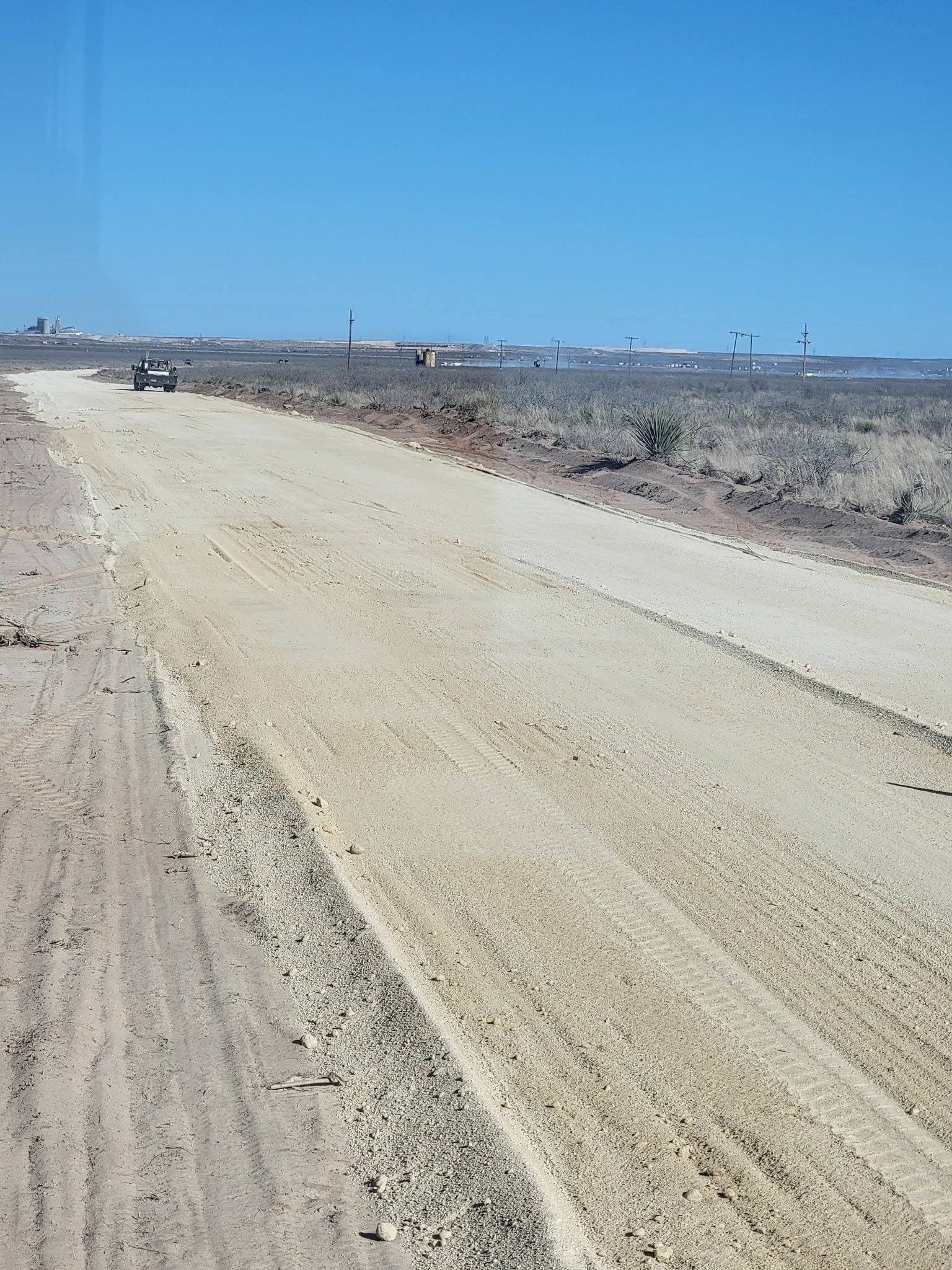
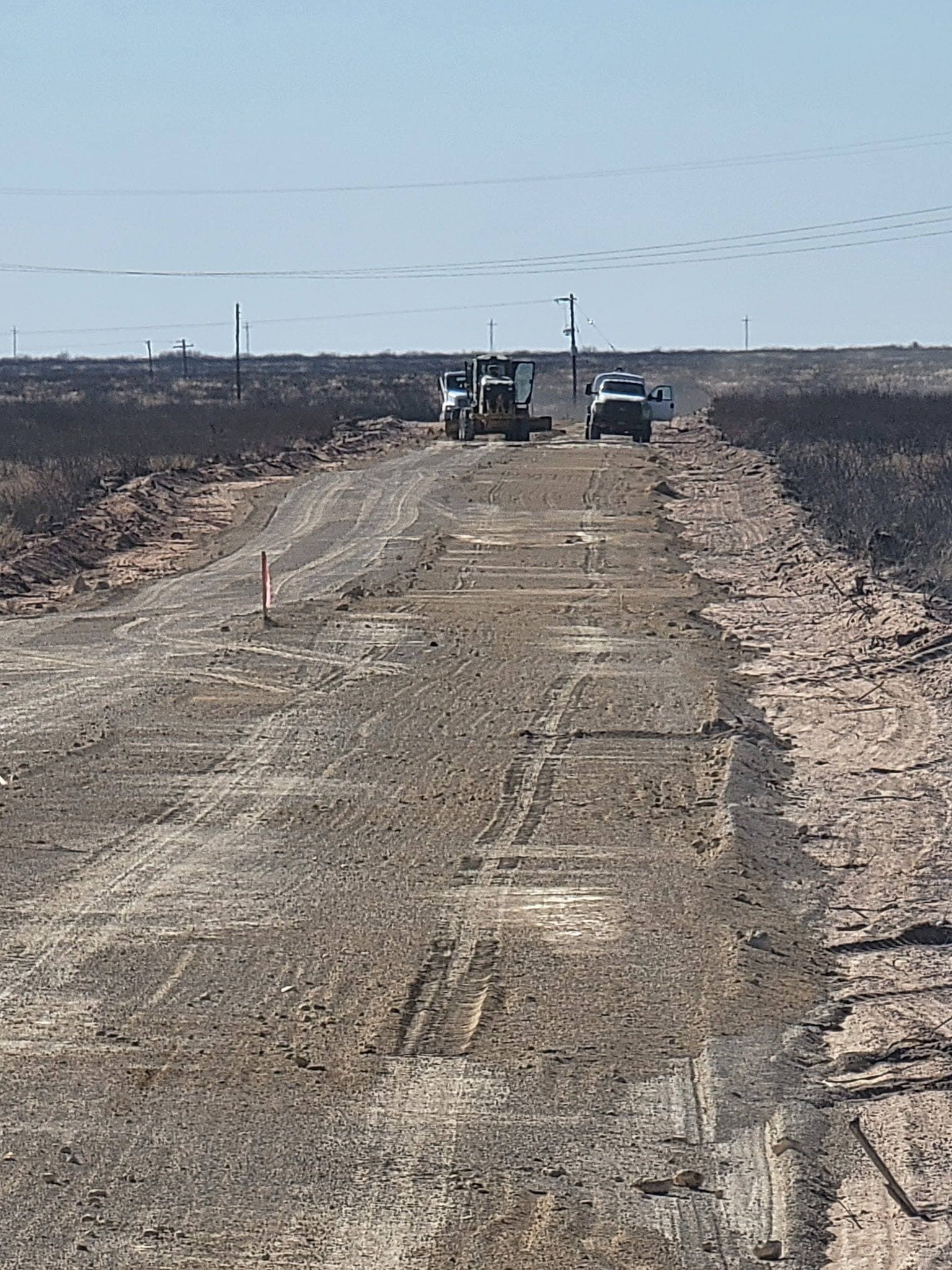
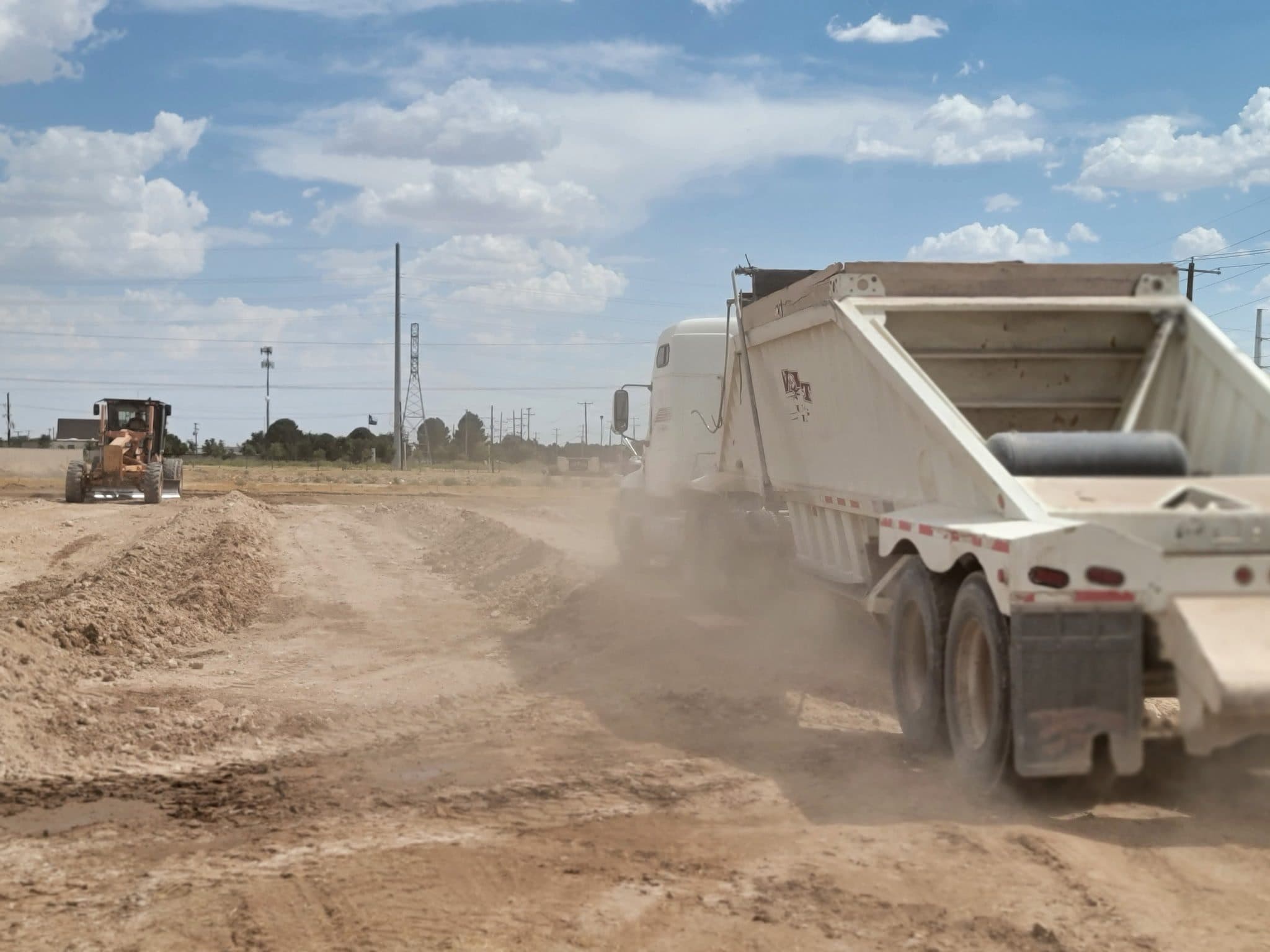
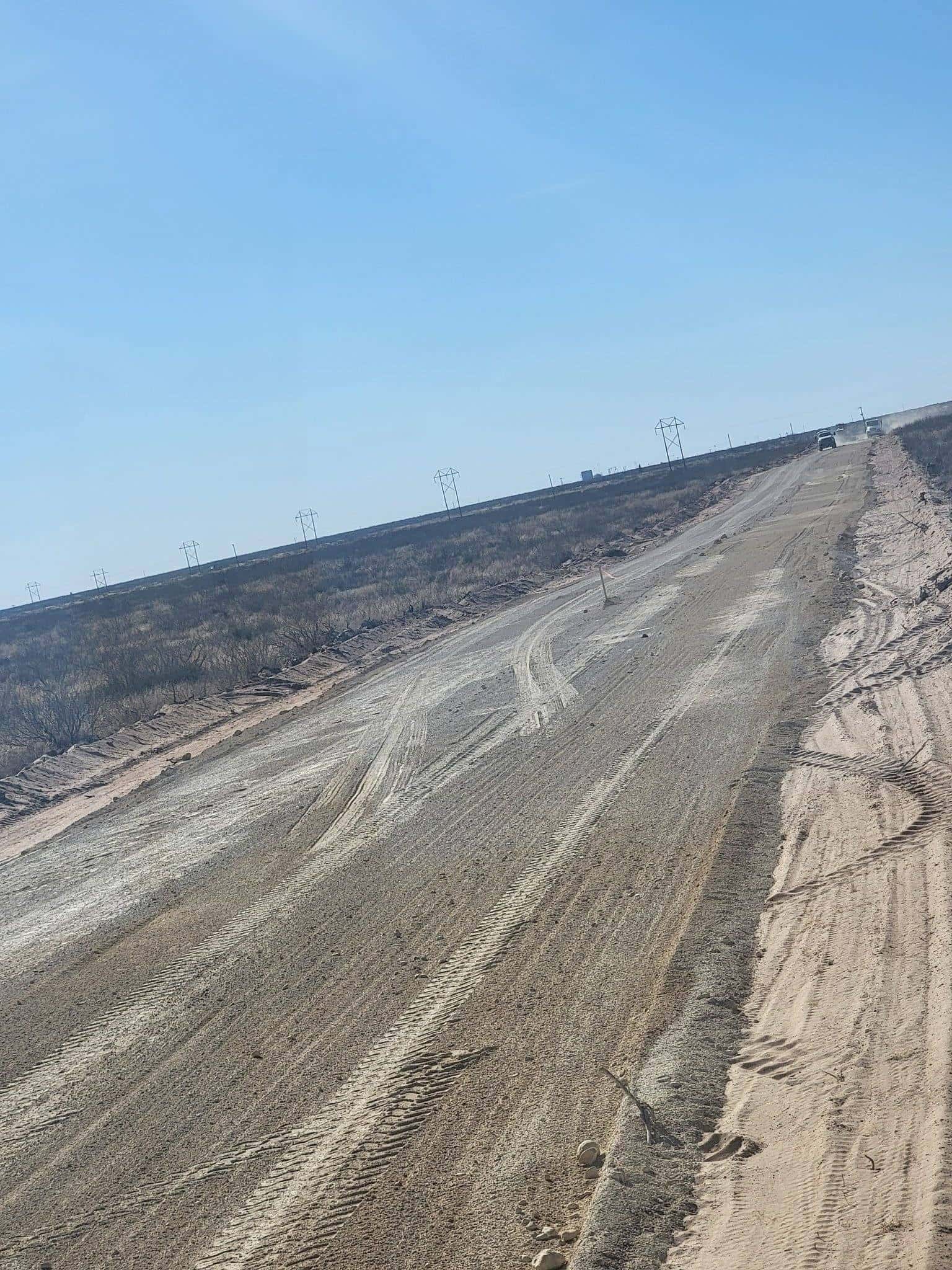
Frequently Asked Questions
Gravel or caliche — which is better for my driveway?
Caliche compacts harder and holds up better over time in most Permian Basin soils, which is why we use it on most rural driveways. Gravel can work well as a top layer over a caliche base, especially if you want a finished look near the house. The two are not really competing: caliche is what most driveways out here should be built on, and gravel is what some of them should be finished with.
Can I put gravel over a caliche driveway I already have?
That is the most common combination we build, and it works as long as the caliche under it is compacted and still holding its crown. If the base is rutted or ponding, spreading rock over the top hides it for a season and then the same ruts come back through. We would rather blade and re-crown the base first, then top it.
How long does a caliche or gravel driveway take to build?
A typical rural driveway takes one to a few days depending on length, grade changes, and whether a culvert is involved. We'll give you a real timeline once we've walked the site.
Do you pave asphalt or pour concrete driveways?
No. We build caliche and gravel driveways and we prep base sections for whoever is doing the paving. If asphalt or concrete is what you actually want in front of the house, we will tell you that straight rather than talking you into rock.
My driveway washes out every time it rains. Is that the material's fault?
Usually, no. Most flooding driveways just need proper crown and ditch work, not a different surface. We'll diagnose where the water's actually coming from before we recommend tearing anything out.
Will caliche hold on sandy ground?
Not if it is spread thin over loose sand. Around Monahans and the Ward County sandhills, sand does not compact the way caliche does, and the failure is a surface that will not hold shape under load rather than one that ponds. Driveways out there get imported base placed and compacted first, and the surface goes on top of that.
The Work Behind This Guide
Everything above is one of these services, or the drainage work that keeps it from failing.
Driveway Installation
A driveway that drains right and holds up, not just a scraped-flat path.
Learn more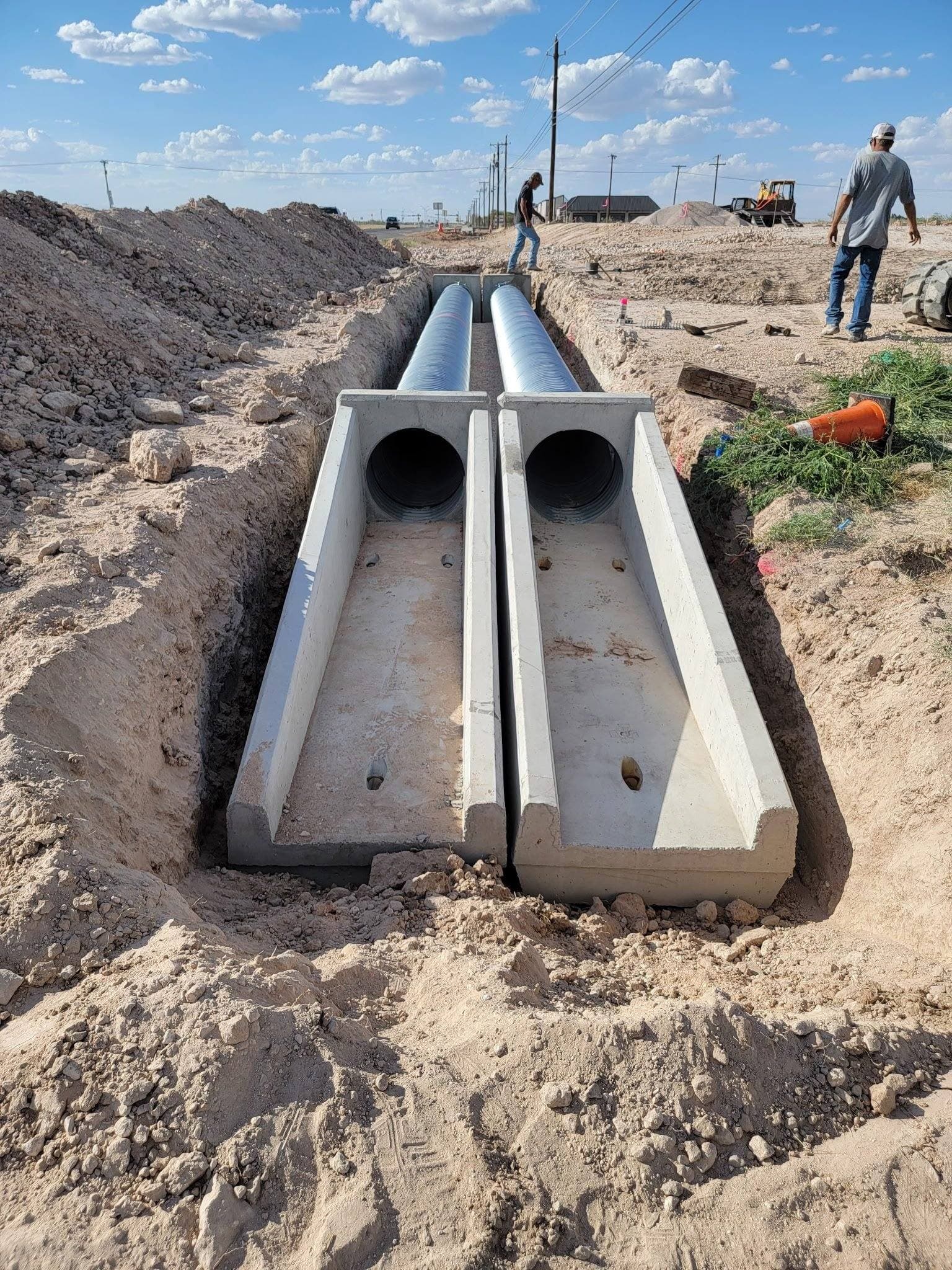
Culvert Installation
Culverts sized and set to actually carry the water, not just look installed.
Learn more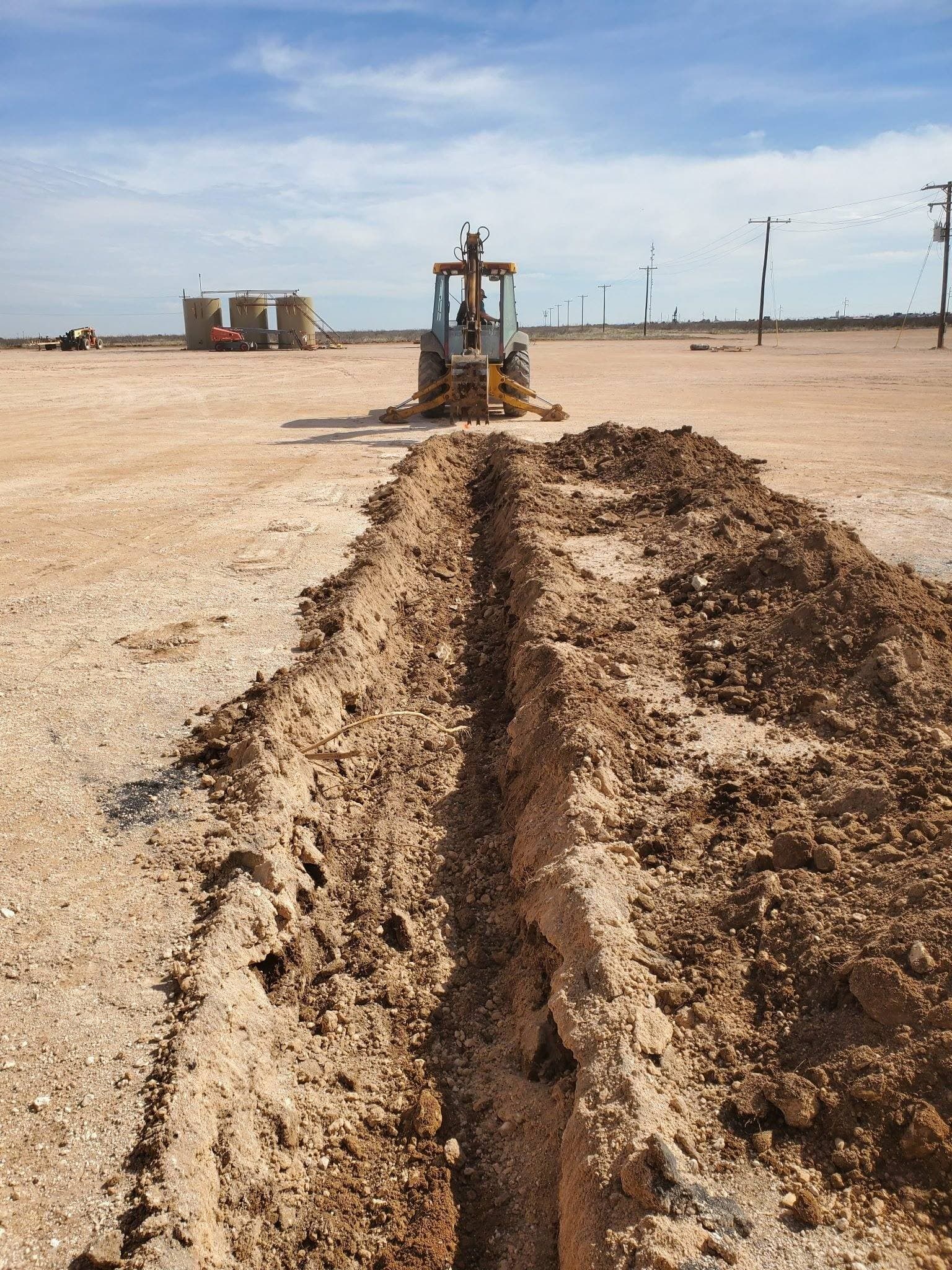
Drainage Solutions
Grading and drainage work that gets water moving where it's supposed to go.
Learn moreRanch Development
Ranch roads, pads, and infrastructure built to work as hard as you do.
Learn moreStill not sure which one your ground wants?
Tell us where the gate is and what you are trying to end up with. We will walk it and tell you what we would build, including when the answer is less work than you were expecting.
Contact Us Directly
Prefer to call or email instead of filling out the form? Reach us directly:
Phone
(575) 973-8523Hours
- Monday – SundayOpen 24 hours — call anytime
Service Area
Midland, TX & the Permian Basin