Guide
Building a Stock Tank: Damming a Draw vs Digging a Pit
Every stock tank in this country is built one of two ways: across a draw to catch what runs, or dug into the ground to hold what you put in it. The watershed above the site picks, and the spillway is what keeps whichever one you build.
A stock tank is one of the few things you can build on a ranch that pays you back every year it holds. It is also one of the easiest to build in the wrong place, because the whole thing depends on something you cannot see standing at the site — how much ground drains to it, and whether the dirt underneath will keep what it catches.
There are two ways to build one. You put a dam across a draw and let the watershed fill it, or you dig a pit and rely on a much smaller catchment, an apron, or hauled and pumped water. Which one you can build is mostly decided for you by the ground. What is not decided for you is whether the spillway, the depth and the core are done right, and that is the difference between a tank that is still holding in twenty years and a pile of dirt across a gully. Rangefinder Excavation builds tanks, dirt tanks and ranch ponds across the Permian Basin on our own dozers, scrapers and excavators.
If you already know what you want built, the pond construction page covers scope, process and what a job like it involves instead.
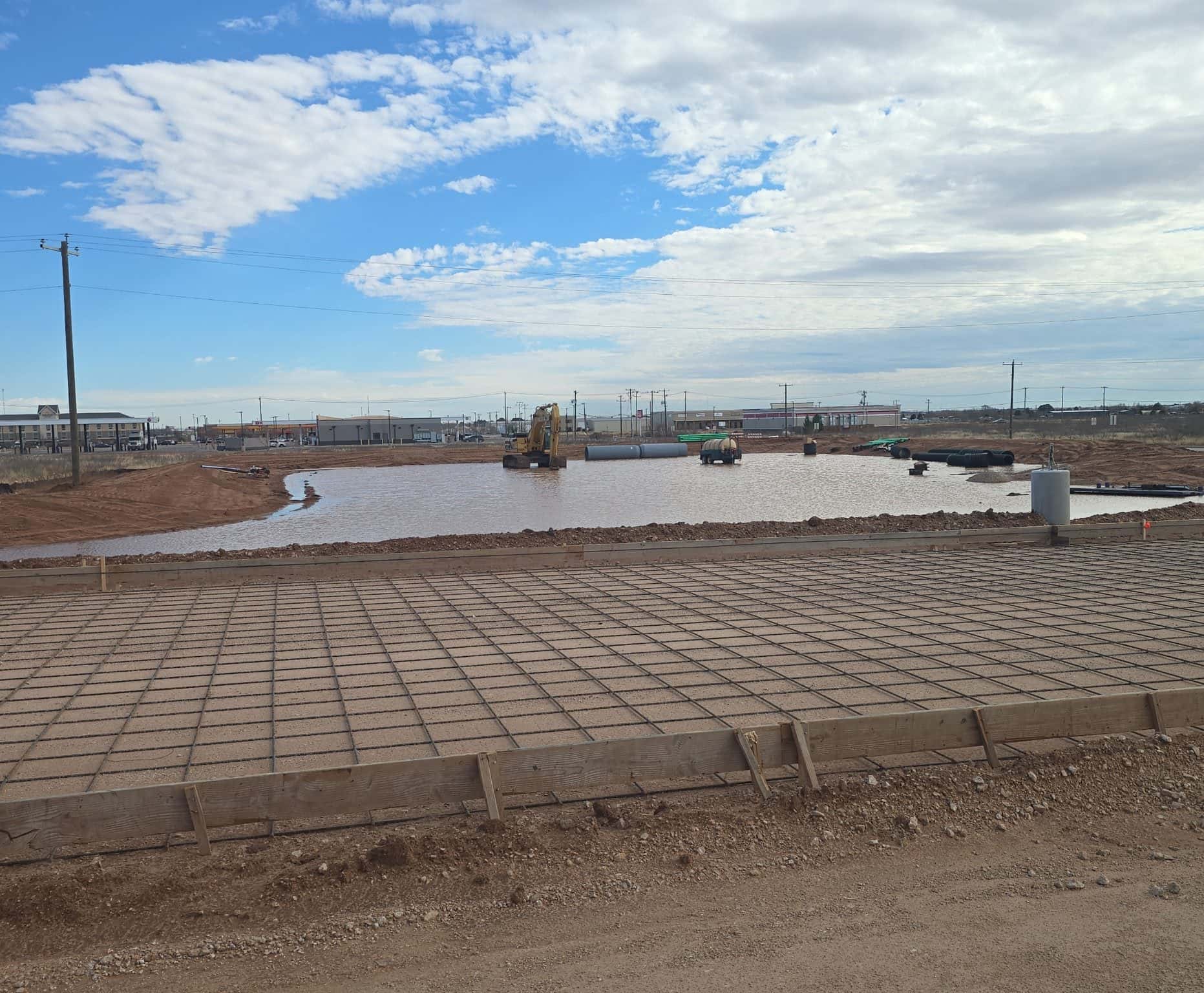
Straight talk: a tank holds what the ground lets it hold
We can build a textbook dam with a proper key and a spillway that works, and if the bottom is sand or fractured caliche the tank will still not hold. Nobody can dig their way around bad material. That is why we want test holes before anybody moves dirt, and why we would rather tell you a site is wrong than take the job and let you find out over a summer.
We are also a dirt contractor, not an engineer or an agency. On a larger structure, a dam that impounds significant water, or anything with a regulatory question attached, get an engineer involved. If you want technical guidance or want to know whether cost-share exists for the work, call your local NRCS field office directly — they are the right people to ask and it costs you nothing to ask them.
Head to Head
Dammed tank
An embankment built across a draw or drainage so runoff backs up behind it. Most of the water comes from the watershed above, and most of the earthwork is in the dam and its spillway.
Dug pit tank
A pit excavated into the ground with the spoil used to build up the rim. There is little or no watershed above it, so it fills from local runoff, an apron, a well, or hauled water.
| What you're comparing | Dammed tank | Dug pit tank |
|---|---|---|
| Where the water comes from | The watershed above it. Get that acreage right and it fills; get it wrong and you have built either a dry hole or a dam that is going to be overtopped. | A small local catchment, a shaped apron, or water you put in it. Predictable, but it is on you to supply. |
| What the site has to give you | A draw with defined banks, enough drainage area above, and material that will hold water. All three, not two of three. | Not much beyond soil that holds and room to put the spoil. That flexibility is the entire reason pit tanks exist out here. |
| Where the dirt goes | Into the dam, which is the structure. Most of the earthwork ends up as the embankment and its key. | Out of the hole and onto the rim. The excavation is the tank, and the spoil is shaped and spread rather than engineered. |
| Spillway | Mandatory and not optional. An emergency spillway cut into undisturbed ground at the right elevation is what saves the dam when a big one comes. | Simple by comparison. There is no impounding structure to lose, so overtopping is an inconvenience rather than a failure. |
| How it fails | Overtopping and losing the dam, or seepage through an unkeyed embankment. Both are construction failures, not bad luck. | It goes dry, or it seeps out through the bottom. Annoying, and rarely dangerous or catastrophic. |
| Reliability in a dry year | Depends entirely on rain falling on your watershed. A run of dry years empties it no matter how well it was built. | Better, if it is tied to a well or a pipeline, because you are not waiting on weather. Worse, if it depends on runoff it does not have the ground to collect. |
| Livestock access | Usually one shaped, armored approach, with the rest fenced to keep stock off the dam and out of the shallows. | Easy to design in from the start, which is one of the quiet advantages — you are shaping the whole rim anyway. |
Where Each One Is the Right Call
Reach for dammed tank when
- Sites with a real draw and enough acreage draining to it to fill the tank in a normal year
- Ground with clay or tight material available to build a dam and key it in
- Ranches where a single well-placed tank can water a whole pasture
- Getting the most stored water for the least dirt moved, when the site supports it
Reach for dug pit tank when
- Flat country with no draw to work with, which is most of the ground west of the Caprock breaks
- Placing water exactly where the cattle need it rather than where the topography allows
- Sites where a dam would need a spillway you have nowhere to put
- Pairing with a well or pipeline, where the tank is storage rather than a catchment
The watershed is the first question, not the last
Before anything else, somebody has to work out how many acres drain to the site. It is the number that decides whether a dammed tank fills, how big the spillway has to be, and frankly whether the site is a site at all. It gets skipped constantly, and skipping it produces both of the classic failures: a tank that never fills because there is not enough ground above it, and a dam that blows out because there is far more.
In caliche country the ground sheds hard. Very little soaks in, so a given acreage delivers more runoff here than the same acreage would somewhere with deeper soil and better cover. That cuts both ways — it is why modest draws out here can fill a good tank, and why a dam sized off a guess gets overtopped by a storm nobody thought was that big.
The spillway is what keeps the dam
Water going over the top of an earthen dam is how earthen dams are lost, and it does not take long. The emergency spillway exists so that when the tank fills and keeps filling, the overflow leaves through a wide, flat, grassed channel cut into undisturbed ground beside the dam, at an elevation below the top of the embankment, instead of over the structure itself.
Three things get it wrong. Cutting it too narrow, so it concentrates flow and cuts a channel. Setting it too high, leaving no freeboard between spillway level and the top of the dam. And cutting it through fill instead of into natural ground, which just gives the water a softer path to take the dam apart. If the budget forces a choice between a bigger tank and a proper spillway, build the smaller tank.
Key the dam in, or it leaks under itself
A dam built by piling dirt on top of the existing ground surface will seep underneath it, because the surface layer it is sitting on is loose, root-filled and permeable. The fix is a cutoff trench, a core trench cut down the centerline of the dam into tight material below, then backfilled with clay and compacted in lifts as the embankment goes up.
That trench is invisible in the finished tank and it is most of why one dam holds and the one across the fence does not. Same for the embankment itself: built in thin lifts with moisture in the material and rolled, not pushed up in a pile and shaped. There is no way to inspect this after the fact, which is why it is worth knowing whether it was done.
Depth beats width out here
Evaporation is the quiet thief in West Texas, and it works on surface area. A wide shallow tank and a narrower deep tank holding the same water at the start of summer are not in the same condition by August — the shallow one has more surface exposed for every acre-foot it holds, and it loses proportionally more.
Shallow edges cost you twice. They evaporate fastest, they grow the most vegetation, and they are where livestock churn the bank into mud. So tanks generally get built deeper than people first picture, with the banks pulled in steeper than a gentle slope and only the designated watering approach left shallow and armored.
Will the ground hold it
A tank holds what the soil lets it hold. Clay and tight material hold well. Sand, fractured rock or caliche with voids in it will take water down as fast as you can put it in, and no amount of good dam building fixes a bottom that leaks.
The way to find out is to dig test holes at the site before committing, not after. If the material is marginal there are answers — a clay liner hauled in and compacted, or a synthetic liner — and choosing between those is a whole decision of its own, which is the subject of our guide on dirt tanks versus sealed ponds. What you do not want is to find out by watching a full tank disappear over a month.
What we need to quote it
A drop pin on the site, or two or three if you are deciding between them. Roughly what drains to it. What the tank is for — livestock, wildlife, irrigation storage, fire protection — because it changes depth and shape. Whether there is a well or pipeline nearby. Access for equipment. And anything you know about the dirt, including any test holes or old tanks on the place that hold or do not.
We would rather walk it. Where the water already runs, what the banks are made of, and what old tanks on the same ground have done tell you more in twenty minutes than anything you can describe on the phone. Estimates are free, and if we think a site will not hold, we will say so before you spend money on it.
What Your Ground Changes
The Permian Basin is not one kind of dirt. What is obviously the right call on one side of our service area is the wrong one two counties over, and it is the ground underneath — not the thing sitting on top of it — that decides.
Midkiff, TX
Upton County
Upton County ranch ground falls off toward the draws, which is the best setting we work in for a dammed tank — there is something to dam and there is watershed above it. Caliche ledge near the surface is the flag: it can make a good key hard to cut, and it can be fractured enough to leak, so test holes matter more here than anywhere.
Dirt work in MidkiffBig Spring, TX
Howard County
Howard County has the most relief in our territory and real draws east and south of town, with rock common. Good tank country when the material cooperates, and the same concentrated runoff that fills a tank fast is what oversizes the spillway you need.
Dirt work in Big SpringSnyder, TX
Scurry County
Scurry County runs larger ranch tracts with more relief than the flat country west of it, and tanks here are often part of a pasture rotation rather than a single water source. Multiple smaller tanks placed for grazing distribution frequently beat one big one, even when the topography would support the big one.
Dirt work in SnyderStanton, TX
Martin County
Martin County is sandy loam farm ground over caliche. Sandy material up top is the classic leaking-bottom problem, so pit tanks here often need a clay liner or a sealed bottom, and finding out which before construction is the difference between a tank and a hole.
Dirt work in StantonMidland, TX
Midland County
Flat country with caliche close to the surface. There is usually nothing to dam, so most of what we build around Midland County is pit tanks placed where the stock need water, filled from a well or a shaped apron rather than from a watershed.
Dirt work in MidlandGreenwood, TX
Midland County
Acreage south and east of Midland, sandy loam over caliche, mostly smaller tracts. Tanks here tend to be modest pit tanks serving a few head or built as a wildlife and landscape feature, and the constraint is usually how much room the tract has for the spoil.
Dirt work in GreenwoodAndrews, TX
Andrews County
Flat caliche and sandy loam country with very little relief. Same as Midland County — pit tanks and apron catchment rather than dams, and depth is what carries a tank through an Andrews County summer.
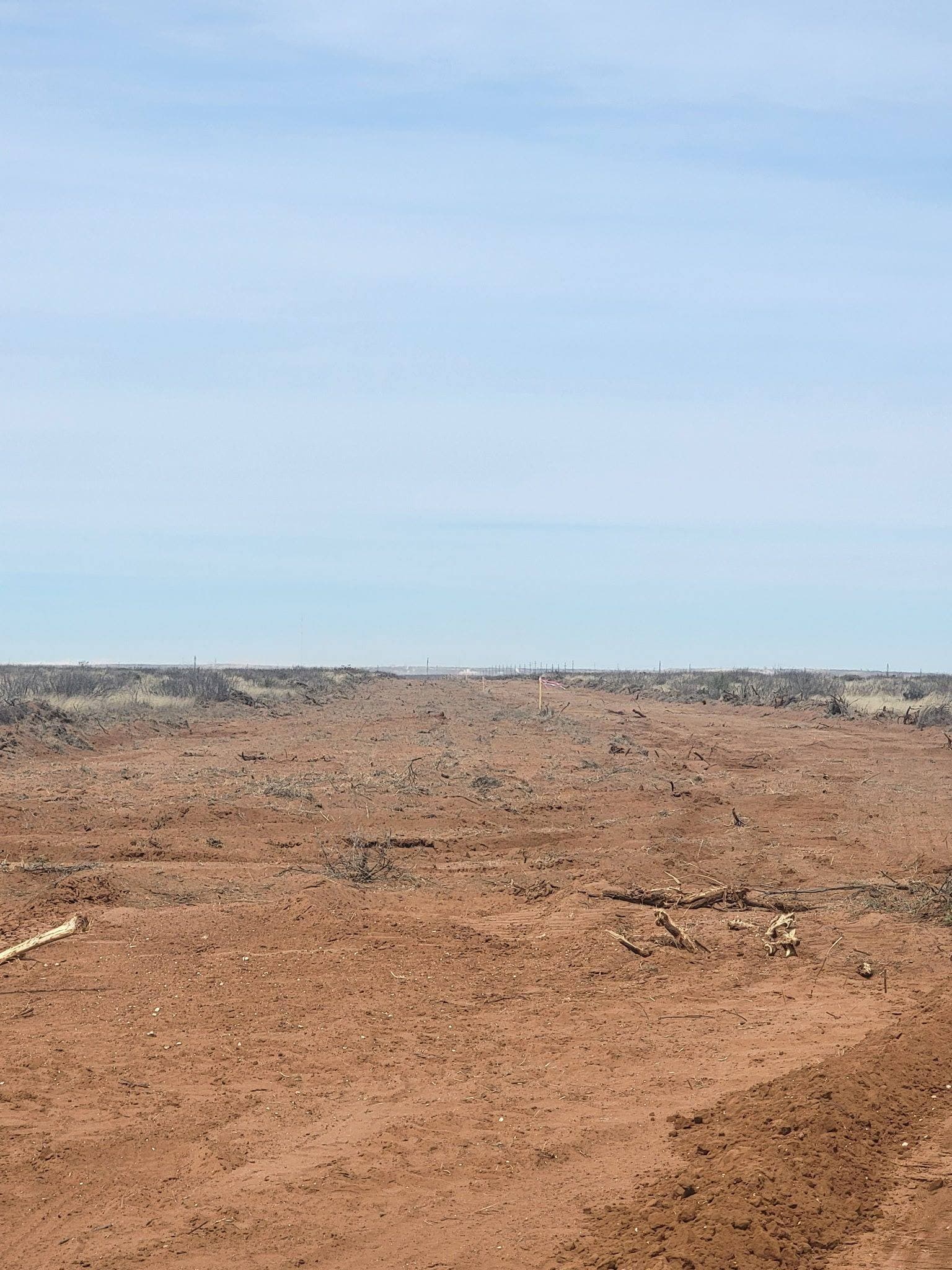
Dirt work in AndrewsWhat This Looks Like on the Ground
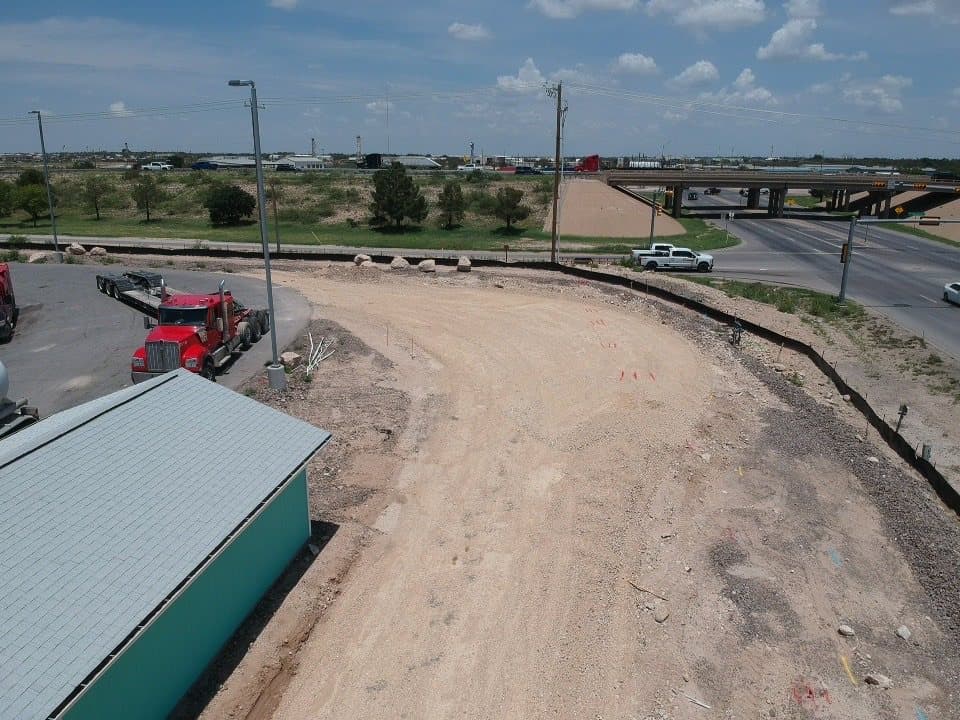
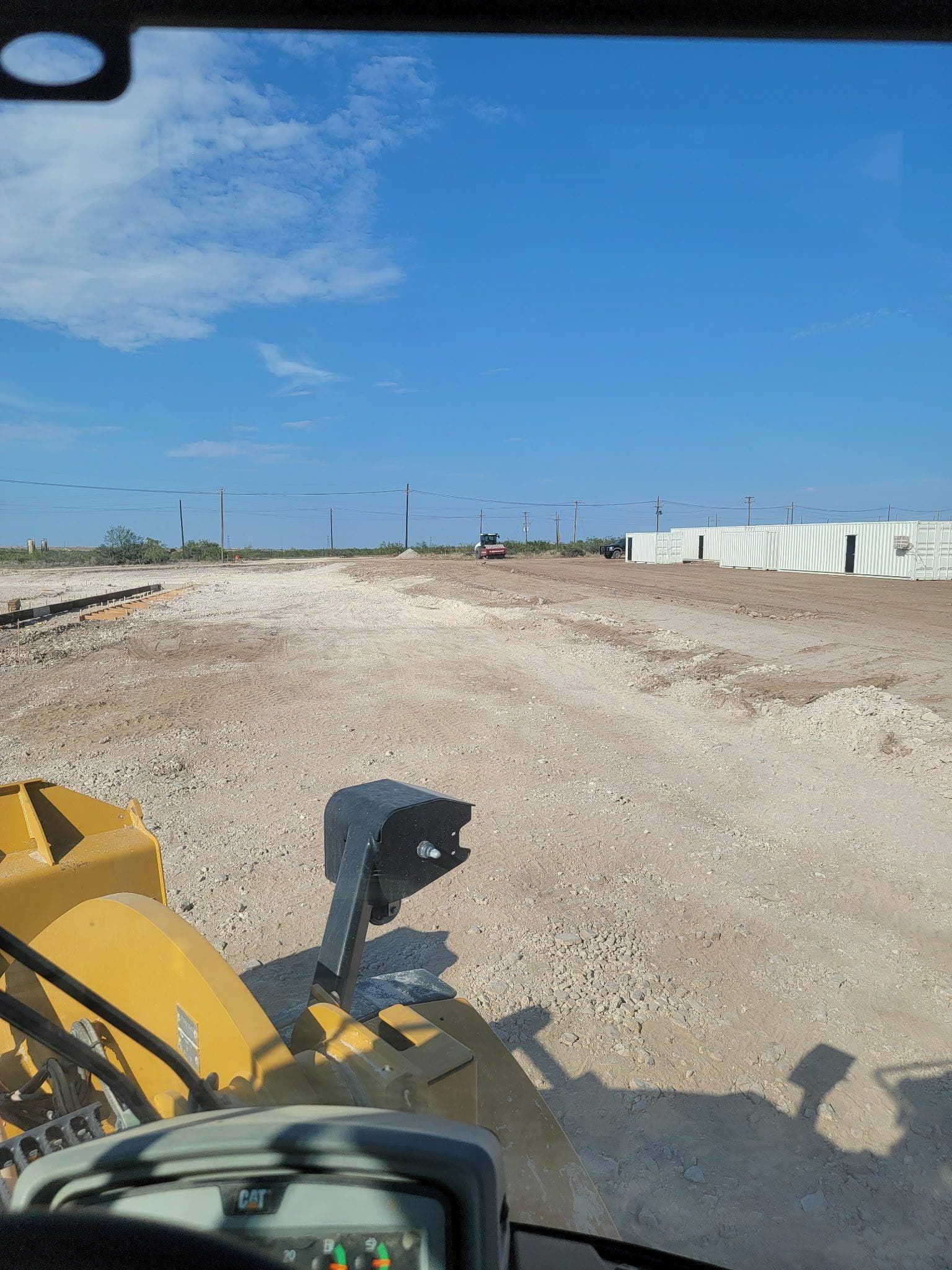
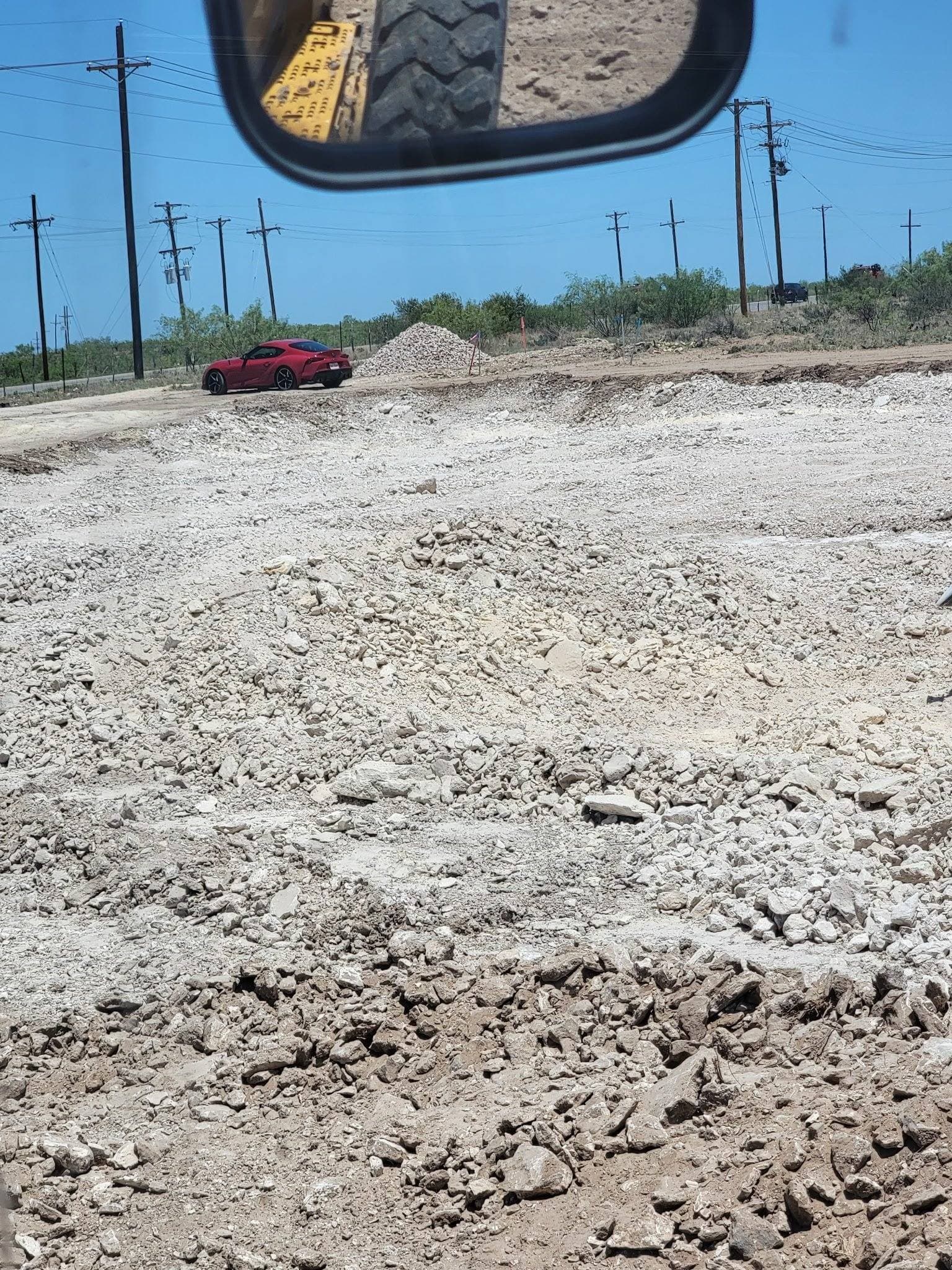
Frequently Asked Questions
How many acres do I need draining to a stock tank for it to fill?
There is no single number, because it depends on how hard your ground sheds. Caliche country runs off far more of what falls on it than deeper soils do, so a modest watershed here can fill a tank that the same acreage elsewhere would not. It has to be worked out for your site, and it is the first thing to work out, because it also sizes the spillway.
How deep should a stock tank be?
Deeper than most people first picture. Evaporation works on surface area, so a deep tank holds through a West Texas summer far better than a wide shallow one holding the same water in spring. Shallow edges also grow vegetation and get churned into mud by livestock, so banks get pulled in steeper with one shaped, armored watering approach.
Why does my tank leak?
Usually the bottom, not the dam. Sand, fractured rock or caliche with voids will take water down as fast as it comes in. Sometimes it is the dam instead, seeping underneath because it was built on the existing ground surface without a core trench cut into tight material below. Test holes tell you which before you build; after the fact it is a diagnosis job.
What is a spillway and do I really need one?
It is a wide, flat overflow channel cut into undisturbed ground beside the dam, set below the top of the embankment, so that when the tank fills and keeps filling the water leaves there instead of over the dam. On any dammed tank, yes, you need one. Water going over an earthen dam is how earthen dams are lost, and it does not take long.
Can you build a tank if there is no draw on my place?
Yes, that is what a pit tank is, and on flat caliche country it is most of what we build. The pit is excavated and the spoil shapes the rim, and it fills from a shaped apron, a well or a pipeline rather than a watershed. It also lets you put the water where the cattle need it instead of where the topography allows.
How much does a stock tank cost to build?
It moves with yards of dirt, how far that dirt moves, what the material is, whether a liner or hauled clay is involved and how much spillway and access work is in the scope — so a number quoted before anyone has looked at the site is a guess. We walk it, dig test holes where it matters and price it off the ground. Estimates are free.
The Work Behind This Guide
Everything above is one of these services, or the drainage work that keeps it from failing.
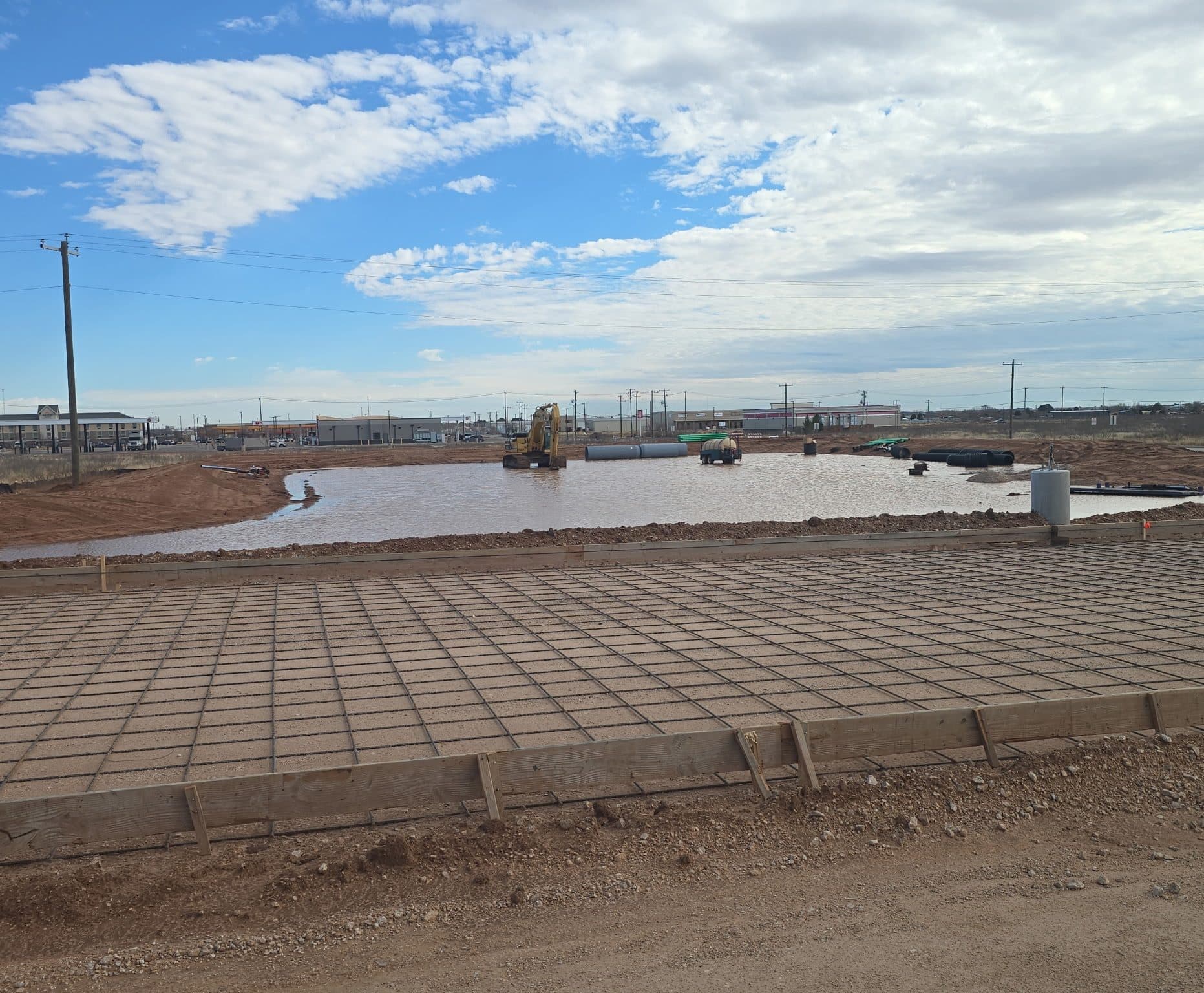
Pond Construction
Stock ponds and tanks built to hold water, not just hold a hole.
Learn more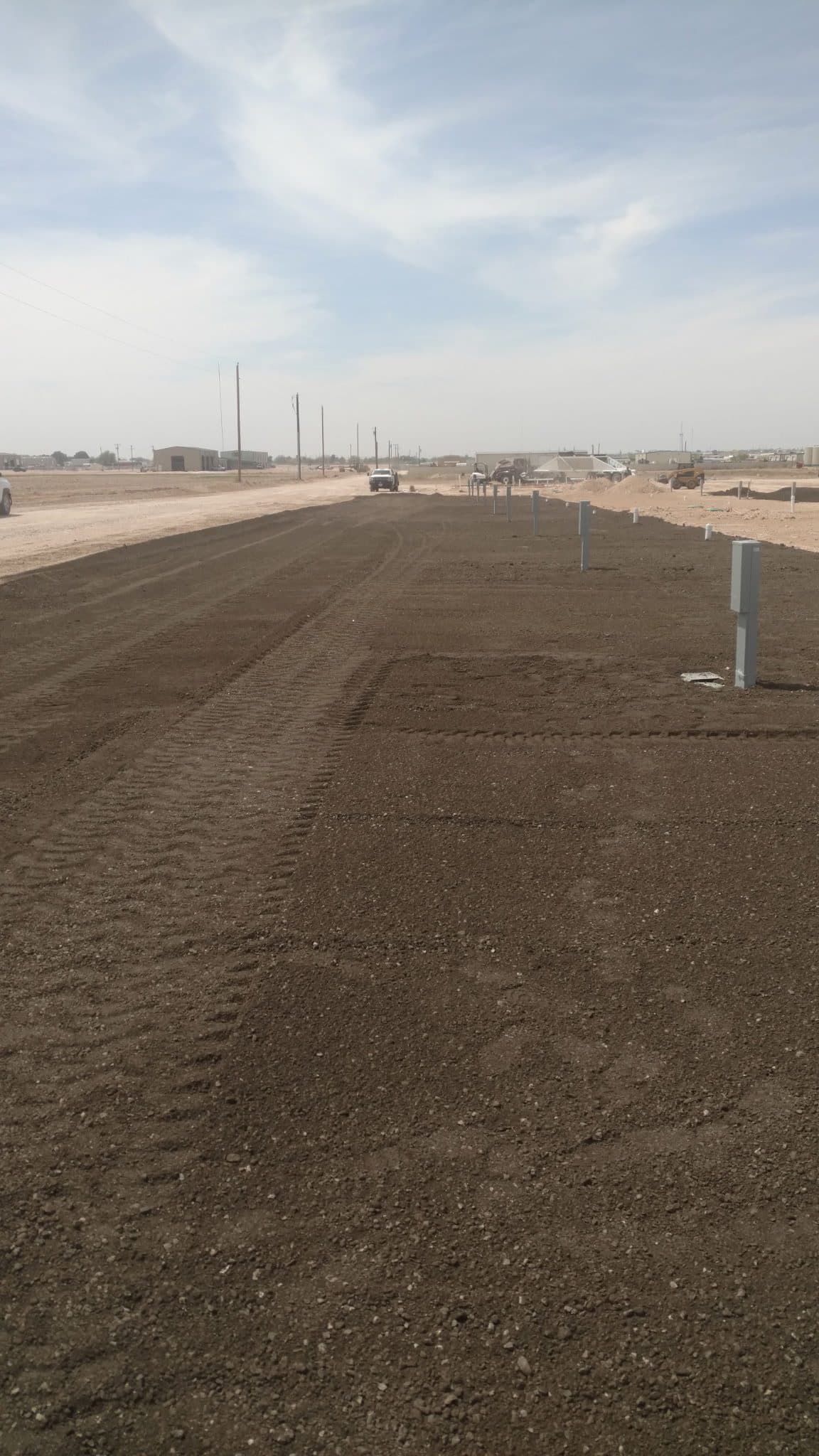
Ranch Development
Ranch roads, pads, and infrastructure built to work as hard as you do.
Learn more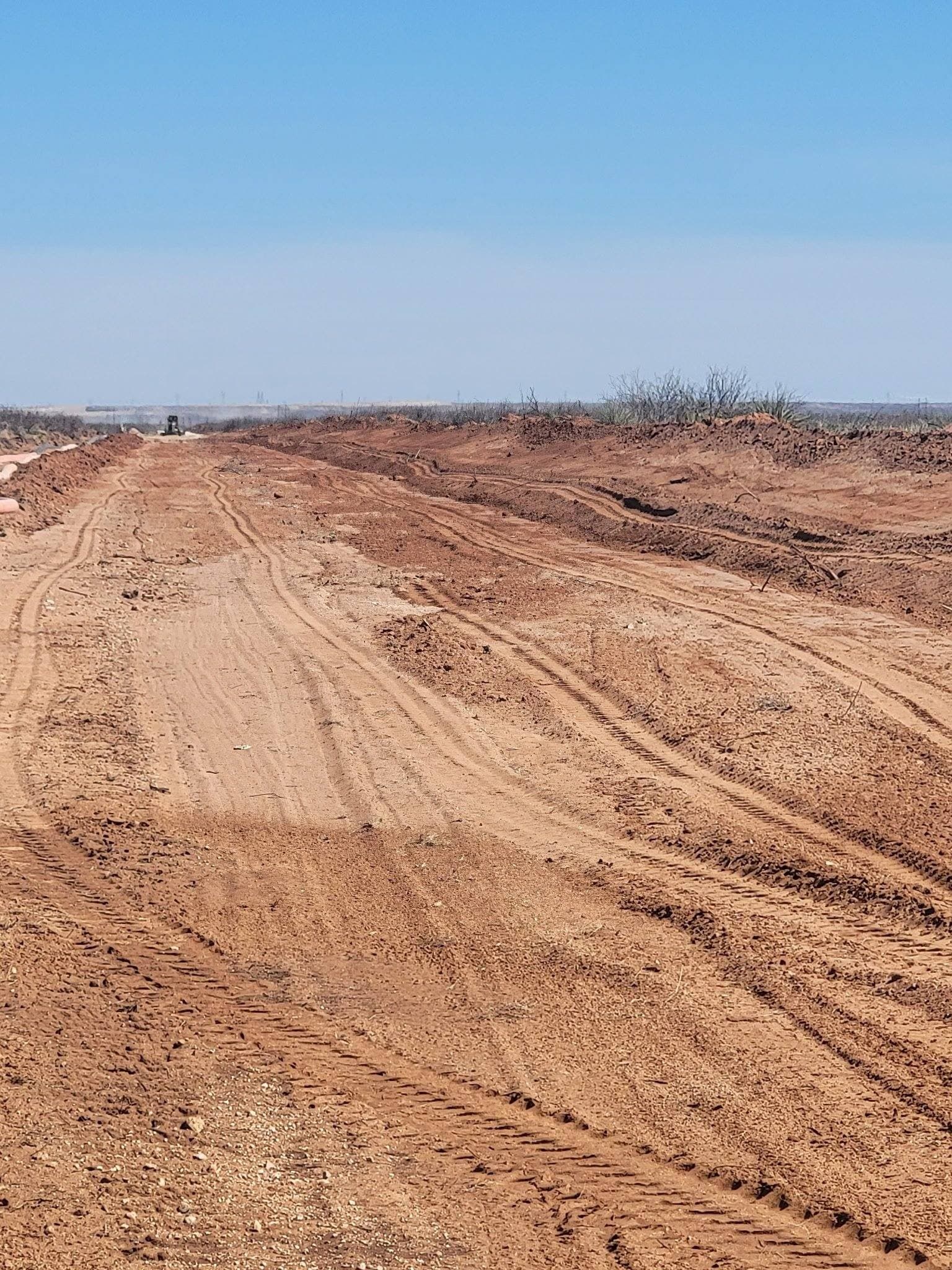
Ag Terrace Development
Terracing that keeps topsoil where it belongs and water where you want it.
Learn more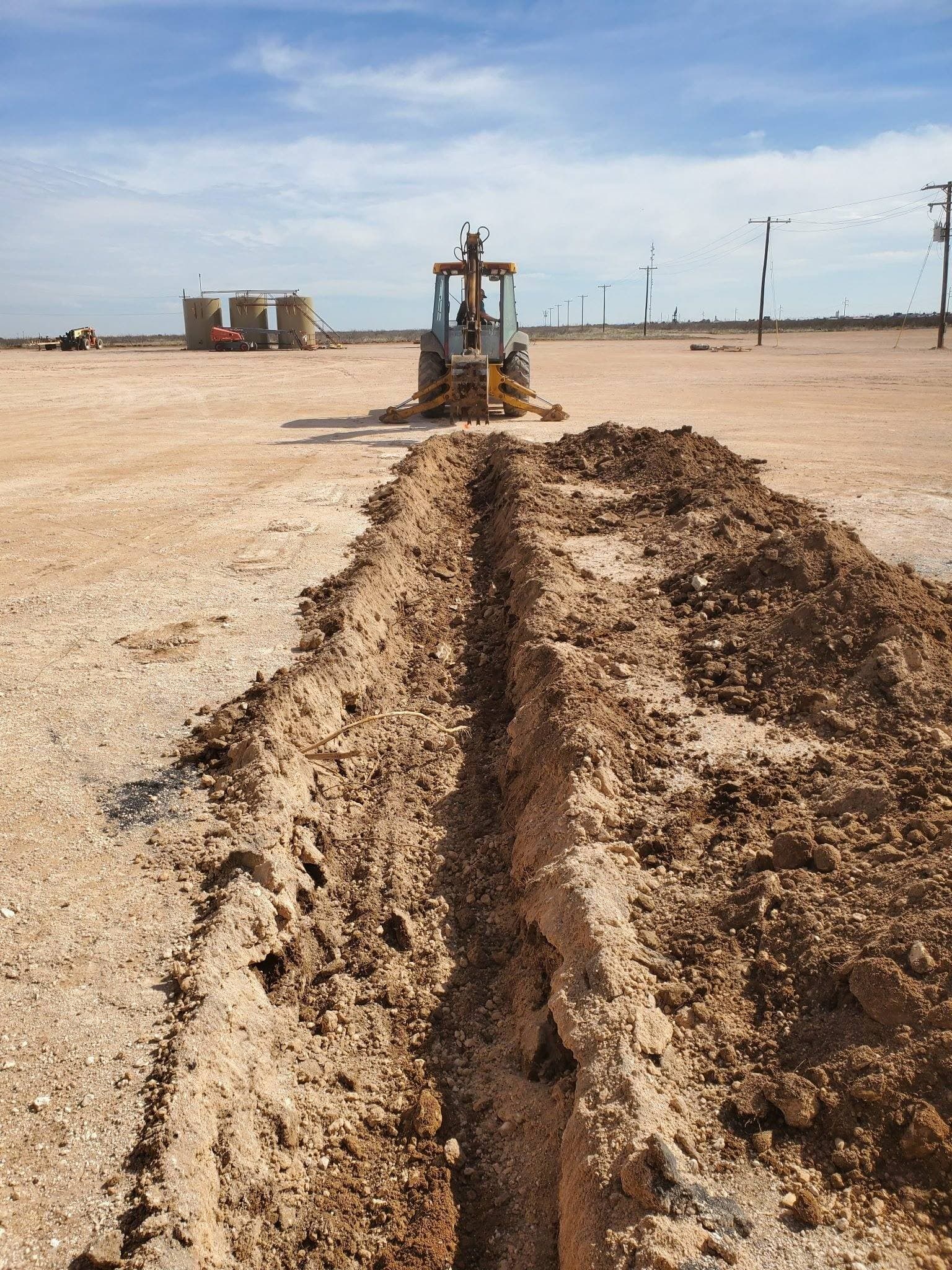
Drainage Solutions
Grading and drainage work that gets water moving where it's supposed to go.
Learn moreStill not sure which one your ground wants?
Tell us where the gate is and what you are trying to end up with. We will walk it and tell you what we would build, including when the answer is less work than you were expecting.
Contact Us Directly
Prefer to call or email instead of filling out the form? Reach us directly:
Phone
(575) 973-8523Hours
- Monday – SundayOpen 24 hours — call anytime
Service Area
Midland, TX & the Permian Basin