Guide
Site Prep vs Pad Construction: What You Are Actually Buying
Two words that get used like synonyms and are not. One is the whole job of turning raw ground into something you can build on. The other is one piece of it. Knowing which one your bid covers is the difference between comparing two numbers and comparing two different jobs.
When somebody calls us about a commercial build and says they need a price on a pad, about half the time they mean the pad and about half the time they mean everything between raw ground and a slab the concrete crew can work on. Those are very different jobs and very different numbers, and the confusion is the single most common reason two bids on the same project come back thousands apart.
It is almost never because one contractor is expensive and one is cheap. It is because one of them priced clearing, demolition, cut and fill, utility trenching, drainage and parking base, and the other priced the engineered fill under the building footprint. Both answered the question they were asked. Below is the plain version of where the line sits, so you can read a bid and know what is in it. Rangefinder Excavation has been doing both across the Permian Basin since 2018.
If you already know what you want built, the site & pad construction page covers scope, process and what a job like it involves instead.
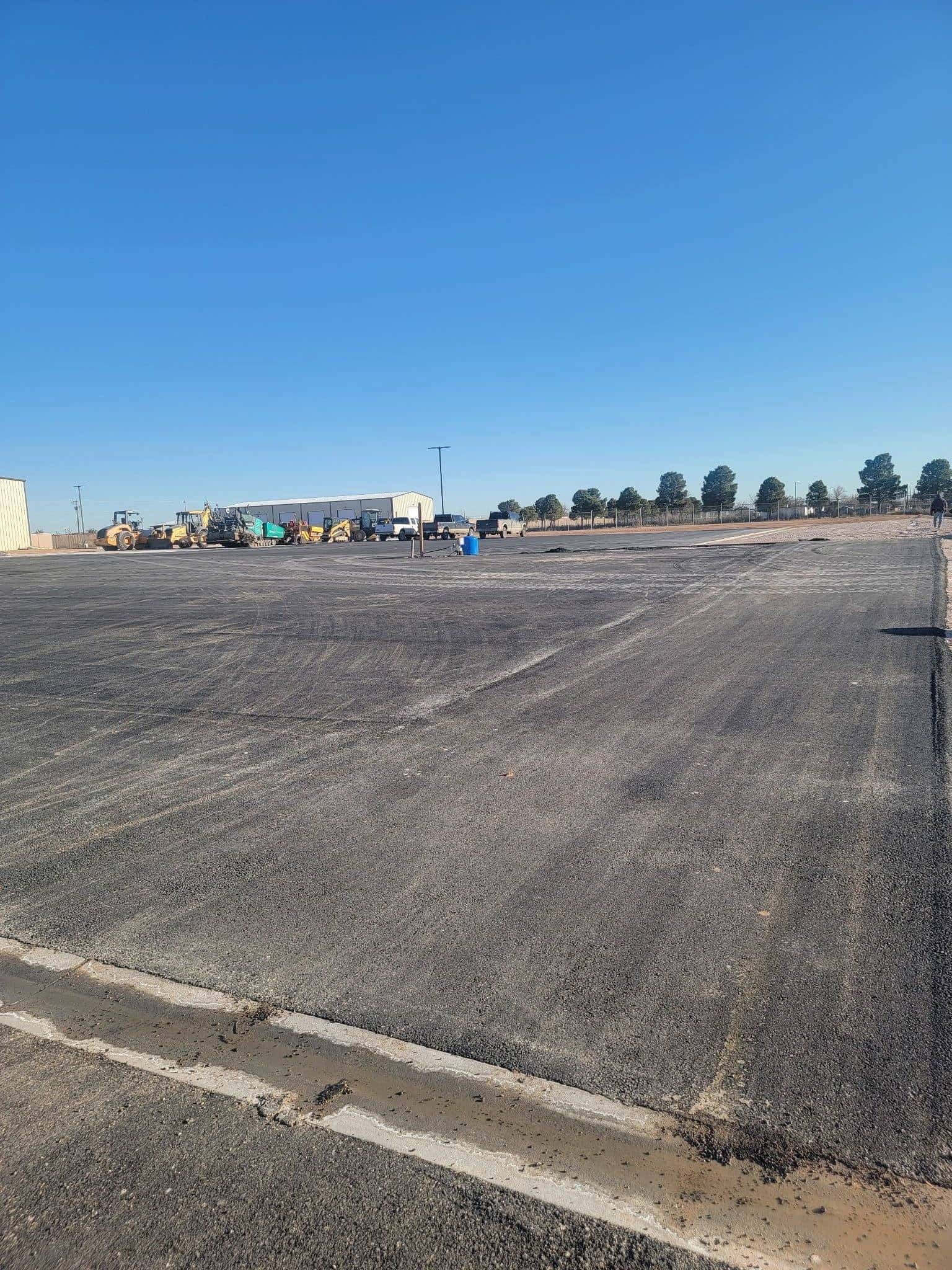
Straight talk: we stop at the pad, we do not pour the slab
We are a dirt contractor. We build the pad, the parking base and the drainage, and we hand you ground that is ready for concrete. We do not form, pour or finish slabs, we do not set the structural spec, and we do not engineer the site. The geotech and the civil engineer own those, and that is the right way around.
We will also tell you when the plan and the ground do not agree. A grading plan that drains toward a building, a pad spec written before anybody looked at the soils, a detention pond drawn where the dirt will not hold it — we would rather raise all of that standing on the site at bid time than build exactly what is drawn and let you find out after the slab is down.
Head to Head
Site preparation
The whole scope that turns a raw tract into a buildable site. Clearing, demolition, stripping, cut and fill across the property, drainage, utility trenching, parking and drive base, and the building pad as one item inside it.
Building pad construction
The engineered fill under the structure itself. Subgrade prepared, material placed in compacted lifts, built past the footprint, brought to grade and crowned so water leaves the slab.
| What you're comparing | Site preparation | Building pad construction |
|---|---|---|
| What it covers | Everything from the property line in. Clearing, demo, topsoil strip, site-wide cut and fill, drainage, utility trenching, parking and drive base, and the pad. | The footprint and the ground immediately around it. Subgrade, select fill in lifts, compaction, finished grade and fall. |
| Where it starts and stops | Starts at whatever is standing there now. Stops when the site drains correctly and every surface that has to carry something is built to carry it. | Starts at a site already cleared and near grade. Stops at the edge of the over-build, where the concrete crew takes over. |
| Who sets the spec | The civil plans and the site grading plan. Elevations, drainage, parking sections and utility routes all come off them. | The geotechnical report and the structural engineer. Material type, lift thickness, compaction percentage and over-build distance are theirs, not ours. |
| What drives the cost | How much has to come off, how much dirt moves, how far it moves, whether the site balances, how much drainage the ground forces, and how much base goes under paving. | Pad size, how much fill it takes, where that fill comes from, the compaction standard and how far past the footprint it has to be built. |
| What gets tested | Compaction on everything structural — pad, parking subgrade, base, and utility trench backfill under anything that carries load. | The pad, in lifts, as it goes up. Density testing on a schedule the geotech sets, not after the whole thing is built. |
| How it shows up on a bid | Line items by scope, usually with quantities. If a bid is one lump number with no quantities behind it, nobody can compare it to anything. | Usually pad dimensions, fill yards, compaction standard and over-build. Short, and easy to check against the geotech. |
| What it costs you to get wrong | Standing water, a parking lot that fails in a year, or a utility conflict found after the slab is poured. | Slab movement. The most expensive thing on this page, because the fix is under a finished building. |
Where Each One Is the Right Call
Reach for site preparation when
- Raw ground or a tract with anything on it that has to come off first
- Projects where one contractor from raw dirt to a workable pad is worth more than the lowest line item
- Sites where grading, drainage and the pad have to be solved together because they are the same water problem
- Commercial builds with parking, drives and fire lanes in the same scope as the building
Reach for building pad construction when
- Sites that are already cleared, stripped and roughly at grade
- A pad going into an existing yard, lot or developed tract
- Projects where another contractor holds the sitework and you need the pad built to a geotech spec
- Shops, barndominiums and metal buildings on ground that does not need much else done to it
Why two bids on the same job come back thousands apart
Send the same plan set to three dirt contractors and the spread is usually scope, not margin. One priced the pad. One priced the pad and the parking base. One priced the whole site including the demo of what is standing there and the drainage the plans call for. All three answered honestly and none of the three numbers means anything next to the others.
The fix is not to ask for a lower number. It is to send every bidder the same scope in writing and ask for quantities, not a lump sum. Yards of cut, yards of fill, square feet of pad, linear feet of trench, tons of base. Quantities make three bids comparable in about five minutes and they make it obvious when somebody has left something out.
The pad is part of site prep, not another word for it
Think of it as one item on a longer list. On a raw tract the list runs clearing, demolition, topsoil strip and stockpile, site cut and fill to the grading plan, drainage and detention, utility trenching and backfill, building pad, then parking and drive base. The pad is one line in the middle of that.
Which is why a pad price on a site that has not been cleared or brought to grade is not a real price for the job in front of you. It is a real price for one line item, quoted as though the seven around it are somebody else's problem. Sometimes they genuinely are — that is a legitimate way to buy this work. It just has to be a decision rather than a surprise.
Over-build past the footprint, or the corners go
A building pad does not stop at the slab edge. It gets built out past the footprint on every side, because the load from the structure spreads outward and downward through the fill, and fill that ends at the slab line leaves the edges of that load sitting on ground that was never built. The corners are where it shows up first.
How far past is a geotech question and it varies with pad height and soil. What does not vary is that it is not optional and it is not a place to save material. A pad built to the slab line is the most common shortcut we get called in behind, and by the time anyone notices, the fix is under a finished building.
Compaction testing: who orders it and who pays
On a commercial build the testing lab is usually retained by the owner or the general contractor, not by the dirt contractor, and there is a reason for that — the party doing the work is not the right party to grade its own homework. Density tests get taken in lifts as the pad goes up, not once at the end, because a failing lift buried under three more is a very expensive thing to find.
Get this settled before the first load of fill lands. Who is calling the lab, who is paying for tests, what the passing standard is, and what happens on a failing test. It is a ten-minute conversation at the preconstruction meeting and it is a change order if you have it later.
Water is the part nobody prices and everybody pays for
A pad can be perfect and the site can still be wrong. Water that is routed onto your lot from uphill, a detention pond that was drawn but never dug, parking that drains toward the building instead of away from it — none of that is a pad problem and all of it lands on the same slab.
So we would rather look at the whole site even when we are only bidding the pad, and say plainly if the grading plan and the ground disagree. It costs nothing to mention it at bid time and it is the cheapest thing on this page to fix before anybody moves dirt.
What we need to give you a real number
The civil plans and the grading plan if they exist. The geotechnical report, which is what sets the pad spec — without it nobody is quoting the same pad. Pad dimensions and finished floor elevation. What is standing on the tract now. Where utilities come in. Whether parking, drives and fire lanes are in this scope or a later one. And your schedule, because a wet spring changes sequencing more than it changes price.
If some of that does not exist yet, say so and we will still walk it and tell you what we see. What we will not do is quote a pad off a spec nobody has sent and let you find out the difference later.
What Your Ground Changes
The Permian Basin is not one kind of dirt. What is obviously the right call on one side of our service area is the wrong one two counties over, and it is the ground underneath — not the thing sitting on top of it — that decides.
Midland, TX
Midland County
Caliche close to the surface across most of Midland County, which is good news for a pad and a complication for utility trenching and detention — the same hard layer that compacts well is the one a trencher has to get through. Sites here often balance, so the cut-and-fill line is usually smaller than people expect.
Dirt work in MidlandOdessa, TX
Ector County
Ector County runs caliche and sandy loam, and a lot of commercial ground here is infill next to lots that were developed decades ago. The pad is rarely the hard part; tying new drainage into whatever the neighbors built, and finding what is actually buried on the tract, usually is.
Dirt work in OdessaGreenwood, TX
Midland County
Sandy loam over caliche on acreage south and east of Midland, mostly shop and barndominium builds on tracts that have never been developed. Two things drive the number out here: what has to be cleared first, and how far the pad has to come up to stay out of sheet flow across flat ground.
Dirt work in GreenwoodStanton, TX
Martin County
Martin County farm ground is sandy loam over caliche, easy digging up top with a hard layer underneath. Building on ground that has been farmed means the topsoil strip is deeper than average and the stockpile is worth keeping, because the organic layer that grows a crop will not hold a slab.
Dirt work in StantonGardendale, TX
Ector County
Ector County ground along SH-158, flat with caliche not far down. Flat is the constraint, not the material — with almost no natural fall, the finished elevation of the pad and where the site sheds water are the same decision, and they have to be made together.
Dirt work in GardendaleAndrews, TX
Andrews County
Caliche and sandy loam with good base material generally close by, which keeps import hauls short when a site needs fill brought in. Flat country again, so drainage is designed rather than inherited, and detention gets dug because nothing runs off on its own.
Dirt work in AndrewsBig Spring, TX
Howard County
Howard County turns rocky fast and caliche ledge is common, and the ground falls off toward the draws. Rock changes what a cut costs and what a utility trench costs; the relief means water arrives on a site with somewhere to go, which helps drainage and hurts anything built in its way.
Dirt work in Big SpringWhat This Looks Like on the Ground
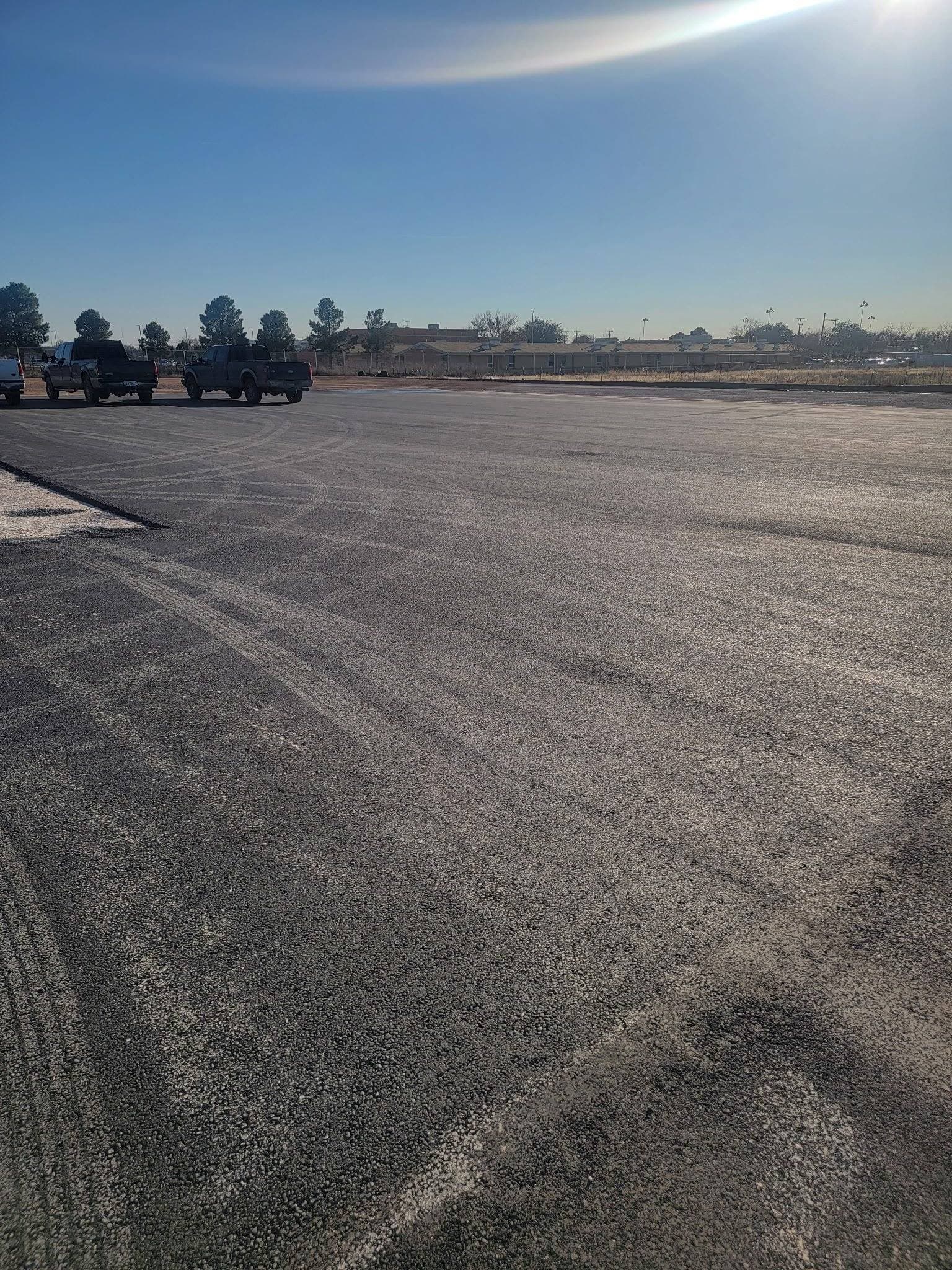
Frequently Asked Questions
What is the difference between site prep and a building pad?
Site prep is the whole job of making raw ground buildable — clearing, demolition, cut and fill, drainage, utility trenching and parking base, with the building pad as one item inside it. Pad construction is that one item: the engineered fill under the structure, built in compacted lifts past the footprint. Every bid you compare should say plainly which of the two it is.
Do I need a geotechnical report before you can quote a pad?
For a commercial build, yes, and you want one. The geotech sets the material, the lift thickness, the compaction standard and how far the pad is built past the footprint. Without it, contractors are each assuming a spec and the bids are not comparable. For a small shop or barndominium on known ground it is sometimes skipped, and that is a risk decision you should make on purpose.
Why are my bids so far apart?
Almost always scope, not price. One bidder priced the pad, another priced the pad plus parking base, another priced the whole site. Send every bidder identical scope in writing and ask for quantities — yards of cut and fill, square feet of pad, linear feet of trench, tons of base. Quantities make the comparison obvious and they expose what somebody left out.
How far past the building does the pad have to extend?
The geotech sets it, and it moves with pad height and soil type. What is constant is that it is required — structural load spreads outward through the fill, so a pad that ends at the slab line leaves the edges of that load on unbuilt ground. Corner movement is the usual symptom and the repair is under a finished building.
Do you handle demolition and clearing as part of site prep?
Yes. Clearing, grubbing, and demolition of concrete, asphalt and structures are all part of the same scope, and doing them with the same contractor that does the earthwork avoids the gap where one crew leaves debris the next crew has to work around.
What does site prep cost in Midland or Odessa?
There is no square-foot rate that means anything, because the drivers are what is standing on the tract, how much dirt moves and how far, whether the site balances, what the compaction spec is, and how much drainage the ground forces on you. We walk the site, price it off the plans and the ground, and the estimate is free.
The Work Behind This Guide
Everything above is one of these services, or the drainage work that keeps it from failing.
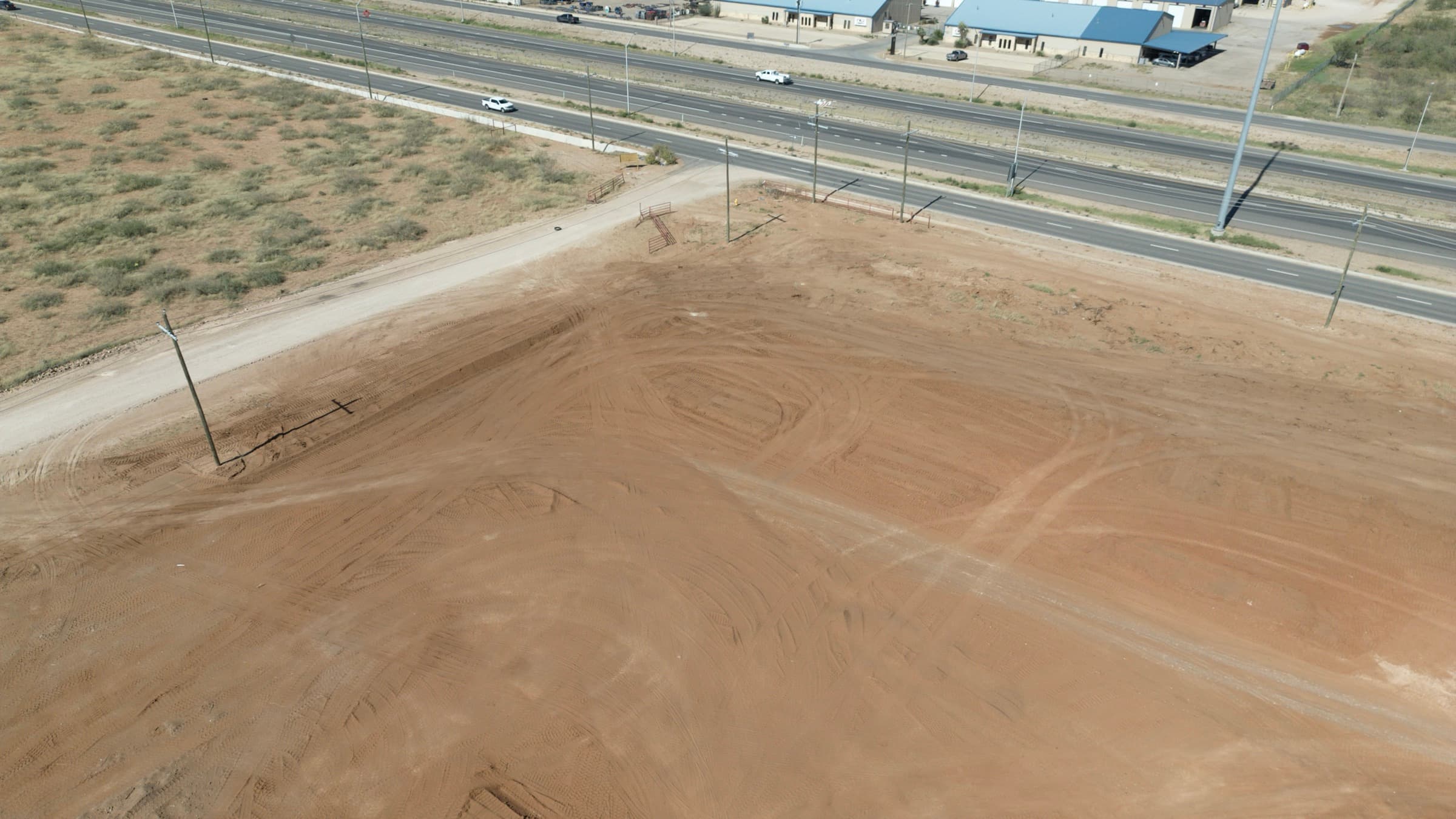
Site & Pad Construction
Site prep and pad construction that gets the ground ready to build.
Learn more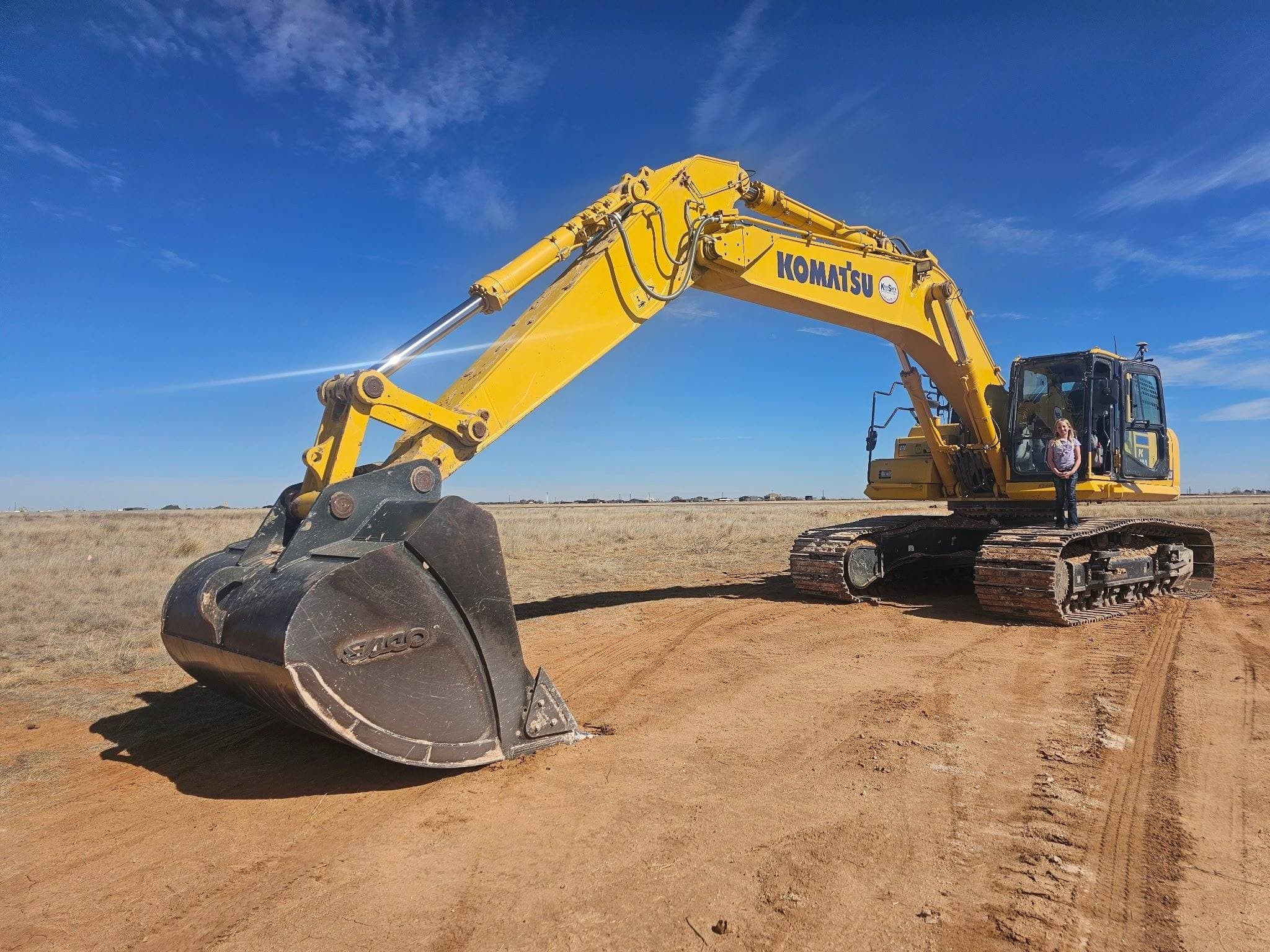
Land Development
Turning raw land into a graded, ready-to-use property.
Learn more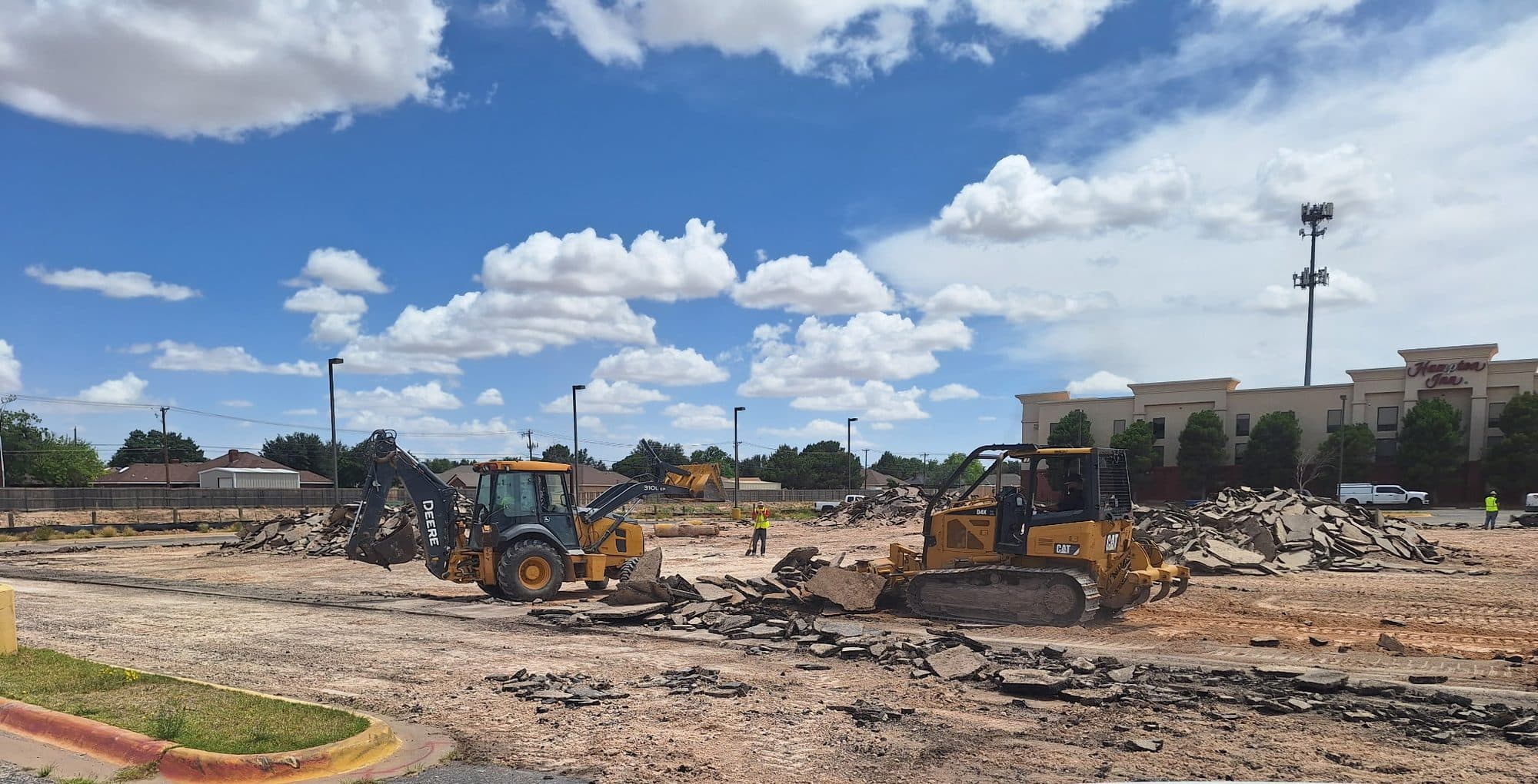
Demolition
Old structures down, debris hauled, site ready for what's next.
Learn more
Drainage Solutions
Grading and drainage work that gets water moving where it's supposed to go.
Learn moreStill not sure which one your ground wants?
Tell us where the gate is and what you are trying to end up with. We will walk it and tell you what we would build, including when the answer is less work than you were expecting.
Contact Us Directly
Prefer to call or email instead of filling out the form? Reach us directly:
Phone
(575) 973-8523Hours
- Monday – SundayOpen 24 hours — call anytime
Service Area
Midland, TX & the Permian Basin