Guide
Moving Dirt: Scrapers vs Excavator and Haul Trucks
Every earthwork bid is really a bid on moving dirt from where it is to where it needs to be. There are two ways to do that, they cost different amounts on the same site, and the thing that picks between them is not price — it is how far the dirt has to travel.
Dirt work is a moving problem before it is a shaping problem. Somewhere on the site there is too much ground and somewhere else there is not enough, and the whole job is getting one to the other at the lowest cost per yard without tearing up the site doing it.
There are two ways we do that, and we own the iron for both, which is the only reason this can be an honest comparison rather than a pitch for whatever is sitting in the yard. Scrapers on one side, an excavator loading haul trucks on the other. The choice changes the crew size, the schedule and the number at the bottom of the page.
If you already know what you want built, the land development page covers scope, process and what a job like it involves instead.
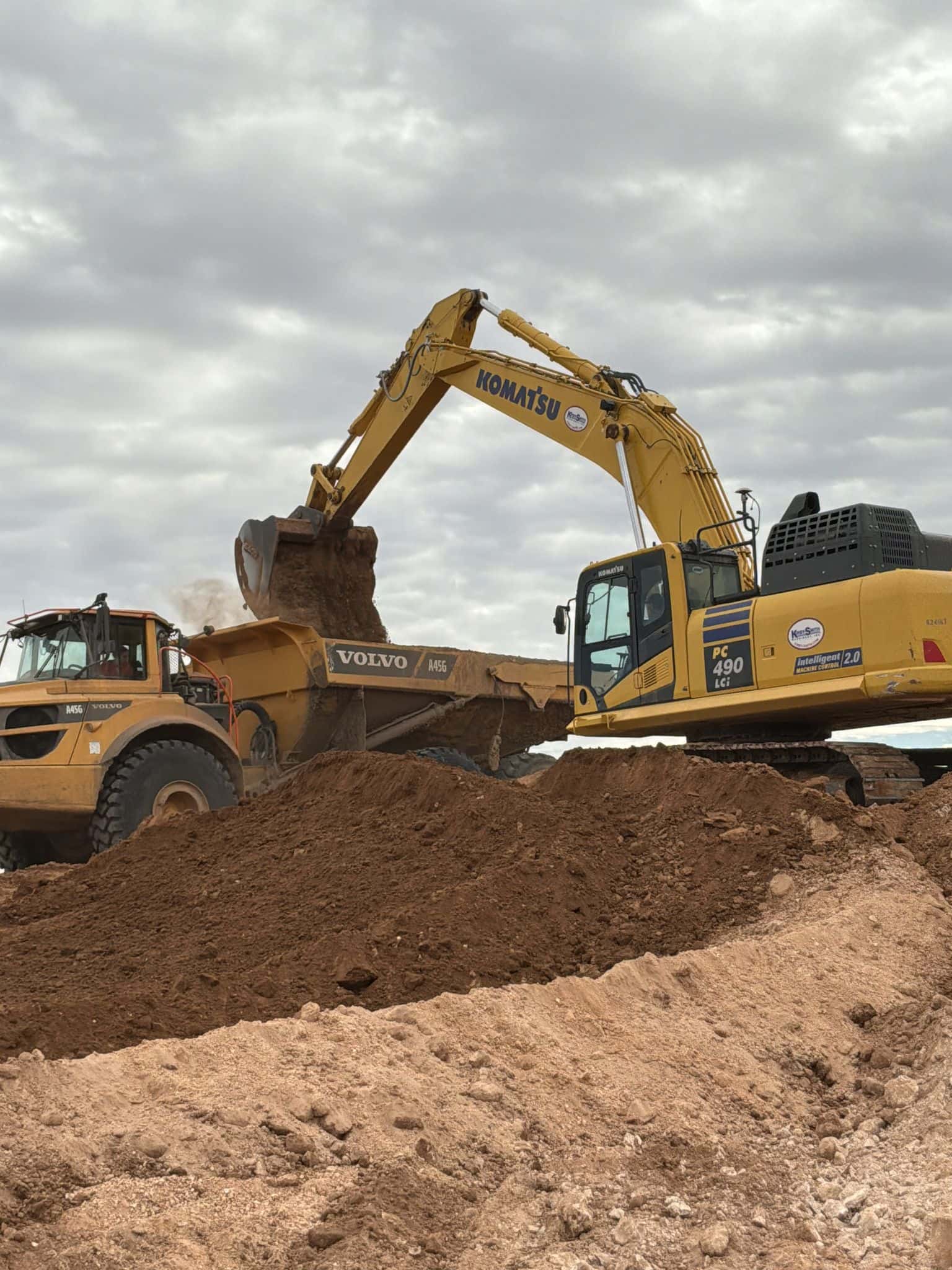
Straight talk: we will tell you when your site does not need trucks
We own scrapers, excavators, haul trucks, dozers, graders and water trucks, so we have no reason to talk you into the expensive method. If your dirt only has to move across the property on open ground, scrapers are the cheaper answer and we will say so, even though a truck fleet bills more hours.
The other half of that: when material genuinely has to leave, the trucking is going to be a real number and we are not going to hide it inside a price per yard. You should be able to see what the hauling costs separately from what the dirt work costs, because those are the two things you might make a different decision about.
Head to Head
Scrapers
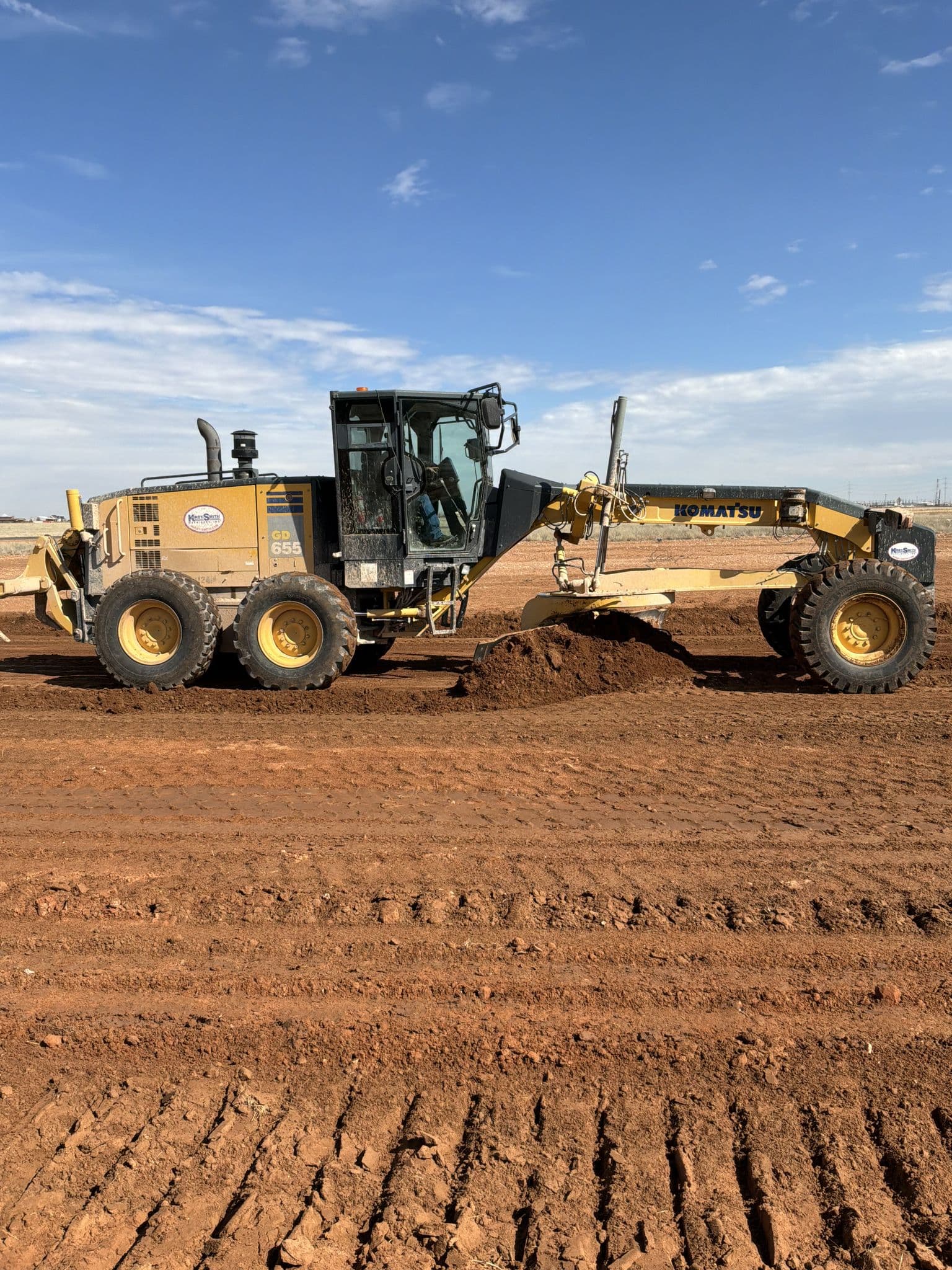
A self-loading pan that cuts dirt, carries it and spreads it in one continuous circuit. No separate loading machine, no waiting — the machine that digs is the machine that hauls.
Excavator and haul trucks
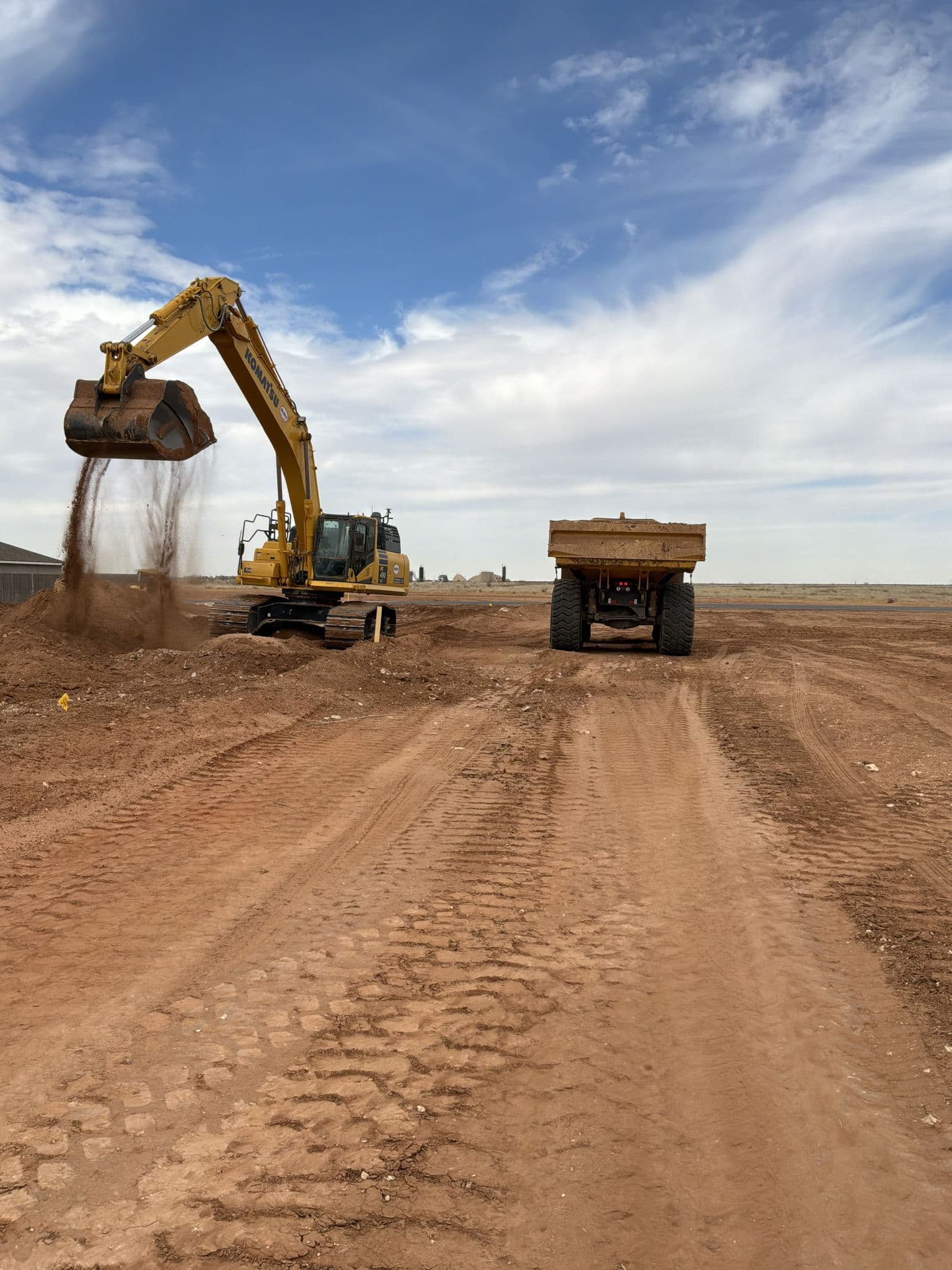
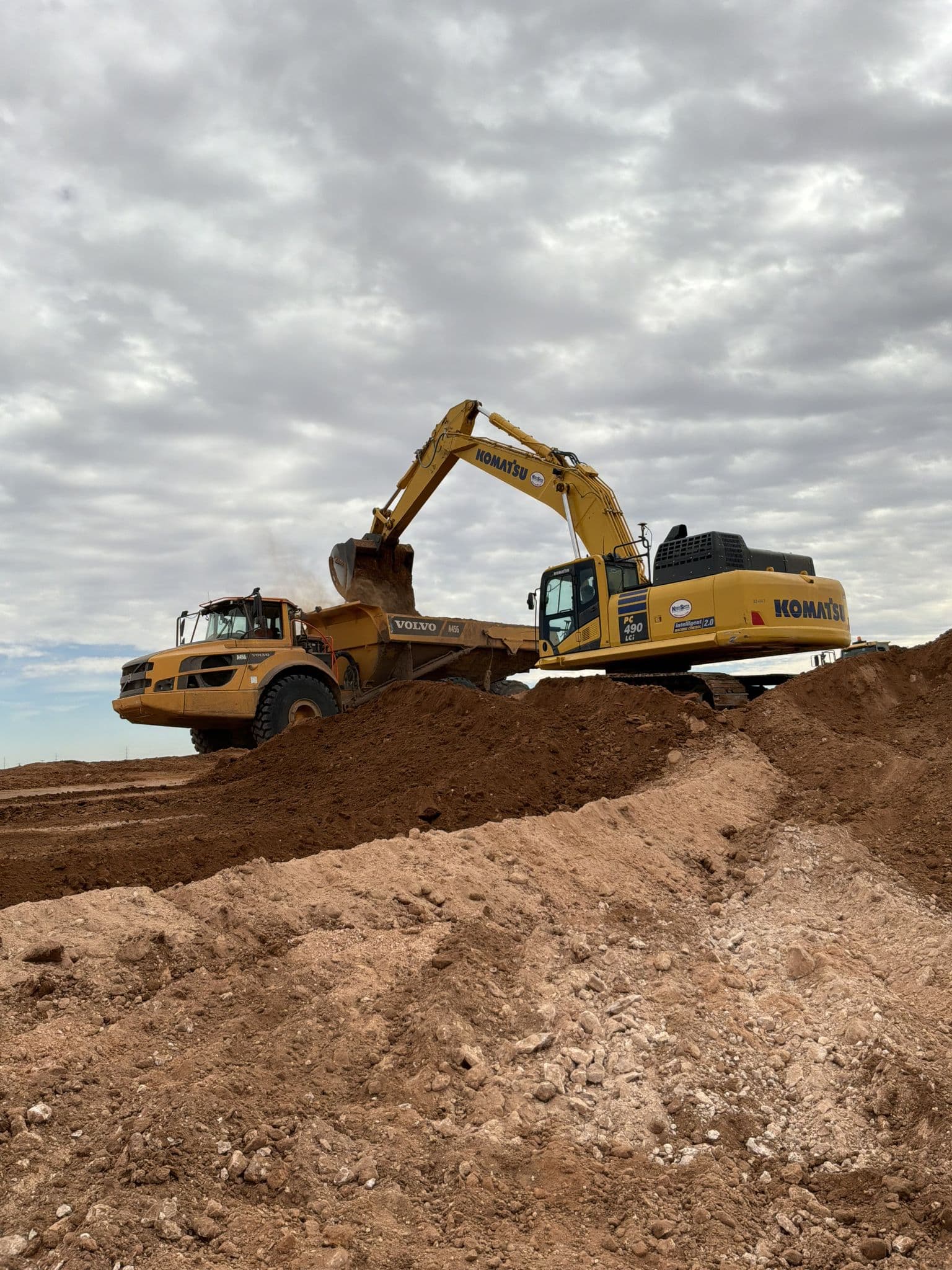
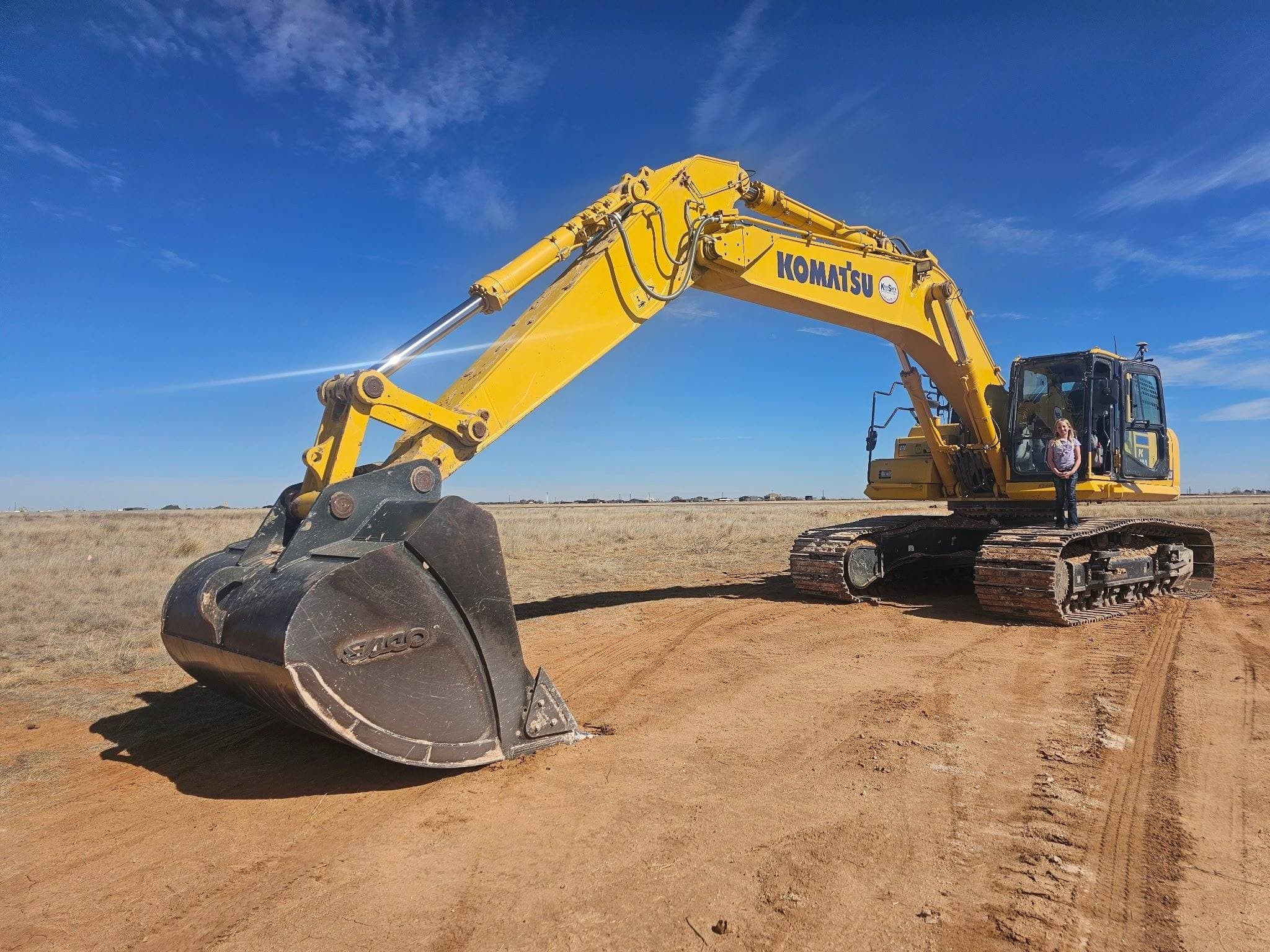
One machine digs and loads, trucks carry. The digging and the hauling are separate, so each can be sized and added to independently.
| What you're comparing | Scrapers | Excavator and haul trucks |
|---|---|---|
| How it works | One machine cuts, carries and spreads in a loop. The cycle is continuous. | Excavator loads, trucks shuttle, excavator loads the next one. The cycle is a queue. |
| Where the money goes | Into cycle time. Fewer machines and a smaller crew, so a good pull is cheap per yard. | Into truck count. More iron and more operators, but each piece can be added or removed as the haul changes. |
| Haul distance | Strong on short and medium pulls across the site. Efficiency falls off as the haul gets long. | Handles long hauls and off-site hauls without penalty, because trucks are built to travel. |
| Ground it needs | Room to run a circuit, and a surface a loaded pan can cross without rutting or bogging. | Room for a truck to turn and a haul road it can keep using. Works in far tighter space. |
| Material | Diggable soil. Rock, ledge and hard caliche stop a pan or force a push-dozer into the loop. | Takes what the excavator can dig or what a breaker or ripper has already loosened. |
| Off the property | Not the tool. A scraper is a site machine, not a road machine. | This is the method. Public roads, weight limits, a disposal site and a real trucking line in the bid. |
| What slows it down | Wet weather and a rough haul route. A pan on soft ground is the first thing to stop. | A queue out of balance — trucks waiting on the excavator, or the excavator waiting on trucks. |
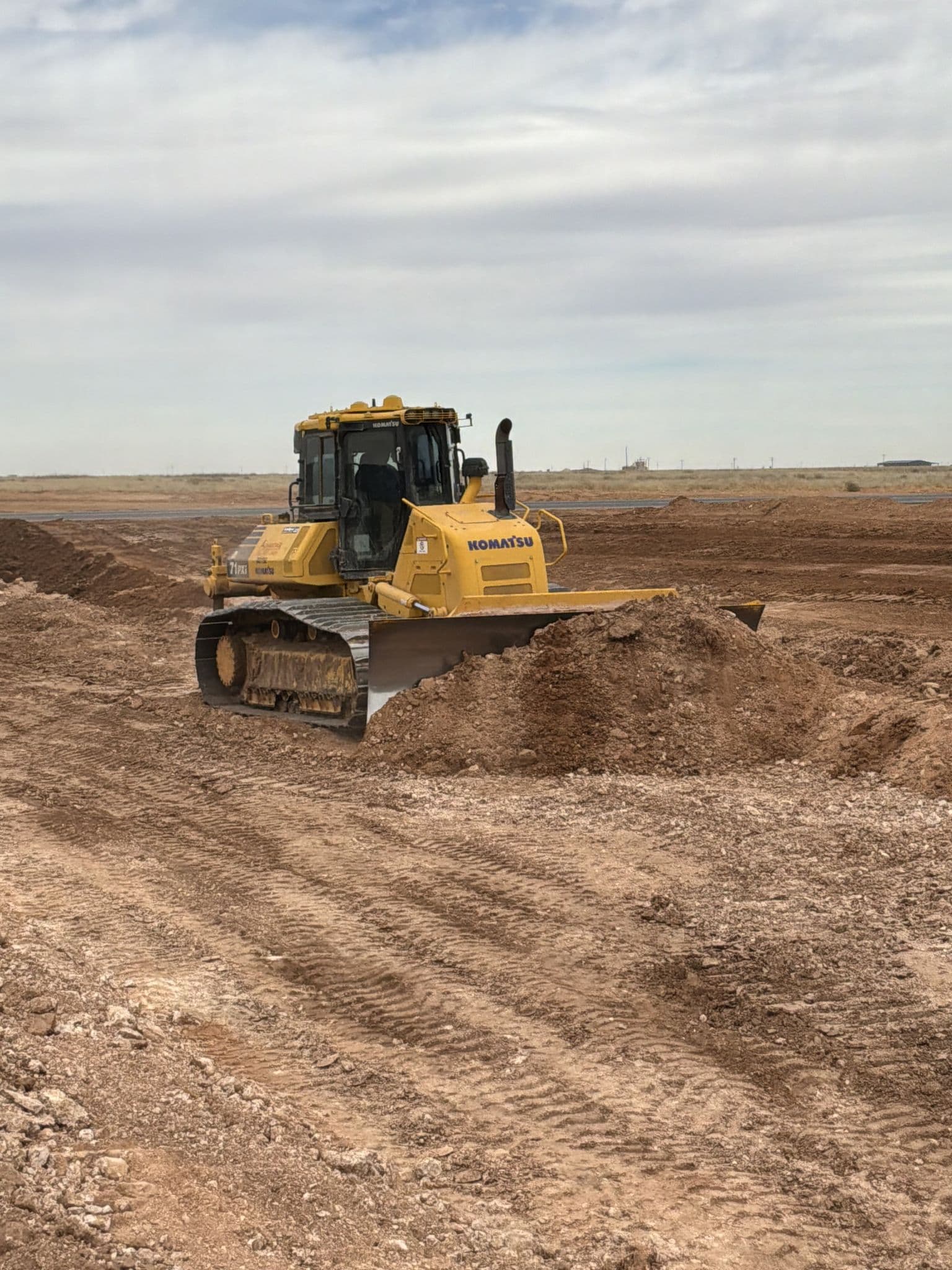
| What it leaves behind | Material spread in a controlled lift as it unloads, close to ready for the roller. | Piles to be spread by a dozer or grader before anything gets compacted. |
Where Each One Is the Right Call
Reach for scrapers when
- Moving material within the same site rather than off it
- Long, reasonably flat pulls where a machine can keep rolling
- Mass grading and cut-and-fill balance on wide open ground
- Jobs where the dirt is diggable without ripping or breaking
- Spreading in controlled lifts as it unloads, which sets up compaction
Reach for excavator and haul trucks when
- Deep cuts, basins, ponds and anything a pan cannot drive into
- Hauling material off the property entirely
- Rock, caliche ledge and material that has to be ripped or broken first
- Tight or built-up sites where a scraper has no room for a circuit
- Wet ground and conditions where a loaded pan would rut or bog
- Stockpiling now and placing later, instead of one continuous pass
Haul distance is the decision, not the price per yard
If somebody quotes you a price per yard without asking how far the dirt is moving, the number is a guess. The same cubic yard costs one thing to move two hundred feet and something else entirely to move two miles, and it is not a small difference — it is the difference that decides which method is on the job at all.
Short haul inside the property, open ground, diggable material: scrapers, and it will be the cheaper number. Long haul, deep cut, rock, a tight site, or dirt that has to leave: excavator and trucks, and the trucking is the number that matters. Most real jobs have both conditions in different corners, which is why the bid should say which method is going where instead of averaging the whole site into one rate.
The haul road is part of the job
Once trucks are in the plan, the route they run becomes a piece of infrastructure. It gets built, it gets watered, it gets bladed, and somebody has to keep doing that or the cycle time climbs every hour as the road gets rougher. A haul road that turns into washboard costs you twice — in truck speed and in what it does to the equipment.
That is why a grader and a water truck stay on a hauling job that has no grading left to do. It looks like idle iron to someone walking the site. It is the thing holding the cycle time down.
Balancing the fleet, and why trucks sit
A hauling operation is a queue, and a queue is either balanced or it is wasting money. Too few trucks and an expensive excavator sits with its bucket full. Too many and trucks line up waiting to load. The right count comes from the cycle — load time, haul time, dump time, return — and it changes when the haul gets longer as the cut works across the site.
So a truck sitting for a minute is not necessarily waste; a truck sitting for twenty is. The practical version for an owner watching the job: ask whether the fleet has been rebalanced since the haul distance changed. On a long job it should have been, more than once.
When the ground picks for you
Rock and hard caliche ledge take the scraper out of the conversation. A pan needs material it can cut; once the answer is ripping or breaking first, an excavator is already there and trucks are the natural pair. The same goes for anything deep — a pond, a basin, a foundation excavation. A scraper works in layers off the top and cannot dig a hole with walls.
Water flips it too. Wet ground is where a loaded pan does the most damage and gets stuck the fastest, and it is also where trucks on a maintained haul road keep working. In a wet week the method sometimes changes mid-job, and that is a decision worth making early rather than after something is buried to the axles.
Hauling off site is a different animal
The moment dirt leaves the property, the job picks up rules that have nothing to do with dirt. Legal load weights on public roads, the route in and out, where the material is actually going and what that site charges to take it, and whether the material is clean. Import is the mirror image — now you are paying for material, trucking and the miles, and the miles are usually the biggest of the three.
This is the strongest argument for balancing cut and fill on site wherever the plan allows it. Every yard that stays on the property is a yard nobody trucked. When a site genuinely cannot balance, the honest bid shows the haul as its own line instead of burying it in a blended rate.
What we need to quote it
The earthwork quantities if an engineer has run them, or enough site information for us to. Where the cut is and where the fill goes, because that distance is the whole question. What the material is, including any geotechnical report — rock and ledge change the method, not just the pace.
Whether anything has to leave the property or arrive on it, and if so, where from and where to. Site access and how much room there is to work. And the schedule, honestly, including how much of it lands in a season when the ground is likely to be wet.
What Your Ground Changes
The Permian Basin is not one kind of dirt. What is obviously the right call on one side of our service area is the wrong one two counties over, and it is the ground underneath — not the thing sitting on top of it — that decides.
Midland, TX
Midland County
Caliche sits close to the surface across most of Midland County, and how close decides the method. Where it is rippable, scrapers move a lot of yardage cheaply. Where it turns to ledge, the job becomes excavator work with trucks, and the bid should say which one the site is before anyone signs it.
Dirt work in MidlandOdessa, TX
Ector County
Ector County runs caliche and sandy loam, often changing within one site. Commercial lots here are frequently tight against existing buildings and drives, which takes the circuit room a scraper needs and pushes the work toward an excavator and trucks even on a short haul.
Dirt work in OdessaAndrews, TX
Andrews County
Sandy loam over caliche with good base material usually nearby. Open acreage and diggable ground is the classic scraper case, and it is also the ground most likely to let a site balance its own cut and fill instead of importing.
Dirt work in AndrewsStanton, TX
Martin County
Martin County farm ground is sandy loam with long open runs, which suits scrapers well. The catch is topsoil — it strips off first and it does not go back under the pad, so the balance calculation has to account for material that is coming off the job as well as moving across it.
Dirt work in StantonBig Spring, TX
Howard County
Howard County goes rocky fast and caliche ledge is common. Assume the method here is excavator and trucks until the ground proves otherwise, and expect ripping or breaking as its own line rather than a footnote to the dirt price.
Dirt work in Big SpringGreenwood, TX
Midland County
Sandy loam over caliche on acreage southeast of Midland, mostly shop and barndominium pads. These are small jobs where the haul is short and the site is open, so the dirt usually never leaves — and on a job this size, one load of imported fill is a noticeable share of the cost.
Dirt work in GreenwoodNotrees, TX
Ector County
Sand country out toward Winkler County. Sand digs easily but it is the material most likely to give a loaded machine trouble on a soft haul route, and it does not hold density on its own, so what gets moved matters as much as how fast it moves.
Dirt work in NotreesWhat This Looks Like on the Ground
Frequently Asked Questions
What is the difference between a scraper and an excavator with haul trucks?
A scraper is one machine that cuts, carries and spreads dirt in a continuous loop, so there is no separate loading step. An excavator and haul trucks split those jobs — the excavator digs and loads, trucks carry. Scrapers are usually cheaper for moving material across an open site; trucks handle deep cuts, rock, tight sites and anything leaving the property.
Which one is cheaper?
It depends almost entirely on haul distance and site conditions, which is why a price per yard quoted without those details is not a real number. Short haul on open, diggable ground favors scrapers. Long hauls, rock, deep cuts, confined sites and off-site disposal favor an excavator and trucks.
Why are trucks sitting idle on my job?
A hauling operation is a queue, and it is balanced against the cycle time — load, haul, dump, return. A short wait is normal. Long waits mean the fleet is out of balance, usually because the haul distance changed as the cut moved across the site. It should be rebalanced when that happens.
Why is there a grader and a water truck on a job with no grading left?
They are maintaining the haul road. A rough or dusty route slows every truck on every cycle and beats up the equipment, so blading and watering it pays for itself in cycle time. It looks like idle iron and it is not.
Can you balance cut and fill so nothing has to be hauled off?
Often, and it is usually the biggest cost saving available on an earthwork job, because every yard that stays on the property is a yard nobody paid to truck. Whether it is possible depends on the design elevations, the quantities and whether the material coming out is suitable to go back in. We will tell you early if the site cannot balance.
Does rock change the method?
Yes, and usually completely. A scraper needs material it can cut, so caliche ledge or rock takes it out of the plan. Once ripping or breaking is involved, the work is an excavator and trucks, and the breaking should show up as its own line in the bid rather than being absorbed into the dirt price.
The Work Behind This Guide
Everything above is one of these services, or the drainage work that keeps it from failing.
Land Development
Turning raw land into a graded, ready-to-use property.
Learn more
Site & Pad Construction
Site prep and pad construction that gets the ground ready to build.
Learn more
Ranch Development
Ranch roads, pads, and infrastructure built to work as hard as you do.
Learn more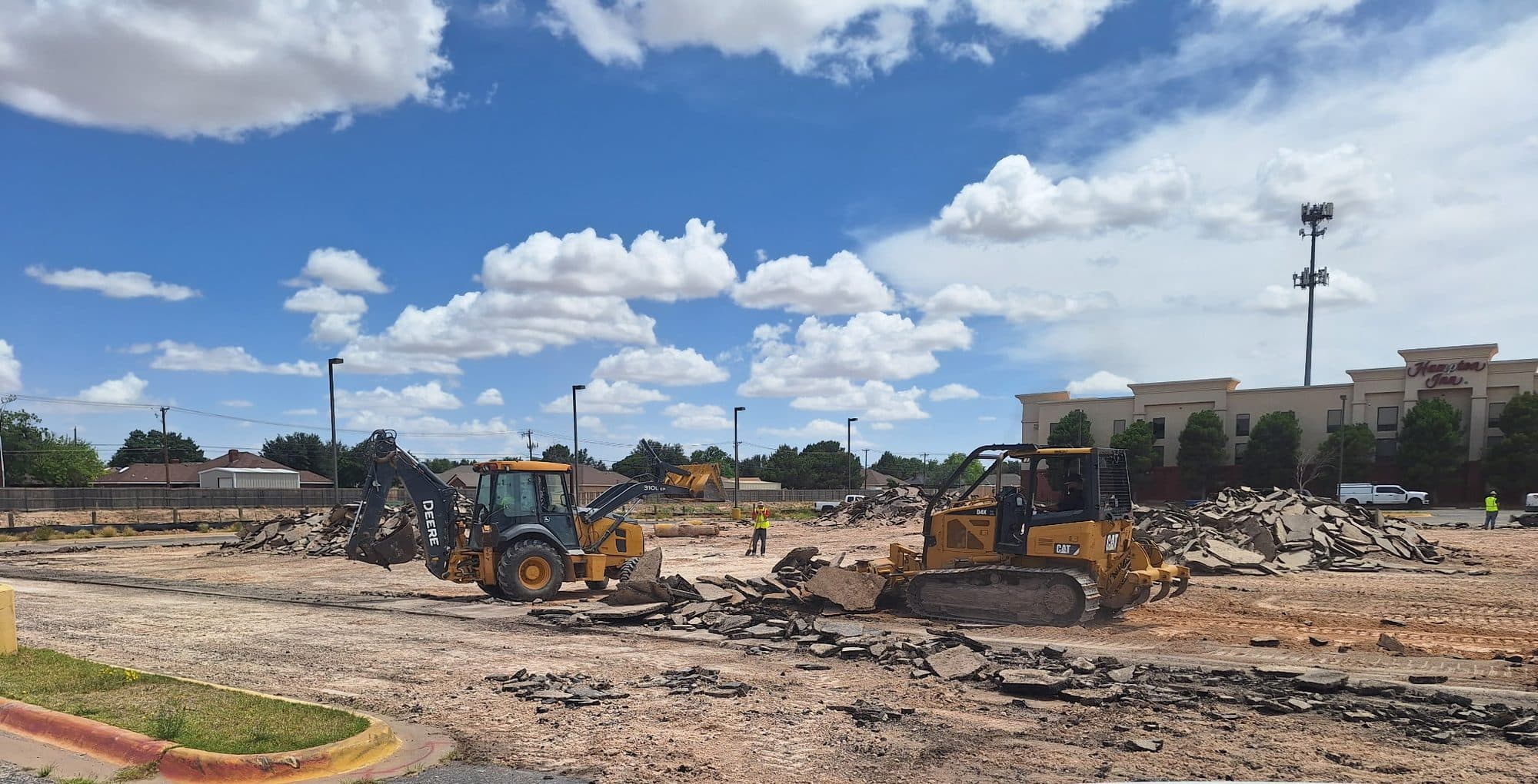
Demolition
Old structures down, debris hauled, site ready for what's next.
Learn moreStill not sure which one your ground wants?
Tell us where the gate is and what you are trying to end up with. We will walk it and tell you what we would build, including when the answer is less work than you were expecting.
Contact Us Directly
Prefer to call or email instead of filling out the form? Reach us directly:
Phone
(575) 973-8523Hours
- Monday – SundayOpen 24 hours — call anytime
Service Area
Midland, TX & the Permian Basin