Guide
Dirt Tank vs Sealed Pond: What Actually Holds Water Out Here
Half the stock tanks out here hold water and half of them do not, and the difference is almost never how deep the hole is. What the soil is made of, how the dam was built, and whether the basin needed sealing — compared plainly.
The call we get most about ponds is some version of the same sentence: it filled up after the rain and then it was gone. That is not a hole-digging problem, and it is usually not an evaporation problem either — a tank that empties in weeks is leaking, and it is leaking because of what the basin is made of and how it was built, not because of how deep it is.
So the real decision on a new tank is not size or shape. It is whether the ground you have will hold water on its own or whether the basin has to be sealed to make it, and that gets answered by looking at the dirt before anybody starts digging. Rangefinder Excavation has built ponds, tanks and dams across Permian Basin ranch and rural ground since 2018.
If you already know what you want built, the pond construction page covers scope, process and what a job like it involves instead.
Straight talk: we are not a soils lab
We dig test pits, we read the profile, and after enough Permian Basin ponds you develop a fair eye for what is going to hold. That is judgment from experience, and it is not the same thing as a laboratory permeability test. On a tank you are genuinely depending on — livestock water, a real investment, a site that has already failed once — get the soil tested properly. It is a small number against the cost of building it twice.
We will also tell you when a site is a bad idea. Some ground out here will not hold water at any sensible price, and there are places where the honest answer is a different spot on the property, or a tank plus a well rather than a tank alone. We would rather say that on the walk-through than take the job and hand you a hole.
Head to Head
Native dirt tank
Built out of what is already there. The basin holds because the soil has enough clay in it to seal itself once it is worked and compacted, and the dam is built from selected material off the same dig.
Sealed basin
The same earthwork plus a deliberate seal — a compacted clay blanket hauled in, or sodium bentonite worked into the top of the basin — because the native soil will not hold on its own.
| What you're comparing | Native dirt tank | Sealed basin |
|---|---|---|
| Why it holds | Clay particles swell and knit together under compaction, so the basin floor becomes its own liner. Nothing gets added; the seal is the dirt. | A layer of low-permeability material is placed over the basin — clay hauled and compacted, or bentonite spread and worked in — so water meets something it cannot pass through. |
| How you know before you dig | Test pits and a read of the soil profile. Material that ribbons in your hand and holds a shape is the sign; sand that falls apart is not. | Same test pits, opposite answer. When the profile comes back sandy, or a pit hits caliche or rock in the bottom, the seal goes in the plan instead of in the hope. |
| What drives the cost | Dirt moved, and how far it moves. If the cut out of the basin builds the dam, the job stays inside its own footprint — that is the cheapest a pond gets. | All of that, plus imported clay or bentonite and the extra passes to place and compact it. A real addition, and a much smaller one than building the tank twice. |
| The dam, either way | A key trench cut into undisturbed material below the dam, then built up in compacted lifts of selected fill. This is the step that fails ponds most often. | Identical. Sealing the basin does nothing about a dam that was pushed up loose instead of built in lifts — water leaves through a bad dam just as happily as through a sandy floor. |
| When you find out it worked | After the first real rain, and again the following summer. A tank that holds through a Permian Basin August is a tank that was built right. | Same test. A sealed basin should show a slow steady decline that tracks evaporation, rather than a level you can watch drop week to week. |
| Fixing it later | Possible, and it is the harder version of the job — the tank has to dry out, the floor gets reworked and sealed, and the dam gets opened up if that is where it is going. | Done once, up front, on dry ground you can get equipment onto. Cleaner and cheaper than coming back to a basin half full of water and mud. |
Where Each One Is the Right Call
Reach for native dirt tank when
- Ground with real clay content — material that ribbons in your hand instead of crumbling
- Tanks sited in a draw where the low ground has been collecting fines for a long time already
- Ranch water where the budget wants every yard of dirt to come off the job itself
- Sites where test pits show the same tight material all the way down, not just on top
Reach for sealed basin when
- Sandy loam, or sand over caliche, where water runs straight down through the basin floor
- Ground with caliche ledge or rock in the bottom that water can travel sideways along
- A tank that already failed once and needs the reason fixed rather than the hole made deeper
- Anywhere the tank has to be reliable — livestock water you are actually counting on
Depth is not what makes a pond hold
The instinct is that a deeper pond holds longer. Depth does matter out here, but for a different reason than most people assume: a deeper basin has less surface area for the same volume of water, so it loses less to evaporation over a Permian Basin summer. A wide shallow tank bakes off.
What depth does not do is stop a leak. Digging further into ground that will not hold just gives you a bigger hole that empties from a lower elevation — and on some sites it makes things worse, by cutting through a tight upper layer into sand or fractured rock underneath. If a tank is not holding, the answer is almost never another two feet.
The dam is where most failures actually live
A dam is not a pile of dirt pushed across a draw. It starts with a key trench — a cut through topsoil and loose material into undisturbed ground underneath — so the dam ties into something solid instead of sitting on a layer water can travel along. Then it goes up in lifts, each one compacted before the next lands on it.
Skip either step and the tank can hold beautifully for a season, then start seeping through or under the dam. The frustrating part is that it looks fine from the top the whole time. This is the single most common reason we get called out to a pond that used to work.
Size the spillway to the watershed, not to the pond
The spillway is not a detail at the end of the job. It is what decides whether the dam survives the storm that fills the tank, and it has to be sized to the ground draining into the site — which is often a lot more ground than people expect once you walk it.
An undersized or badly placed spillway erodes, and once it starts cutting it takes the dam with it. We size and shape the spillway off the watershed actually feeding the site, and armor it where the water is going to concentrate.
Three questions to ask before anyone moves dirt
What does the soil profile look like in test pits across the whole basin footprint, not just one hole in the middle? Where does the water that fills this tank come from, and how much ground is that? And where does the overflow go when the tank is full and it is still raining?
If a contractor can answer those three before quoting, the number they give you means something. If the quote is an hourly rate and a promise to dig until it holds, that is not a plan — that is you funding an experiment.
Cost-share programs are worth a phone call
For agricultural and livestock water, USDA's Natural Resources Conservation Service runs conservation programs that can cost-share on water facilities and related practices, and terracing and waterways sometimes fall under the same umbrella. Eligibility, practice standards and funding cycles are set by the agency and they change.
So we are not going to tell you what you qualify for — we are not the ones who decide it. What we will tell you is that a call to your local NRCS field office before you build costs nothing, and that these programs generally carry specifications the work has to meet. Far easier to plan around up front than to retrofit after the dam is closed.
What Your Ground Changes
The Permian Basin is not one kind of dirt. What is obviously the right call on one side of our service area is the wrong one two counties over, and it is the ground underneath — not the thing sitting on top of it — that decides.
Midland, TX
Midland County
Caliche sits close to the surface across most of Midland County. It is good material to build a dam out of once it is ripped and compacted — but a basin floor cut into fractured caliche can move water sideways out of the pond, which is why a test pit matters more here than a shovel test does.
Dirt work in MidlandGreenwood, TX
Midland County
Caliche shallow under sandy loam, on ground flat enough that water sits where it lands. That flatness is good for catching water and poor for shedding it, so a Greenwood tank is often as much about where the inflow comes from as about the basin. The sandy upper layer is the part that decides whether it needs sealing.
Dirt work in GreenwoodStanton, TX
Martin County
Sandy loam farm ground over caliche across Martin County — easy digging up top, with a hard layer underneath that sets how deep a cut can practically go. Rain sheets across flat cotton ground instead of channeling, so a tank here often gets paired with terraces or a graded waterway to actually deliver water to it.
Dirt work in StantonBig Spring, TX
Howard County
Howard County turns rocky quickly, and caliche ledge is common. Ground falls off toward the draws east and south of town, which is why tanks around Big Spring get sited to catch a draw — good inflow, and concentrated runoff that will cut a spillway that was not armored.
Dirt work in Big SpringMidkiff, TX
Upton County
Upton County ground is rocky in places with caliche ledge close to the surface, and the land falls off toward the draws. Stock tanks built into those draws catch water well; that same concentrated flow is what takes out an undersized spillway, so the overflow gets designed before the basin does.
Dirt work in MidkiffAndrews, TX
Andrews County
Caliche and sandy loam, generally workable, with good base material close to most sites. Flat ground and hard layers mean water sits where you leave it — helpful for a tank, as long as the basin floor is not the sandy half of that description.
Dirt work in AndrewsAbilene, TX
Taylor County
Taylor County runs from sandy loam to tight clay with rock ledges, so the same tract can dig three different ways — and a pond is exactly the job where that matters. Clay that holds water long after a rain is the best news a stock tank can get, but it is not a safe assumption across a whole property without pits.
Dirt work in AbileneWhat This Looks Like on the Ground
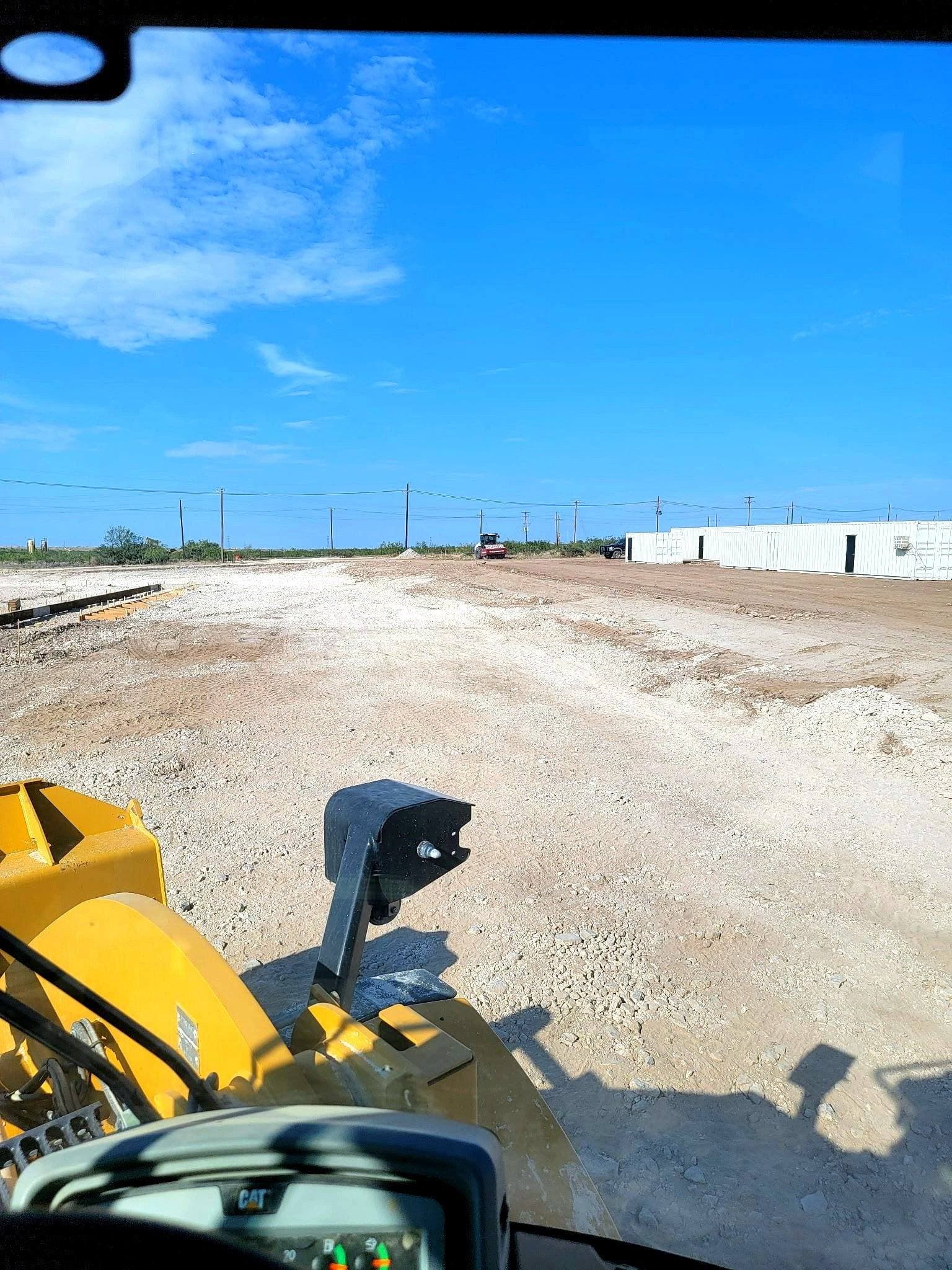
Frequently Asked Questions
Why does my stock tank go dry every summer?
Two different causes, and they look different. If the level drops slowly and steadily all summer, that is mostly evaporation, and the answer is depth and shape rather than sealing. If it empties within weeks of a good rain, the tank is leaking — through the basin floor, or through or under the dam. We can usually tell which by walking it and looking at where the ground stays damp.
Can you seal a pond that already leaks?
Yes, and it is the harder version of the job. The tank has to be dry enough to get equipment onto the floor, then the basin gets reworked and sealed — a compacted clay blanket, or bentonite worked into the surface — and if the leak is in the dam, that gets opened up and rebuilt in lifts over a proper key trench. Doing it right the first time is meaningfully cheaper.
How do I know if my ground will hold water without sealing?
Test pits across the basin footprint, not one hole in the middle. Material with real clay content will ribbon and hold a shape in your hand; sandy material falls apart. Caliche or rock in the bottom of a pit is a flag, because water can travel sideways along it. For a tank you are depending on, a proper lab permeability test is worth the money.
How big should a stock tank be?
It is set by the watershed — how much land actually drains to the site and what that ground typically receives — not by how big the equipment is. We walk the drainage area before recommending a size, because a tank sized larger than its inflow never fills, and one sized smaller puts all the pressure on the spillway.
Do you build detention and retention ponds as well as stock tanks?
Both. The earthwork is the same discipline — basin, embankment, outfall, erosion control — whether it is a ranch tank catching a draw or a detention pond on a commercial site sized to hold a storm and release it slowly. What changes is what the design has to satisfy: livestock and evaporation on one, a drainage plan and a reviewing authority on the other.
What does it cost to build a pond in West Texas?
There is no flat rate, and anyone quoting one over the phone has not seen your ground. What moves the number: how much dirt has to move and how far, whether the cut can build the dam or material has to be hauled in, whether the basin needs sealing, how big the spillway has to be for the watershed, and how far equipment has to travel to get there. We walk it and price it off the site, and the estimate is free.
The Work Behind This Guide
Everything above is one of these services, or the drainage work that keeps it from failing.
Pond Construction
Stock ponds and tanks built to hold water, not just hold a hole.
Learn more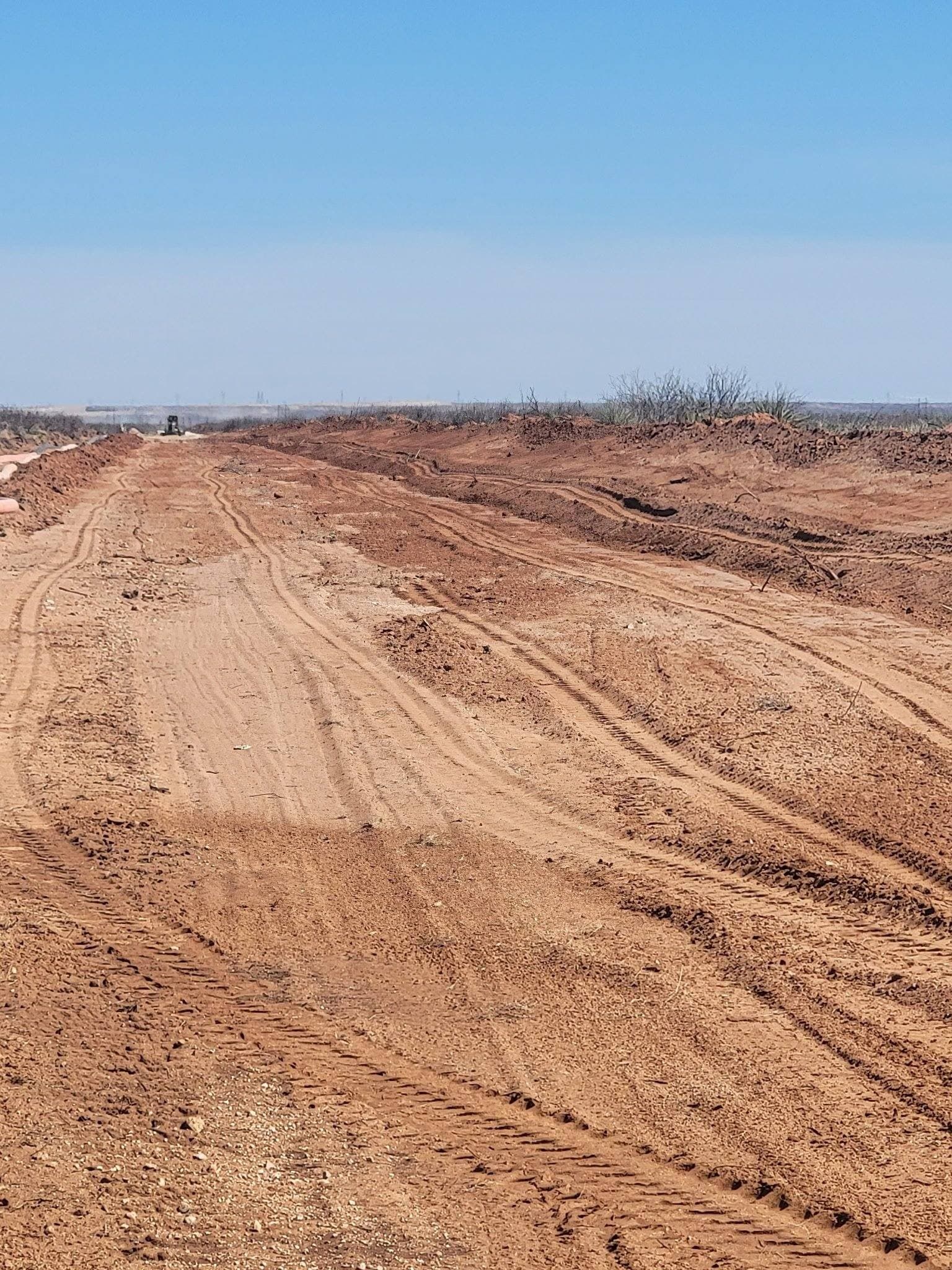
Ag Terrace Development
Terracing that keeps topsoil where it belongs and water where you want it.
Learn more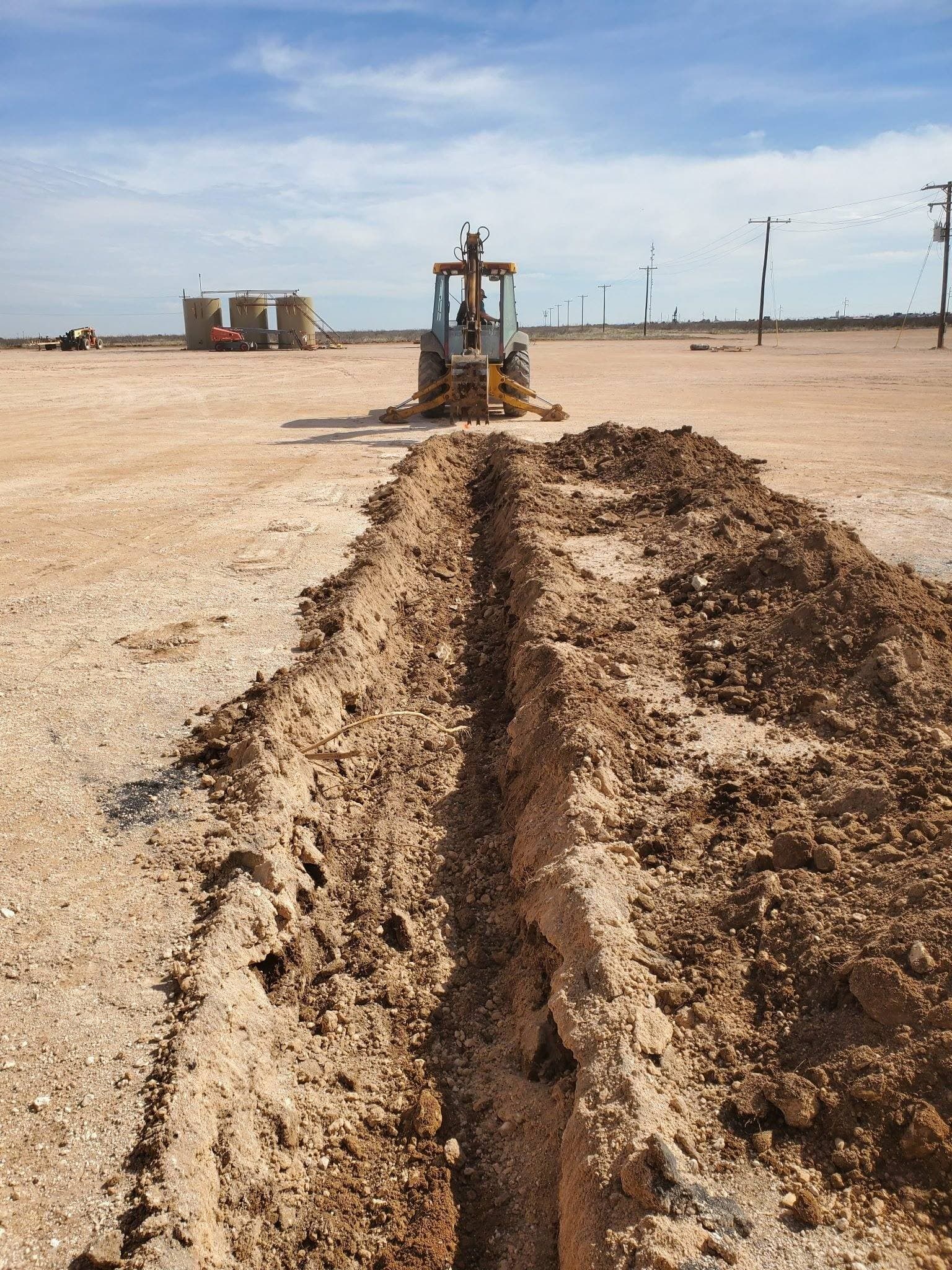
Drainage Solutions
Grading and drainage work that gets water moving where it's supposed to go.
Learn more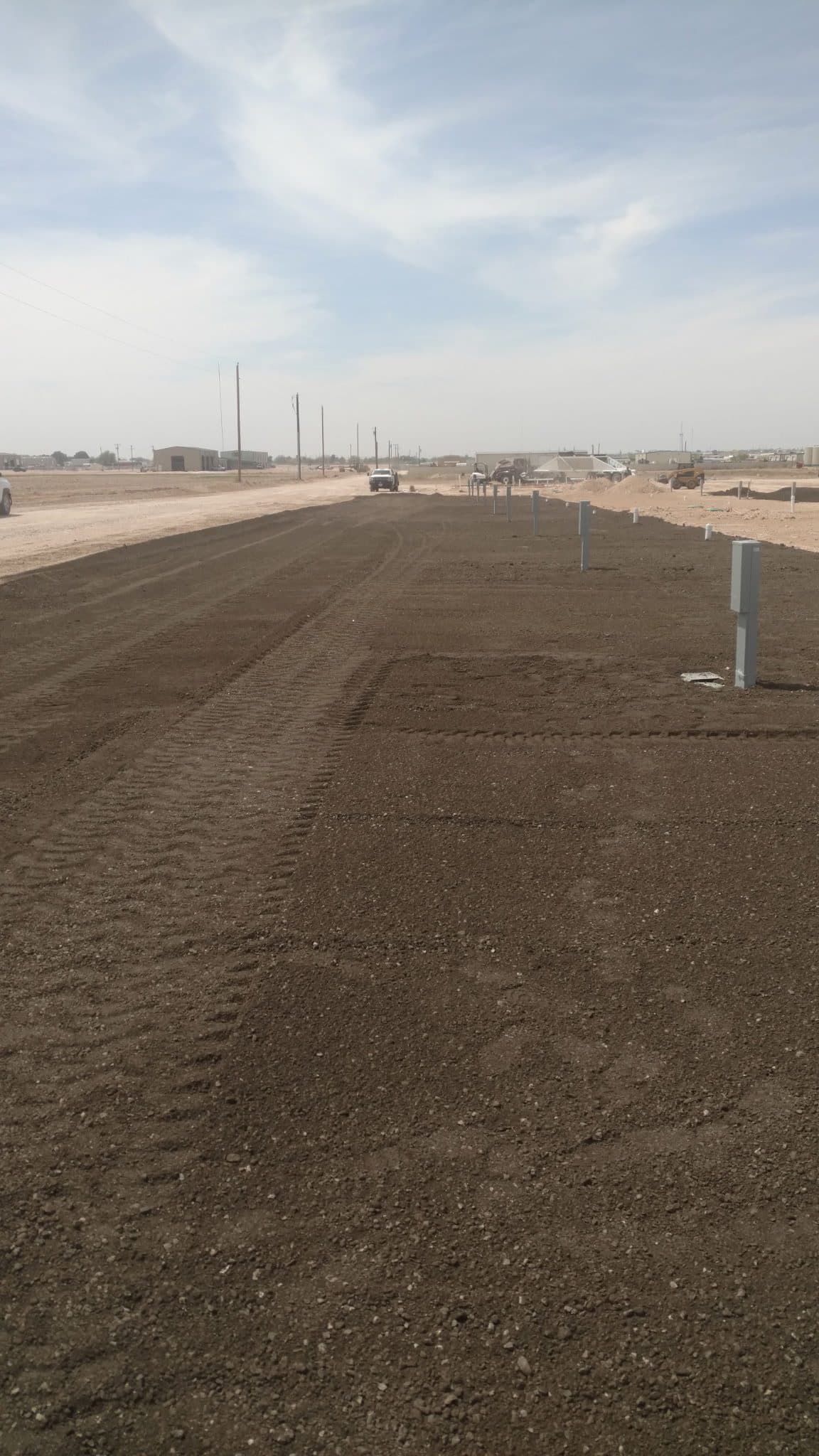
Ranch Development
Ranch roads, pads, and infrastructure built to work as hard as you do.
Learn moreStill not sure which one your ground wants?
Tell us where the gate is and what you are trying to end up with. We will walk it and tell you what we would build, including when the answer is less work than you were expecting.
Contact Us Directly
Prefer to call or email instead of filling out the form? Reach us directly:
Phone
(575) 973-8523Hours
- Monday – SundayOpen 24 hours — call anytime
Service Area
Midland, TX & the Permian Basin