Guide
Padfoot vs Smooth Drum: How Dirt Actually Gets Compacted
Every page on this site says the same three words — compacted in lifts. This is what that actually means: which roller does what, why the water truck matters more than the roller, and how anybody knows when the dirt is done.
Compaction is the part of dirt work nobody photographs and everybody pays for. A pad is not finished when it looks flat. It is finished when the material underneath has been squeezed to a density that will hold a building, a rig or a parking lot without settling, and getting there is a process with a right order and a narrow window.
The two rollers you see on our jobs do genuinely different things, and the truck that gets the least attention decides whether either of them works. Below is the plain version, including the part most people find surprising: on a hot West Texas afternoon you can roll ground all day and never make spec. Rangefinder Excavation has been compacting dirt across the Permian Basin since 2018, on our own graders, rollers and water trucks.
If you already know what you want built, the site & pad construction page covers scope, process and what a job like it involves instead.
Straight talk: we do not test our own work
Density testing belongs to an independent geotechnical lab retained by you or the general contractor, not to us. The contractor placing the dirt is not the right party to certify the dirt, and any contractor who offers to handle the testing for you is offering something you should not want.
We will also tell you when the schedule and the weather disagree. If a spec needs a moisture window that a given week is not going to give us, the honest answer is to say so and move the sequence, not to roll material that was never going to make density and hand you a pad that passes a look and fails a test.
Head to Head
Padfoot roller
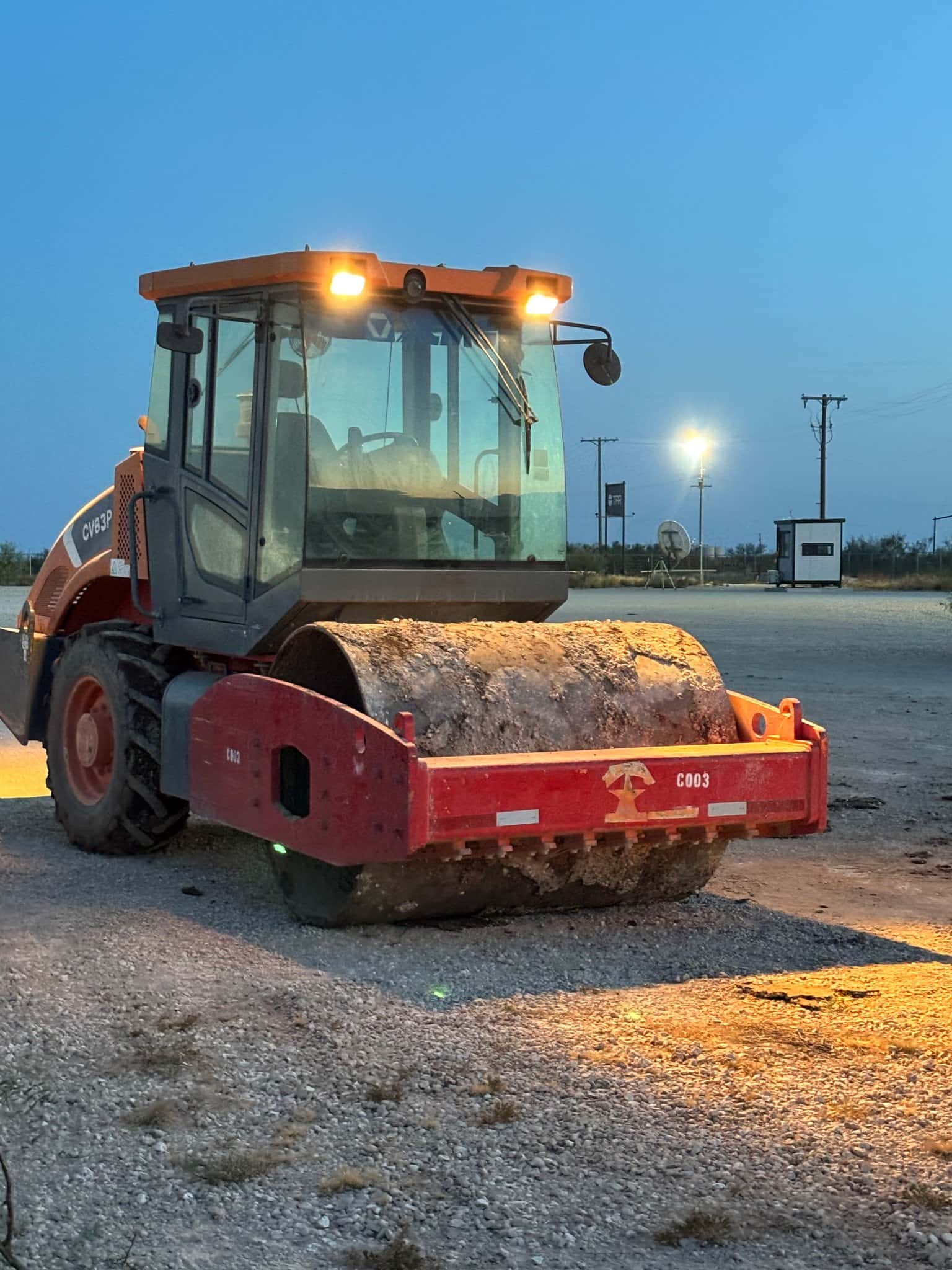
A drum covered in projecting feet. The feet punch down into the lift and knead it from the bottom up, compacting under the surface rather than on it. Sometimes called a sheepsfoot.
Smooth drum roller
A flat steel drum, usually vibrating. It compacts from the surface down and leaves a tight, sealed, finished face rather than a punched one.
| What you're comparing | Padfoot roller | Smooth drum roller |
|---|---|---|
| How it works | The feet penetrate the lift and compact from the bottom upward, walking out of the material as it tightens. | The drum presses and vibrates the surface, compacting downward and leaving a sealed face. |
| Right material | Cohesive — clay and clayey soils. On clean sand it mostly makes holes. | Granular — caliche, base rock, sand and gravel. On wet clay it bridges and traps soft material underneath. |
| Lift thickness | Reaches deeper, so it handles thicker lifts. Still measured in inches, not feet. | Shallower effective depth. Thin lifts or it compacts the top and leaves the bottom loose. |
| Where it sits in the sequence | First. Subgrade and structural fill, lift by lift. | Last. Final base course and the finished surface. |
| How it fails | Rolling material that is too dry — the feet punch through without ever building density, and passes stop helping. | Sealing over a soft lift. The surface looks perfect and the failure is buried where nobody sees it until later. |
| How you know it is working | The roller walks out — the feet stop sinking in as the lift tightens. That is the operator's read, not a test result. | The surface stops deflecting and stops showing a wave in front of the drum. |
| What actually decides the result | Moisture content of the material, not the number of passes. | Moisture content of the material, not the number of passes. |
Where Each One Is the Right Call
Reach for padfoot roller when
- Cohesive material — clay and clayey soils that hold together and need working, not just pressing
- Subgrade and the structural fill underneath, where the density that matters is below the surface
- Thicker lifts than a smooth drum can reach through
- Breaking down chunks and clods so the lift is uniform instead of bridging over voids
Reach for smooth drum roller when
- Granular material — caliche base, road base, sand and gravel that compacts by rearranging, not kneading
- The final base course under a slab or pavement, where the surface itself has to be tight
- Sealing a lift at the end of the day so a rain runs off it instead of into it
- Finishing after the padfoot has done the structural work below
The water truck is half the machine
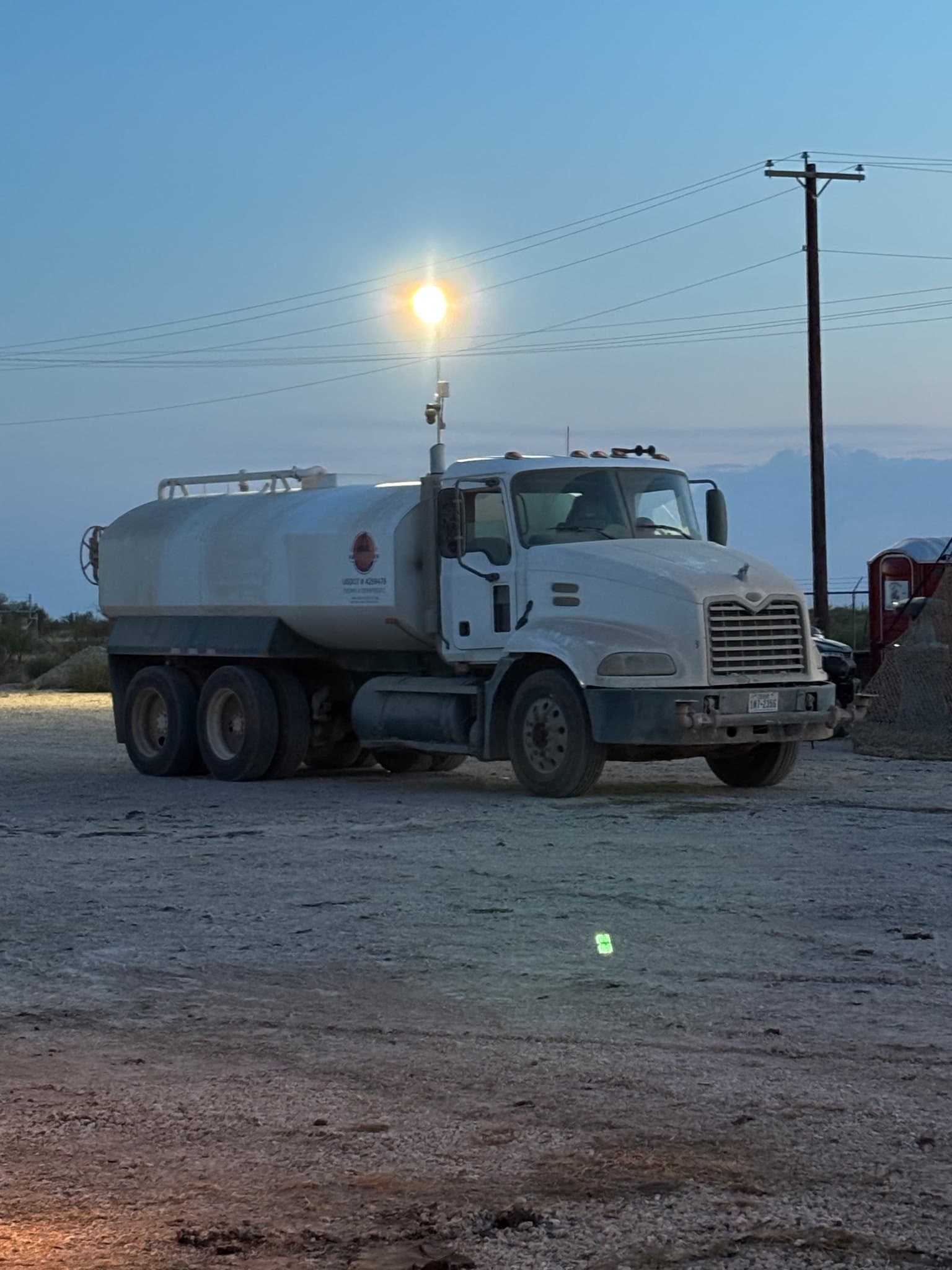
Every soil has a moisture content at which it compacts best — wet enough that the particles slide past each other and pack, dry enough that the water is not holding them apart. Above it or below it, the same roller making the same passes gets you less density. This is why the water truck is on the job, and it is doing engineering, not dust control.
Too dry is the common failure out here, and it is invisible. The ground looks fine, the roller sounds fine, and the lift never makes spec no matter how many passes it gets. Too wet is the opposite problem and it announces itself — the material pumps and waves under the drum, and the fix is to stop, aerate it and let it dry back. Neither one is solved by rolling harder.
Why we work into the dark
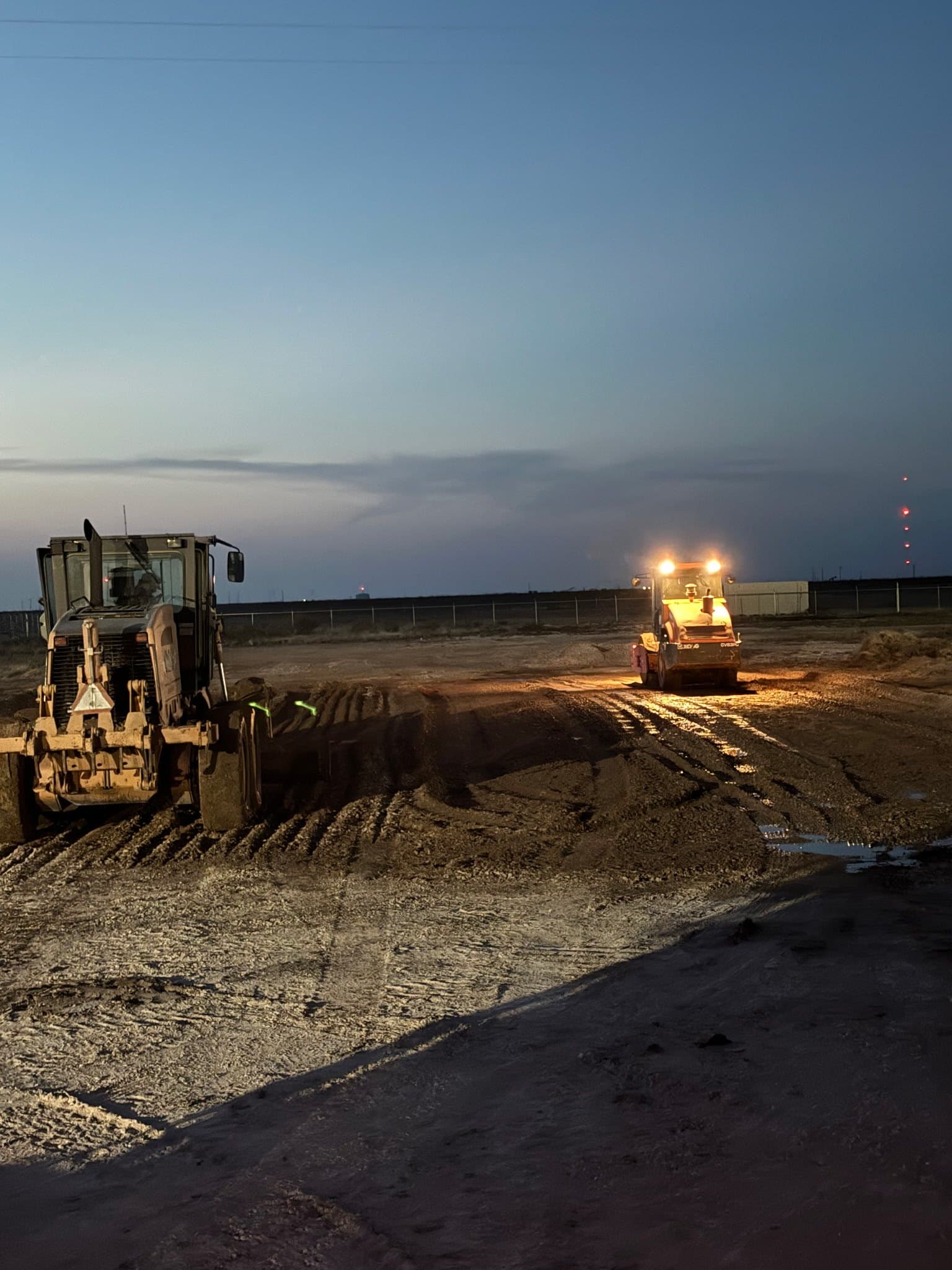
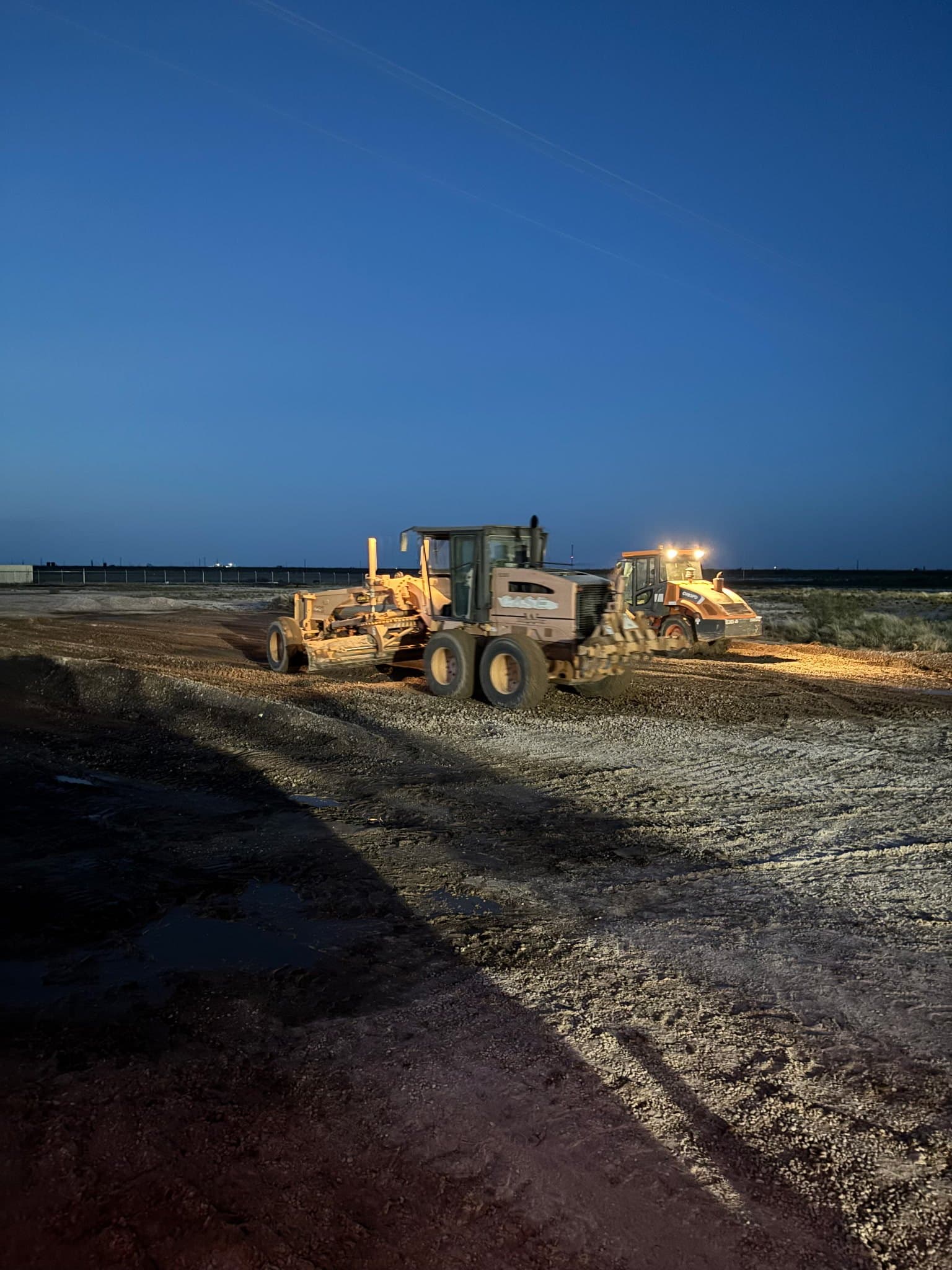
In a Permian Basin summer the afternoon will take the moisture back out of a lift faster than a crew can water it and roll it. You water, and by the time the roller reaches the far end the near end is already dry. So the work moves to the cool end of the day — late evening and after dark, under work lights, when water put into the ground stays there long enough to do its job.
That is what the photos on this page are. Our grader, our padfoot roller and our water truck running at dusk, not because anybody was behind, but because that is when the ground would hold moisture. It is also why a compaction schedule in July is a different animal from the same scope in November.
Lifts, not layers
Fill goes down in thin lifts and every one of them gets compacted before the next arrives. The number is set by the spec and the equipment, and it is measured in inches. The temptation on a big fill is to push in a deep layer and roll the top of it, which produces exactly what you would expect: a crust over loose material.
That buried soft layer is the most expensive mistake in dirt work, because it cannot be found by looking and it cannot be fixed without taking off everything above it. If you are paying for a pad, the lift thickness and the testing frequency are the two lines in the spec worth actually reading.
The order: padfoot first, smooth drum last
On a typical pad the sequence runs subgrade prepared and proof-rolled, then structural fill placed in lifts with the padfoot working each one, the grader holding the elevation and cross-slope as it comes up, and finally the base course placed and sealed with the smooth drum.
Skipping the padfoot on cohesive material and going straight to smooth drum is a way to get a beautiful-looking surface over material that was never properly compacted. It is fast, it passes a visual inspection, and it fails under load a year later. Both rollers, the grader and the water truck are ours, which is the practical reason the sequence runs in the right order rather than the order a rental yard can deliver in — nobody is smooth-drumming a lift early because the padfoot goes back Friday.
How anybody actually knows it is done
Density testing. A geotechnical lab establishes the maximum dry density for the material with a Proctor test, then takes field density tests as the fill goes up and reports each lift as a percentage of it. The spec says what percentage is required. That number, not anyone's opinion, is what says the pad is built.
Tests get taken in lifts as the work proceeds, not once at the end, because a failing lift found under three more is a very expensive discovery. Settle before the first load of fill lands who is calling the lab, who is paying, what the passing standard is and what happens on a failing test.
What we need to quote it
The geotechnical report if there is one — it sets the material, the lift thickness and the required density. The pad or area dimensions and finished elevation. What the ground is now and whether the fill is coming off the site or arriving on trucks. Access and water: where the nearest usable water source is, because hauling water a long way is a real line on a summer job.
And your schedule, honestly. Compaction is the part of the job weather actually controls, and a plan that assumes a dry October is a different plan from one that has to work in July.
What Your Ground Changes
The Permian Basin is not one kind of dirt. What is obviously the right call on one side of our service area is the wrong one two counties over, and it is the ground underneath — not the thing sitting on top of it — that decides.
Midland, TX
Midland County
Caliche close to the surface across most of Midland County, and it compacts well once it is ripped, moisture-conditioned and rolled. Well is the operative word — dry caliche is stubborn, and the difference between a lift that makes spec and one that does not is usually the water truck rather than the roller.
Dirt work in MidlandOdessa, TX
Ector County
Ector County runs caliche and sandy loam, and the mix changes across a single site more often than people expect. That matters here because the right roller changes with it — sandy stretches want the smooth drum, the clayey ones want the padfoot, and treating the whole lot as one material is how soft spots get buried.
Dirt work in OdessaAndrews, TX
Andrews County
Caliche and sandy loam with good base material generally close by. Sand is the flag: it compacts by rearranging rather than kneading, so it is smooth-drum work, and it will not hold density on its own if the fines are not there.
Dirt work in AndrewsStanton, TX
Martin County
Martin County farm ground is sandy loam over caliche. The organic topsoil layer has to be stripped before any of this starts — it holds moisture, it will not compact, and building a lift on top of it puts the pad on a sponge that keeps working after everyone leaves.
Dirt work in StantonGardendale, TX
Ector County
Flat Ector County ground along SH-158 with caliche not far down. Flat is the complication: water put on a lift has nowhere to run, so it is easy to overshoot into pumping, and the recovery is aerating and waiting rather than rolling through it.
Dirt work in GardendaleBig Spring, TX
Howard County
Howard County turns rocky quickly and caliche ledge is common. Rock in a lift bridges — it holds voids open under the drum and reads as compacted when it is not, which is why oversize material gets screened or broken down rather than rolled over.
Dirt work in Big SpringGreenwood, TX
Midland County
Sandy loam over caliche on acreage south and east of Midland, mostly shop and barndominium pads. Smaller jobs, same physics, and the corner nobody should cut is lift thickness — a pad pushed up in one pass to save a day is the one that cracks a slab later.
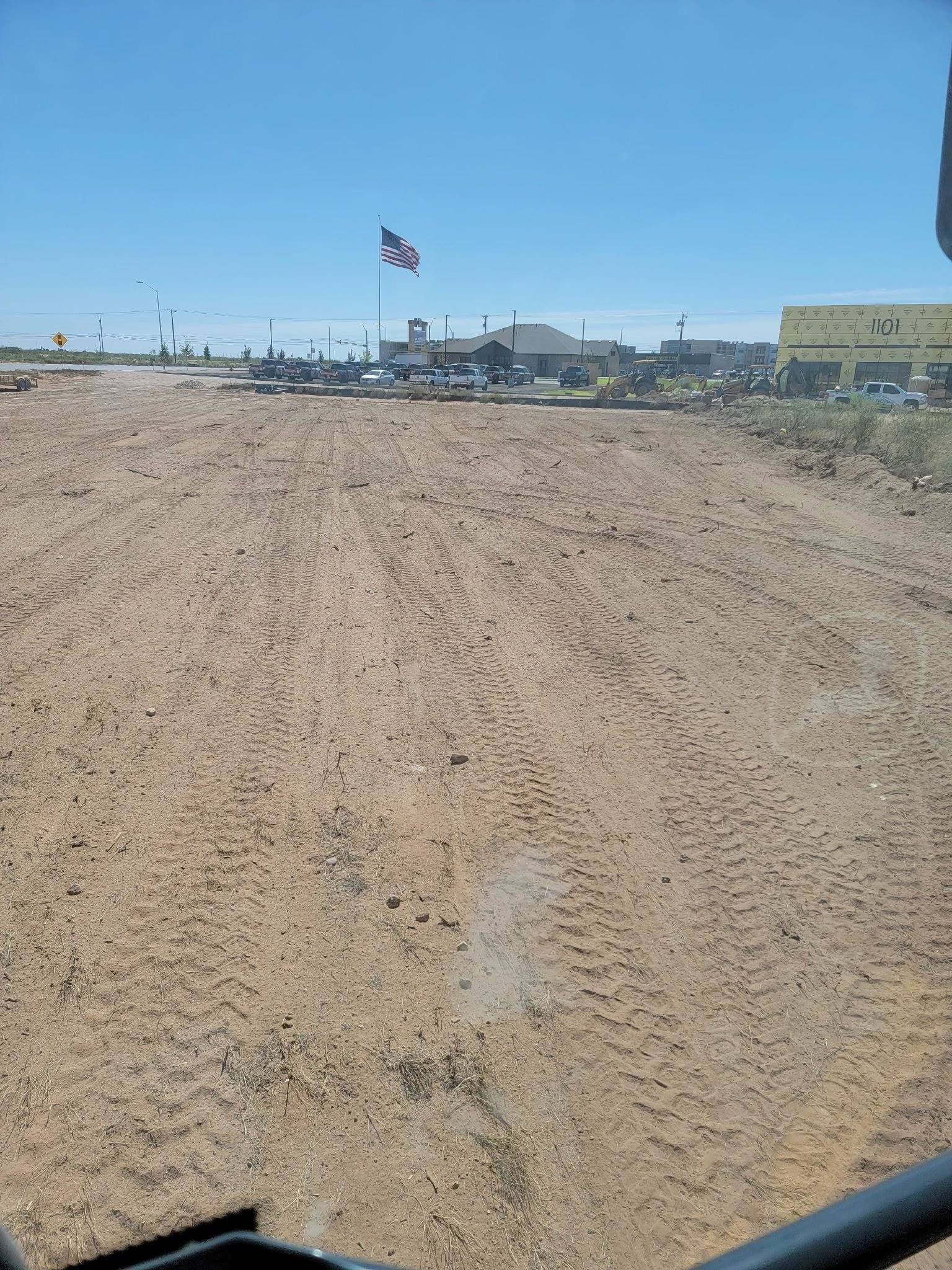
Dirt work in GreenwoodWhat This Looks Like on the Ground
Frequently Asked Questions
What is the difference between a padfoot and a smooth drum roller?
A padfoot has feet that punch into the lift and compact it from the bottom up, which is what cohesive clay-type material needs. A smooth drum presses and vibrates the surface, which is what granular material like caliche base needs, and it leaves a sealed finished face. Most pads use both — padfoot on the structural fill, smooth drum on the final base.
Why do you run a water truck during compaction?
Because moisture content, not passes, is what decides whether a lift reaches density. Every soil has a moisture level where it compacts best. Too dry and the roller never builds density no matter how many times it goes over. Too wet and the material pumps. The water truck is there to hold the material in that window.
Why would a crew be compacting at night?
Heat. On a Permian Basin summer afternoon the ground gives moisture back faster than you can water and roll it, so the lift is dry again before the roller finishes the pass. Late evening and after dark, the water stays in the material long enough to do its job. It is a moisture decision, not a schedule problem.
How many passes does compaction take?
There is no fixed number and anyone quoting one is guessing. It depends on the material, the lift thickness, the moisture content and the roller. The operator reads it — on a padfoot, the roller walking out of the lift as it tightens — and a density test confirms it. Passes without the right moisture will not get there at all.
Who pays for compaction testing?
Usually the owner or the general contractor retains the testing lab, and that is the right arrangement — the party placing the dirt should not be certifying it. Get it settled before fill starts: who calls the lab, who pays, what the passing standard is, and what happens on a failing test.
What happens if a pad is not compacted properly?
It settles, usually unevenly, and usually after the structure is on it. The symptoms show up as slab cracking and movement, and the repair is under a finished building, which is why this is the least glamorous and most consequential part of the job. It is also why lift thickness and testing frequency are the two spec lines worth reading closely.
The Work Behind This Guide
Everything above is one of these services, or the drainage work that keeps it from failing.
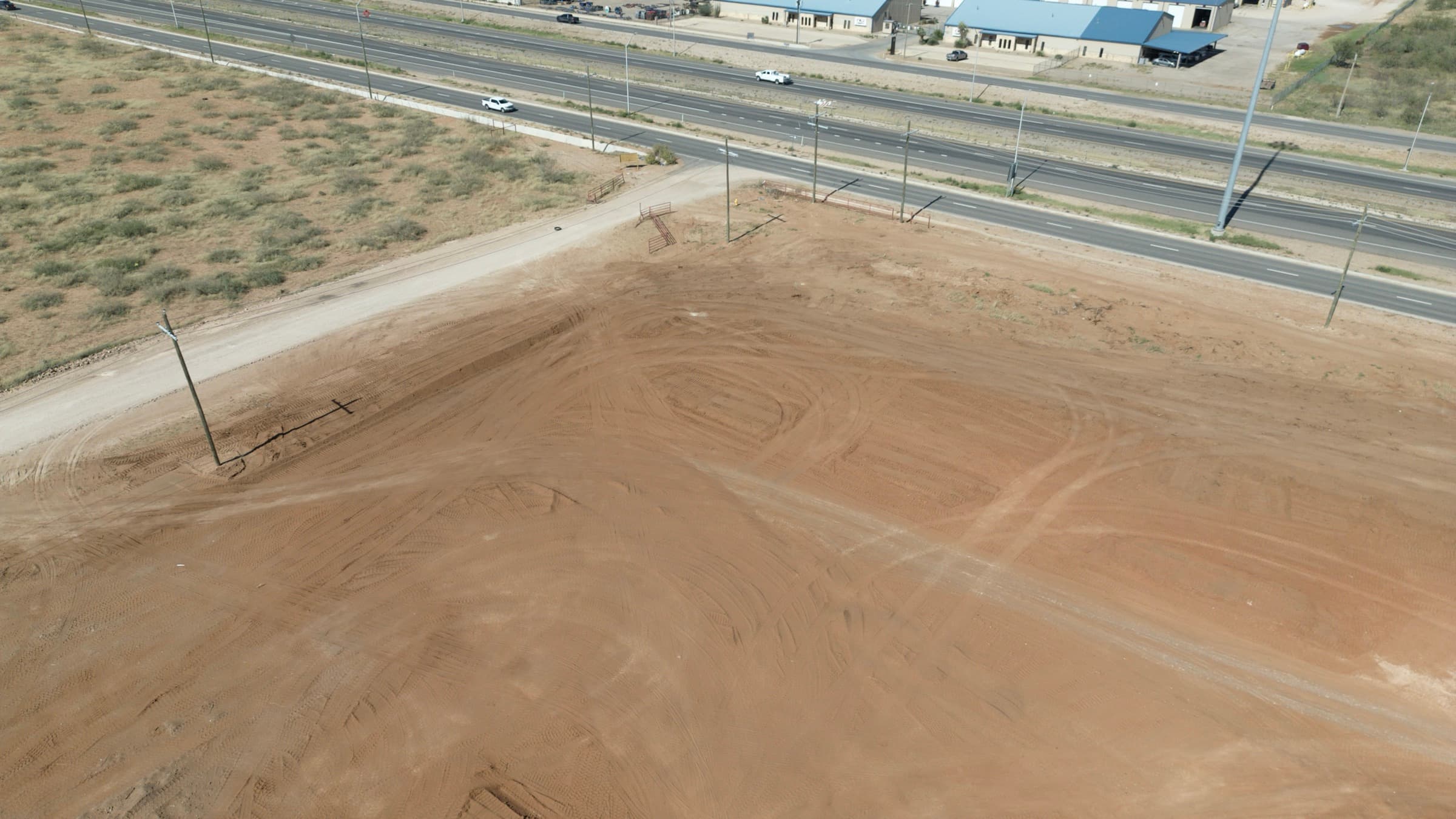
Site & Pad Construction
Site prep and pad construction that gets the ground ready to build.
Learn more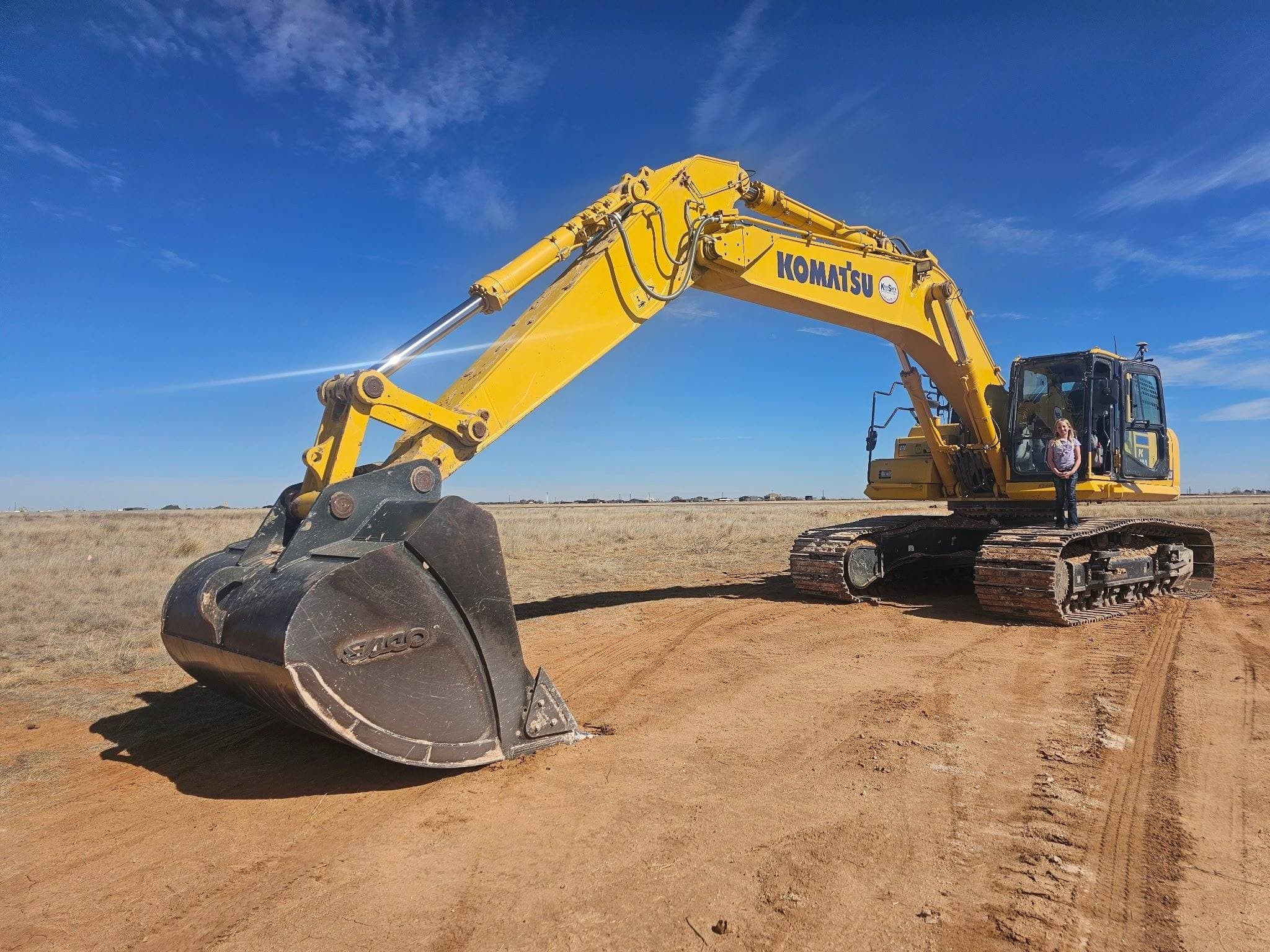
Land Development
Turning raw land into a graded, ready-to-use property.
Learn more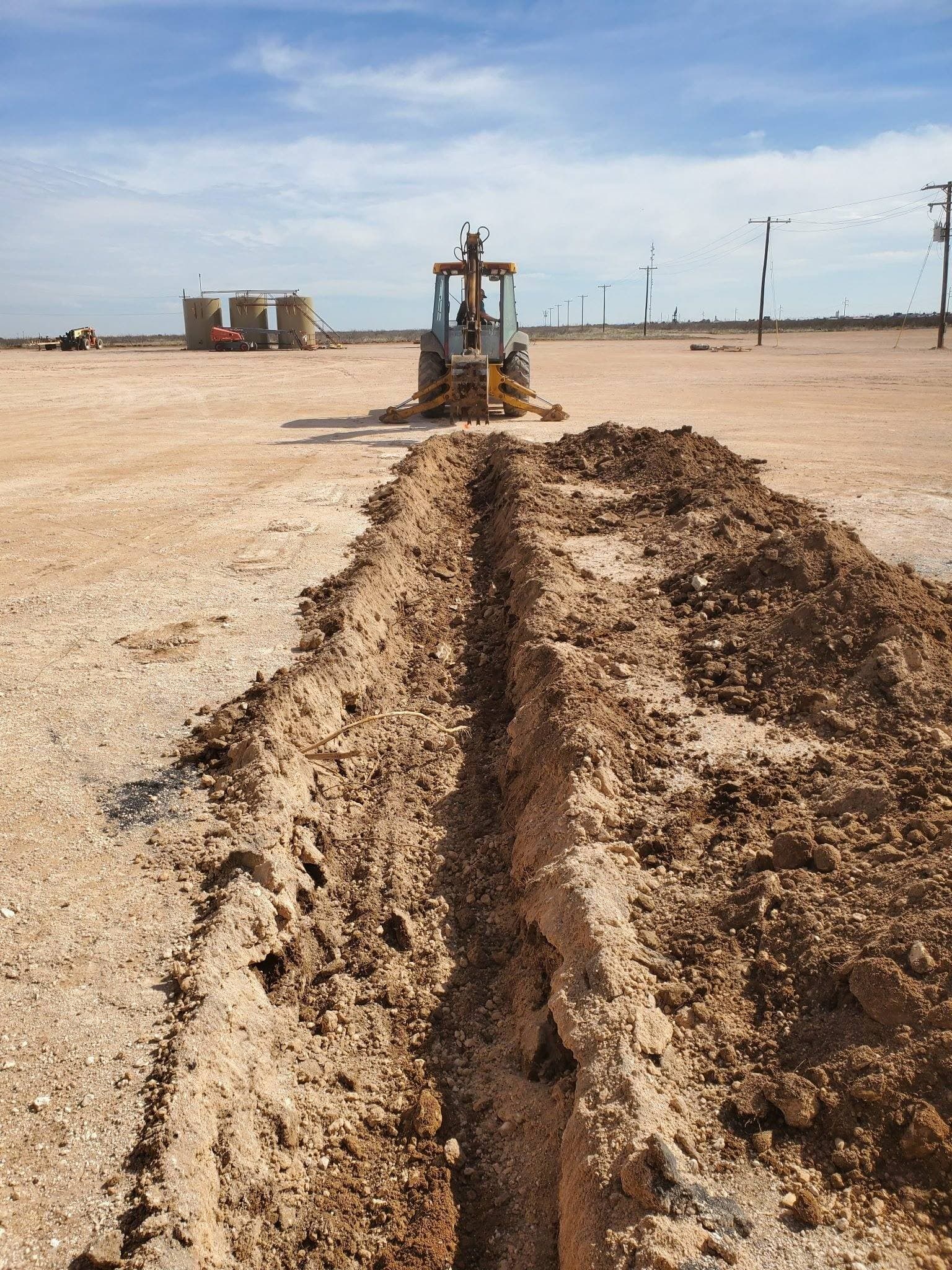
Drainage Solutions
Grading and drainage work that gets water moving where it's supposed to go.
Learn more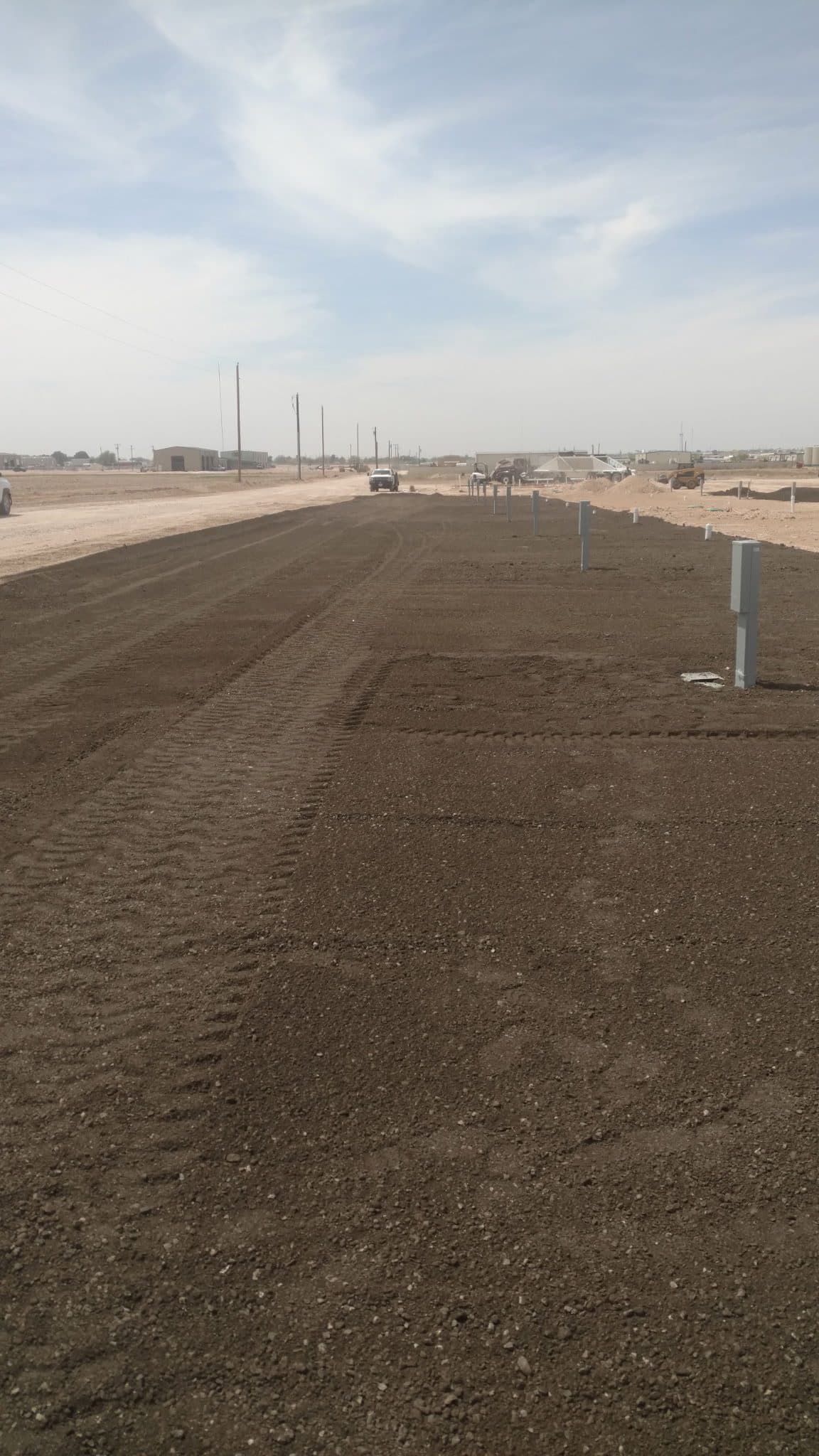
Ranch Development
Ranch roads, pads, and infrastructure built to work as hard as you do.
Learn moreStill not sure which one your ground wants?
Tell us where the gate is and what you are trying to end up with. We will walk it and tell you what we would build, including when the answer is less work than you were expecting.
Contact Us Directly
Prefer to call or email instead of filling out the form? Reach us directly:
Phone
(575) 973-8523Hours
- Monday – SundayOpen 24 hours — call anytime
Service Area
Midland, TX & the Permian Basin