Guide
Overlay or Tear It Out: What to Do With a Failing Asphalt Lot
The decision every owner of a tired commercial lot has to make, explained by what is actually happening under the pavement rather than by what looks cheapest this year.
A contractor who looks at a cracked lot and quotes an overlay without walking it has told you something about the contractor, not about the lot. Overlay is the right answer a good share of the time and the wrong answer the rest of it, and which one you are looking at is usually decided six inches below the surface, not on it.
Here is the short version. If the pavement is worn, oxidized and cracked but the lot still drains and the surface does not move under a loaded truck, an overlay buys you real years for a fraction of the cost. If water stands after a rain, if the cracking has gone to interconnected blocks, or if the surface flexes when weight rolls across it, the base has failed and paving over it hides the problem for about one season.
If you already know what you want built, the asphalt paving page covers scope, process and what a job like it involves instead.
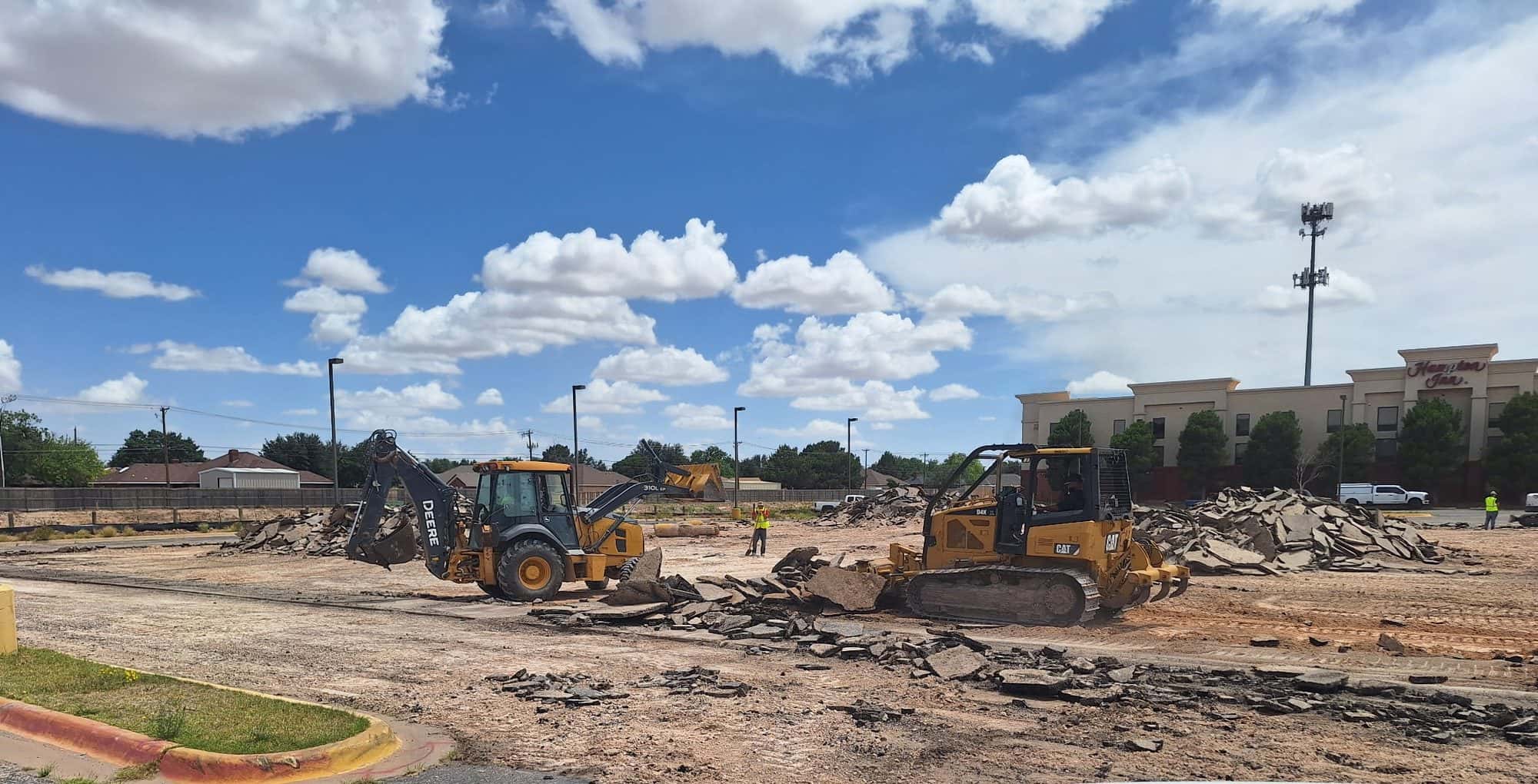
Straight talk: we build the base, our partners lay the mat
We self-perform the part of this that decides whether the job lasts — excavation, subgrade, base, grade and drainage — and we bring in paving crews we work with regularly to lay and roll the asphalt. We are not a paving company that also moves dirt. We are a dirt company that got tired of watching good asphalt fail on bad base.
That also means we have no reason to talk you into the bigger job. If the structure under your lot is sound and an overlay is what it needs, that is what we will tell you, and it is the cheaper answer for both of us.
Head to Head
Overlay
Milling or cleaning the existing surface and laying new asphalt over the top of it. The old pavement stays and becomes part of the structure.
Full reconstruction
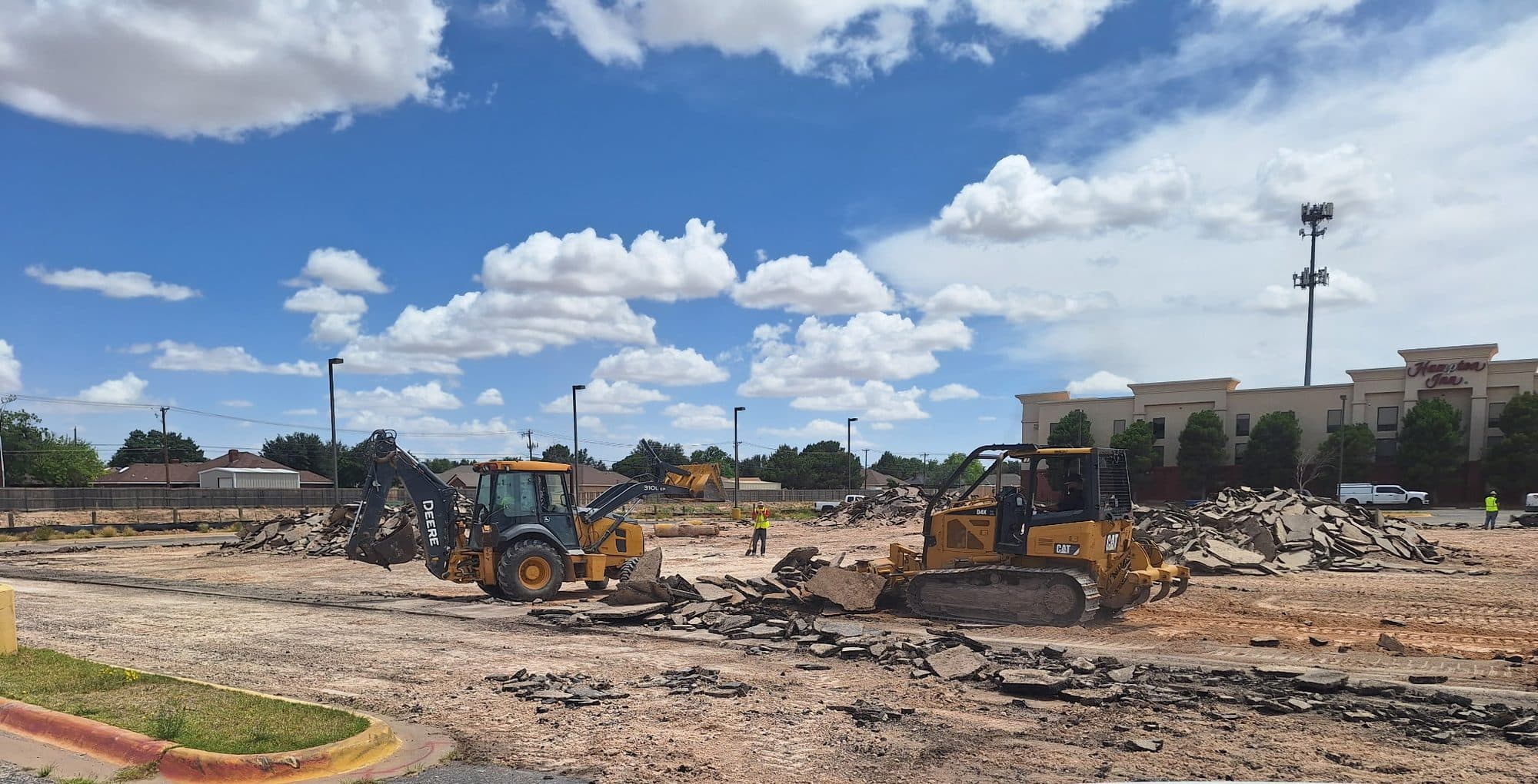
Breaking out the existing pavement, fixing what is under it — subgrade, base, drainage — and building the section back correctly before repaving.
| What you're comparing | Overlay | Full reconstruction |
|---|---|---|
| What it actually fixes | The surface. An overlay restores the wearing course and buys years on pavement whose structure is still doing its job. | The structure. Reconstruction fixes the reason the pavement failed, which is why it is the only option that stops the same failure repeating. |
| What happens if you choose wrong | Overlay a failed base and the same cracks come back through the new mat, usually within a season or two. You paid for asphalt and bought time, not repair. | Reconstruct a lot that only needed a surface fix and you spent multiples of what the job required. Rare, but it happens when nobody investigates first. |
| Downtime | Short. Mill, clean, pave, and in many cases the lot is back in service the same week. | Longer, and it comes in phases — break out, haul off, rework subgrade and base, compact, then pave. On a working site we usually stage it so part of the lot stays open. |
| Drainage | An overlay adds thickness on top of the grade you already have. It will not fix a low spot, and in a few cases it makes ponding slightly worse. | Grade gets rebuilt. This is the only path that puts fall back into a lot that has been holding water since the day it was built. |
| Cost shape | Lower up front. The right call when the structure is sound, and an expensive delay when it is not. | Higher up front and lower over the life of the lot, because you are not paying to repave the same failure every few years. |
Where Each One Is the Right Call
Reach for overlay when
- Lots where the surface is oxidized, raveling or cracked but the section underneath is still solid
- Pavement that still drains — no ponding, no low spots holding water after a storm
- Owners who need the lot back in service fast and cannot lose it for a week
- Surfaces where cracking runs in lines rather than in interconnected blocks
Reach for full reconstruction when
- Lots that pond water, which almost always means grade or base, not surface
- Alligator cracking, where the pattern has gone to interconnected blocks
- Pavement that moves or flexes under a loaded truck
- Anywhere the traffic has changed — a lot built for cars now taking loaded trucks daily
How to read your own lot before anybody quotes it
Walk it the morning after a real rain. That single visit tells you more than a dry inspection ever will. Water standing anywhere more than a few hours is a grade or base problem, and no surface treatment fixes it.
Then look at the crack pattern. Long single cracks running with the direction of traffic, or shrinkage cracks in a rough grid at wide spacing, are usually surface-age problems. Interconnected cracking in small blocks — what everybody calls alligator cracking — is the base telling you it has stopped carrying load.
Last, watch a loaded truck roll across it. If the pavement visibly deflects under the wheels, the section underneath is done, whatever the surface looks like.
Why Permian Basin lots fail early
Two things do most of the damage out here. The first is traffic that changed after the lot was built — a customer parking lot that quietly became a yard for loaded trucks, or a site that added a scale, a shop, or tank traffic without anybody rebuilding the section under it. Asphalt is designed against a load, and when the load changes, the design is wrong.
The second is water with nowhere to go. Runoff moves fast over hard caliche and there is not much natural fall in most of this country, so a lot that was graded flat holds water at the edges and in the low spots. Water under a pavement section softens the base, the base stops carrying, and the surface cracks in blocks over the soft area. That failure looks like an asphalt problem and is a drainage problem.
Both of these are why we look at the dirt work before we talk about mat thickness. It is also why a lot of the repair work we get called out to is the second repair, not the first.
The middle option nobody quotes
Most failing lots are not uniformly failed. Usually one drive lane, one dumpster pad, or one corner where water collects has gone to pieces while the rest of the surface is fine. Full-depth patching those areas and overlaying the rest costs a fraction of a full reconstruction and lasts far longer than a straight overlay.
That only works if somebody actually maps the failure instead of pricing the whole lot at one number. It takes longer to quote and it is a smaller job, which is roughly why it does not get offered as often as it should.
What Your Ground Changes
The Permian Basin is not one kind of dirt. What is obviously the right call on one side of our service area is the wrong one two counties over, and it is the ground underneath — not the thing sitting on top of it — that decides.
Midland, TX
Midland County
Caliche sits close to the surface across most of Midland County and makes good base once it is ripped, shaped and compacted. Lots here usually fail from grade rather than material — runoff moves fast over hard caliche, so a lot without real fall holds water at the edges.
Dirt work in MidlandOdessa, TX
Ector County
Oilfield-driven build-out has covered a lot of Ector County ground in concrete and steel, so water that used to soak in now runs. Older lots were sized for the runoff pattern that existed when they were poured, and a lot of them are now taking more water than they were built for.
Dirt work in OdessaBig Spring, TX
Howard County
Howard County ground turns rocky quickly, and shallow rock changes both the dig and the price on a reconstruction. Worth knowing before anybody quotes a tear-out, because it is the single biggest swing factor in that number.
Dirt work in Big SpringStanton, TX
Martin County
Sandy loam farm ground over caliche across Martin County — easy digging up top with a hard layer underneath. Sandy subgrade is the classic case where a lot needs base depth rather than a thicker mat.
Dirt work in StantonMonahans, TX
Ward County
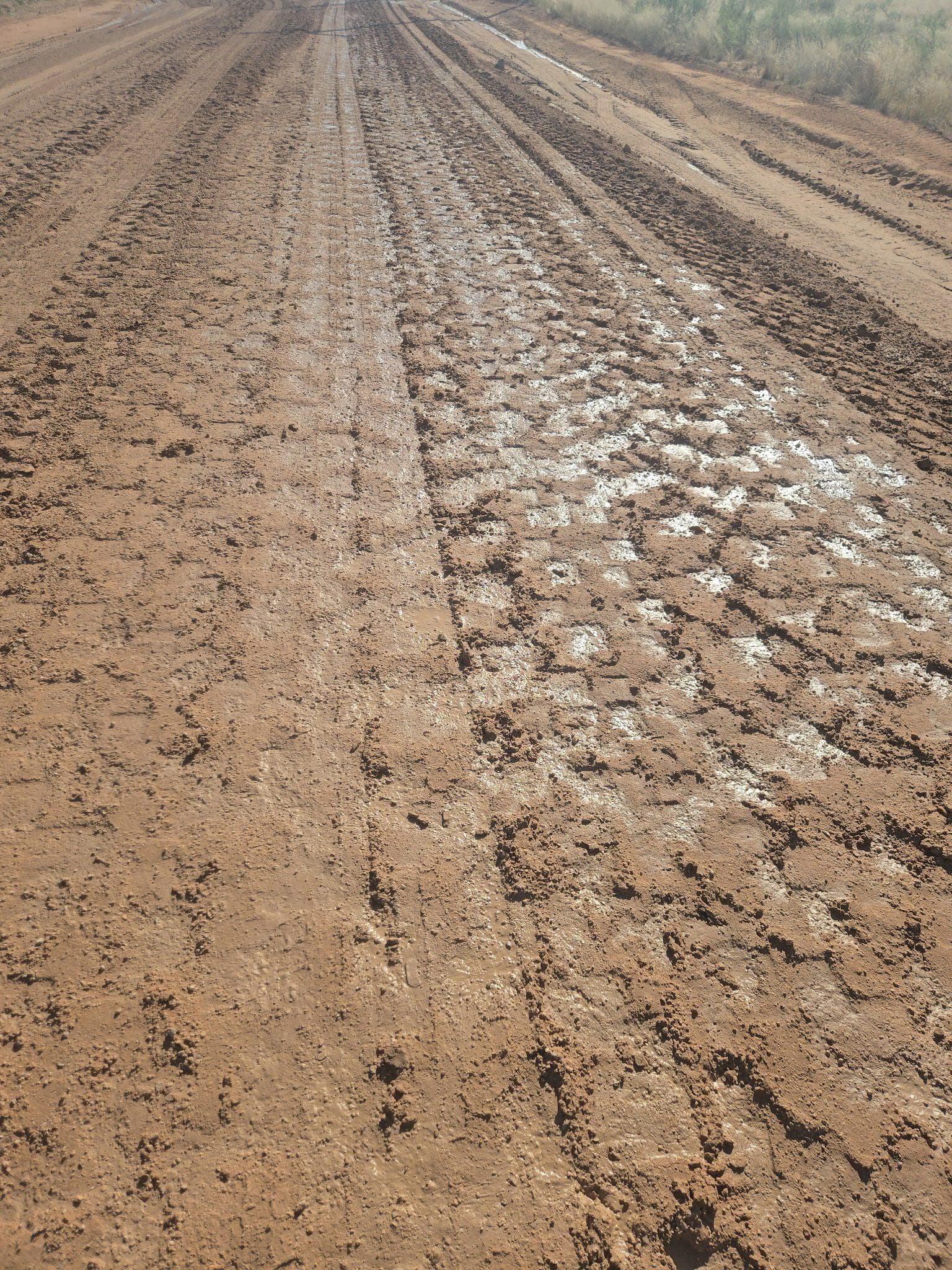
Ward County ground is sand, and sand does not hold shape under load without imported base. A lot built on it that is failing is almost never fixable with an overlay, however good the surface looks in the dry.
Dirt work in MonahansLubbock, TX
Lubbock County
Flat South Plains ground over clay-loam with playa basins that hold water rather than shedding it. Clay under pavement swells and shrinks with moisture, which cracks surfaces from below regardless of how the mat was laid.
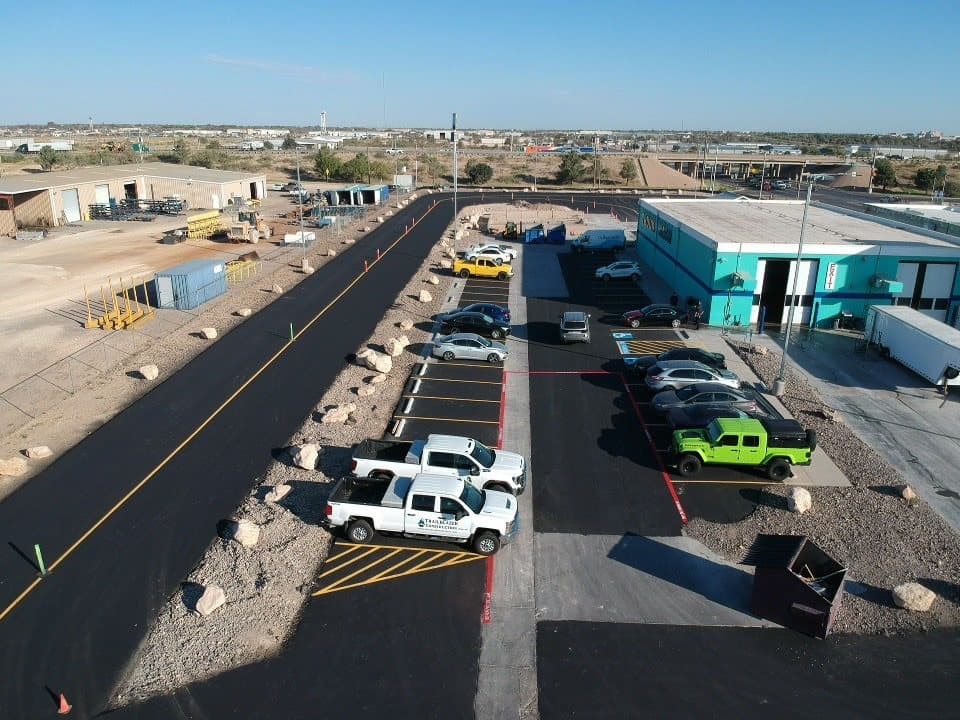
Dirt work in LubbockWhat This Looks Like on the Ground
Frequently Asked Questions
How do I know if my base has failed or just the surface?
Walk the lot the morning after a hard rain. Standing water means grade or base. Cracking in small interconnected blocks means the base has stopped carrying load. Pavement that flexes under a loaded truck means the same thing. Long single cracks with no ponding are usually a surface-age problem, which is what an overlay is for.
Can you just patch the bad areas?
Often, yes, and it is the option that gets quoted least. Most lots fail in specific places — a drive lane, a dumpster pad, a corner that collects water — rather than uniformly. Full-depth patching those and overlaying the rest is frequently the honest answer.
Do you do the paving yourselves?
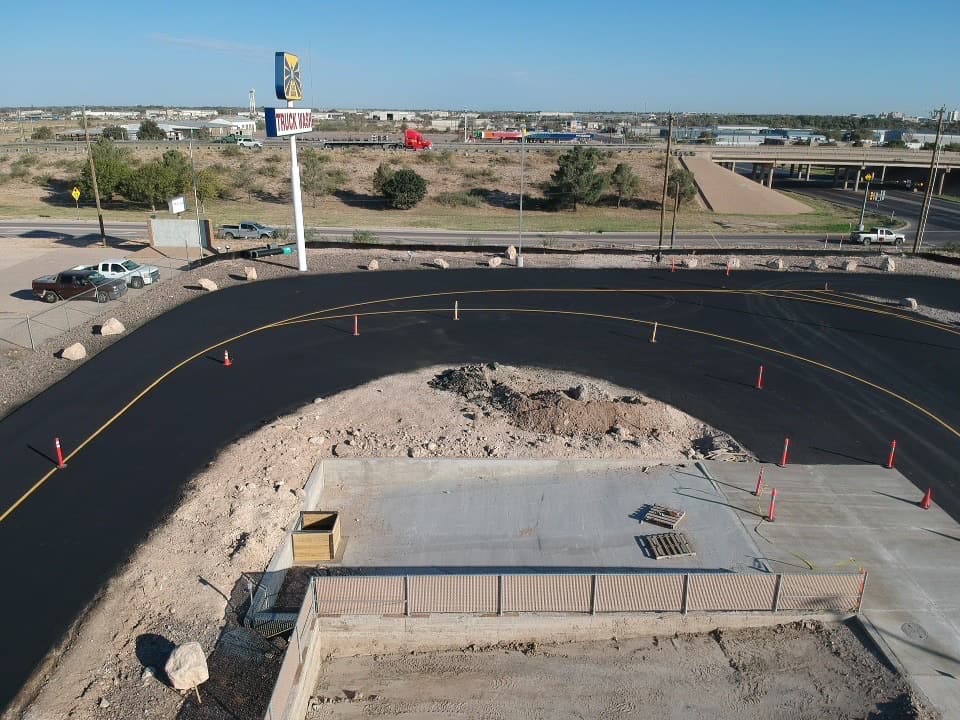
We self-perform everything under the pavement — excavation, subgrade, base, drainage and grade — and bring in paving crews we work with regularly for the mat. You deal with us for the whole job and we stay on site through the pour.
How long will an overlay last on a lot that is holding water?
Not long, and that is the most useful thing we can tell you. Water under the section is what softened the base in the first place. Adding thickness on top does not drain anything, so the same cracking usually comes back through the new mat within a season or two.
The Work Behind This Guide
Everything above is one of these services, or the drainage work that keeps it from failing.
Asphalt Paving
Pavement is only as good as what's under it — and that part is ours.
Learn more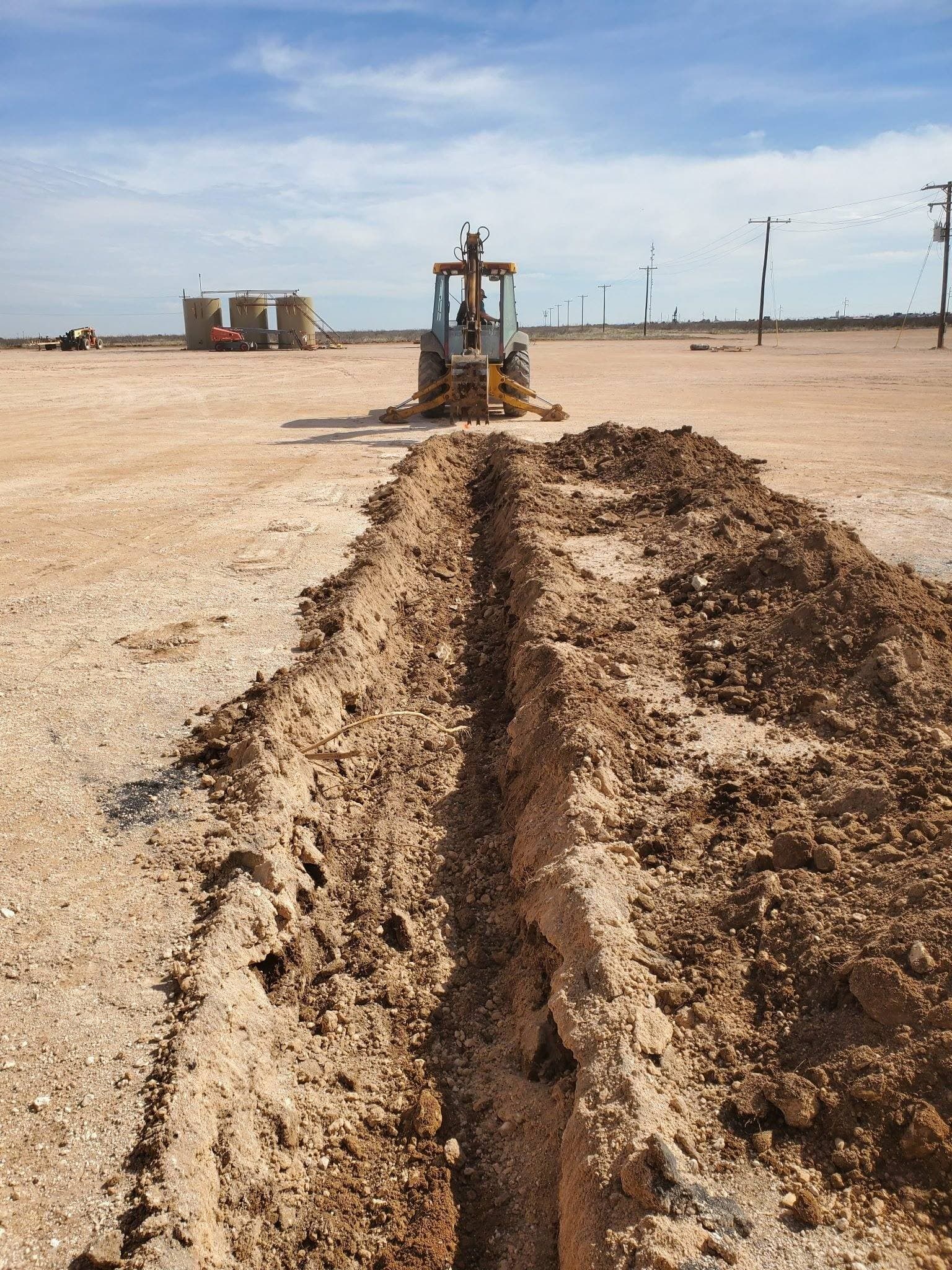
Drainage Solutions
Grading and drainage work that gets water moving where it's supposed to go.
Learn more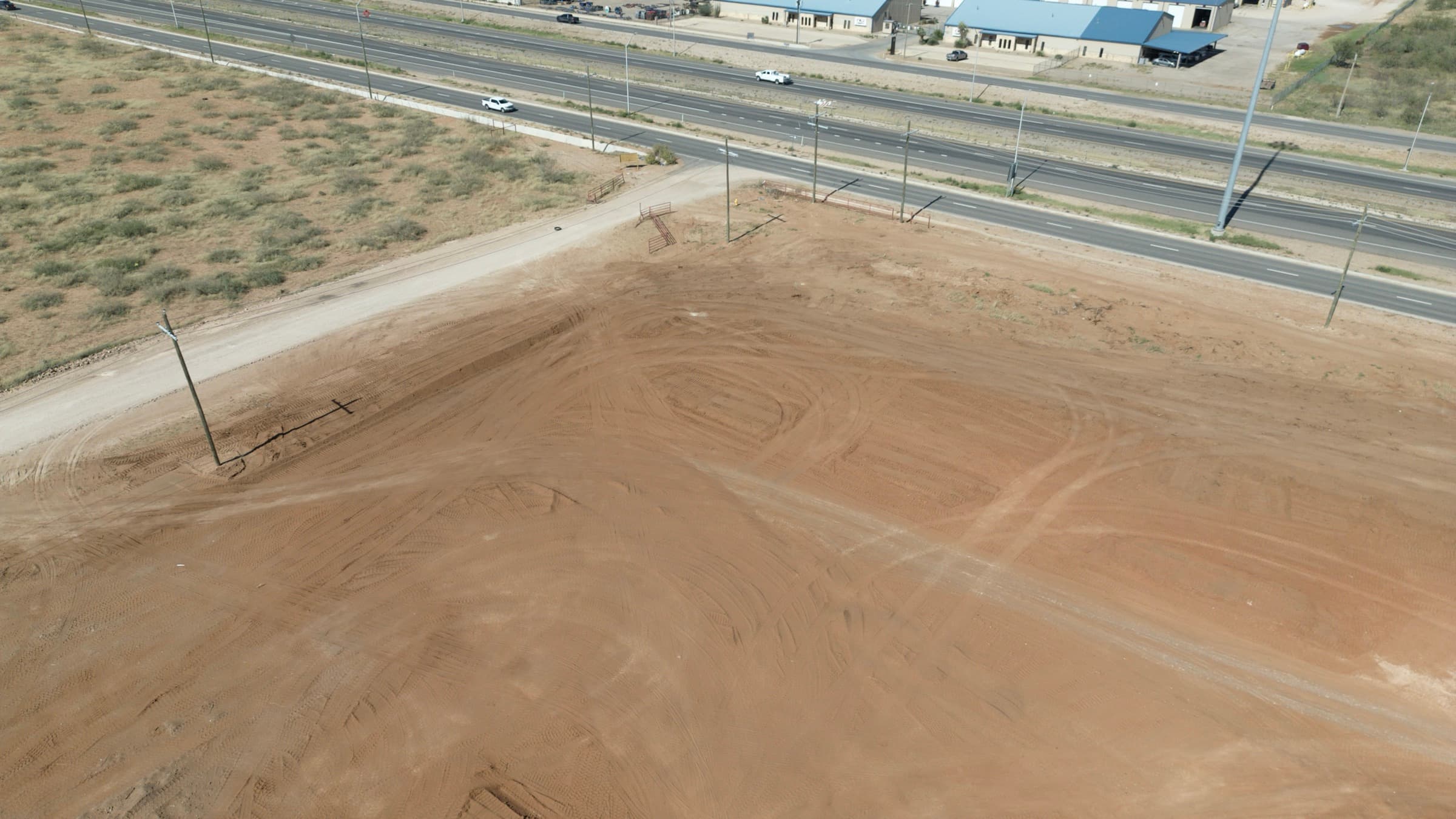
Site & Pad Construction
Site prep and pad construction that gets the ground ready to build.
Learn moreDemolition
Old structures down, debris hauled, site ready for what's next.
Learn moreStill not sure which one your ground wants?
Tell us where the gate is and what you are trying to end up with. We will walk it and tell you what we would build, including when the answer is less work than you were expecting.
Contact Us Directly
Prefer to call or email instead of filling out the form? Reach us directly:
Phone
(575) 973-8523Hours
- Monday – SundayOpen 24 hours — call anytime
Service Area
Midland, TX & the Permian Basin